How to Decorate a Nail Salon: 5 Practical Steps
Most nail salon owners start decorating by buying things that look good - then discover nothing quite goes together once it's all in place. Not because the individual choices were wrong, but because there was no connecting logic from the start.
This guide follows the actual sequence: lock in a concept before buying anything, build a color palette, decorate each zone with specific intent, get the lighting right, and finish with the small details that create the largest perception impact. Applies equally to new salons and existing spaces in need of a refresh.
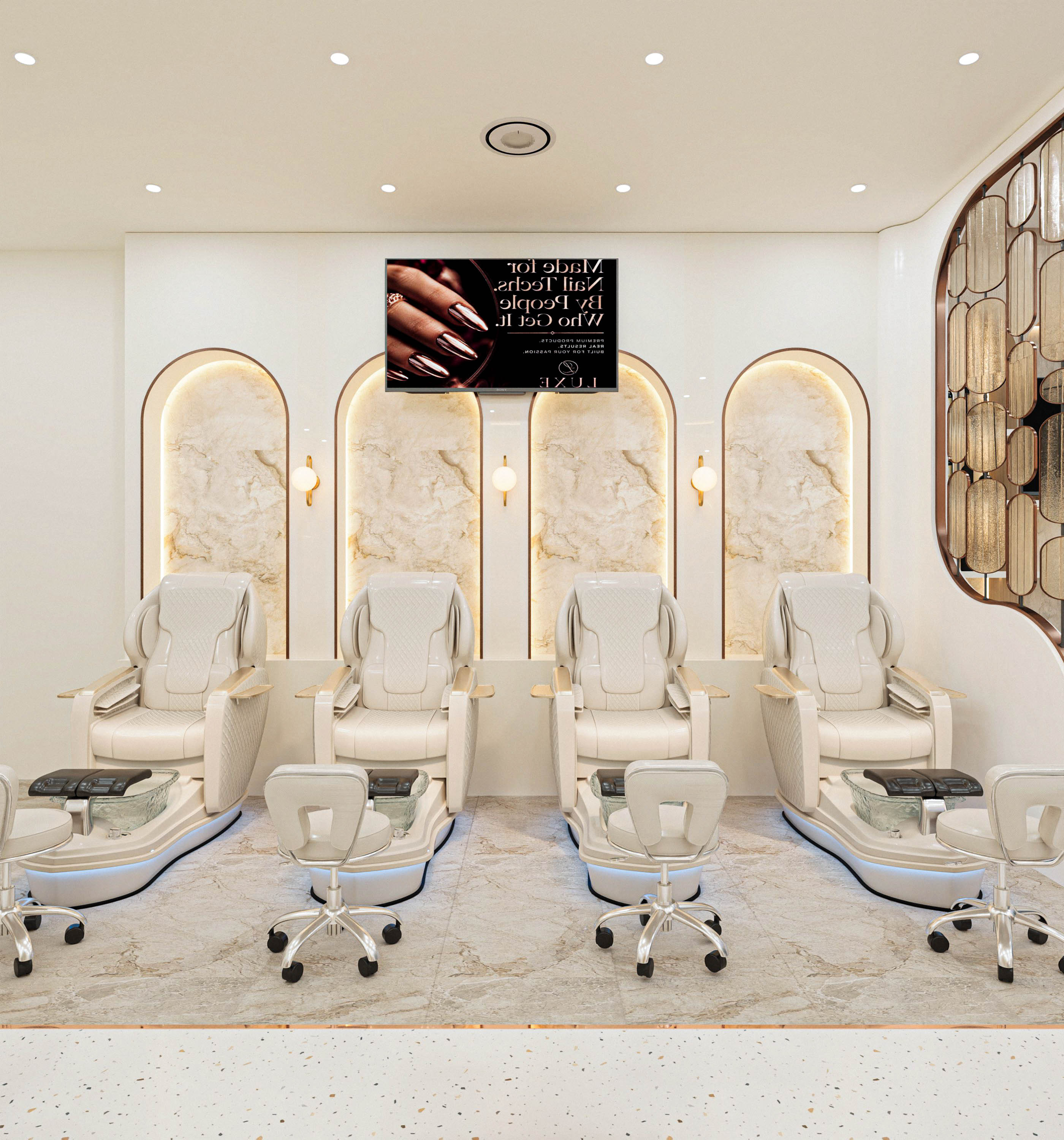
1. Step 1: Lock In a Concept Before Buying Anything
This is the step most salon owners skip and the main reason a space looks inconsistent even when each individual piece looks fine on its own.
A concept is not your favorite color. A concept is the answer to: "What should clients feel when they walk in?"
Three directions that dominate the US market right now:
- Modern Minimalist - clean, professional, neutral. Few decorative elements, high consistency.
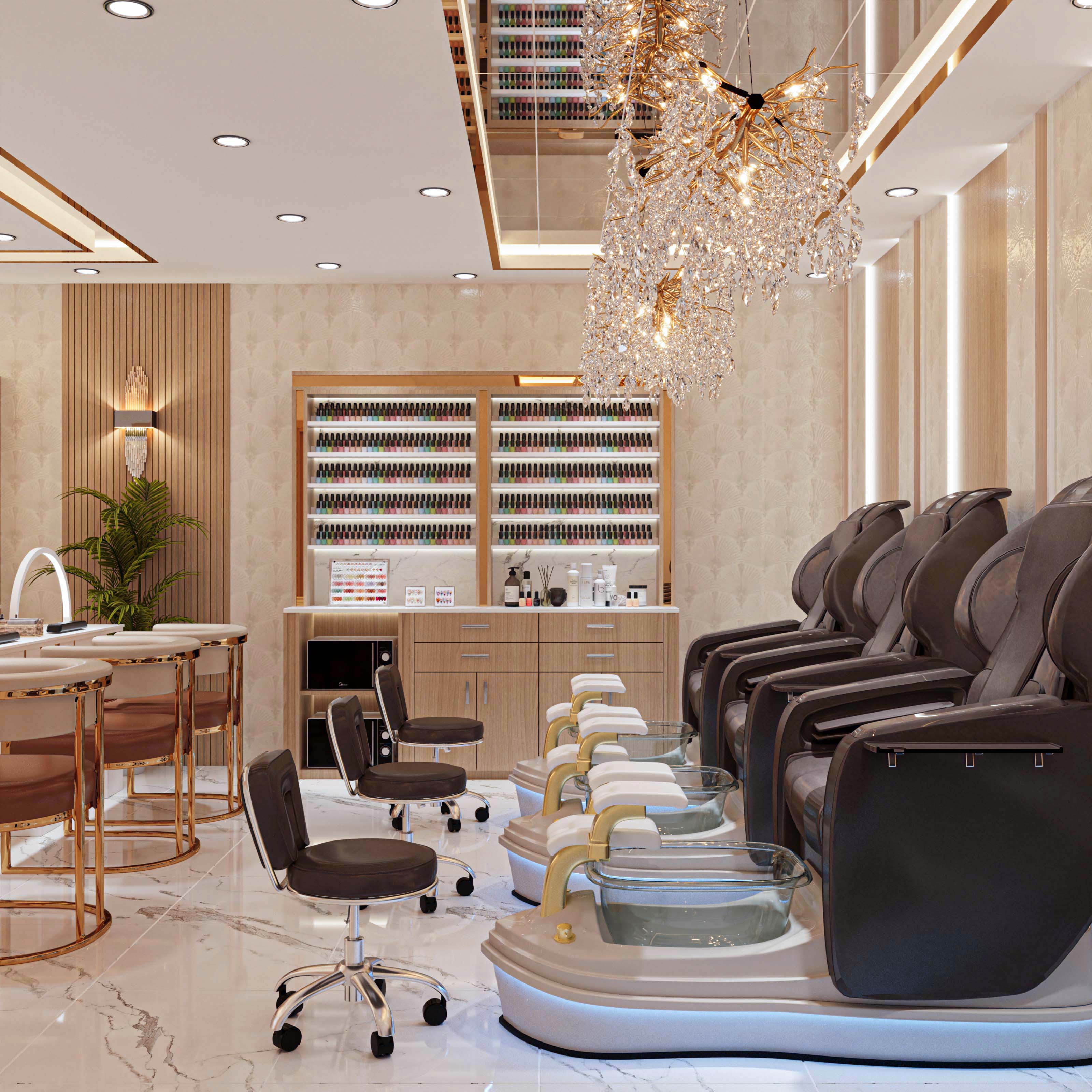
- Luxury - premium materials, attentive atmosphere, clients comparing you to a spa.
- Soft Aesthetic - pastel tones, floral touches, built so clients photograph themselves naturally.
Choosing the right concept for your specific market matters more than choosing the style you personally like. See the full breakdown of each style and which market conditions they fit in nail salon design ideas for the US market
After choosing a concept: Write three adjectives describing how you want clients to feel when they walk in. Every decoration decision after this point goes through one filter: "Does this fit those three words?"
2. Step 2: Build Your Color Palette
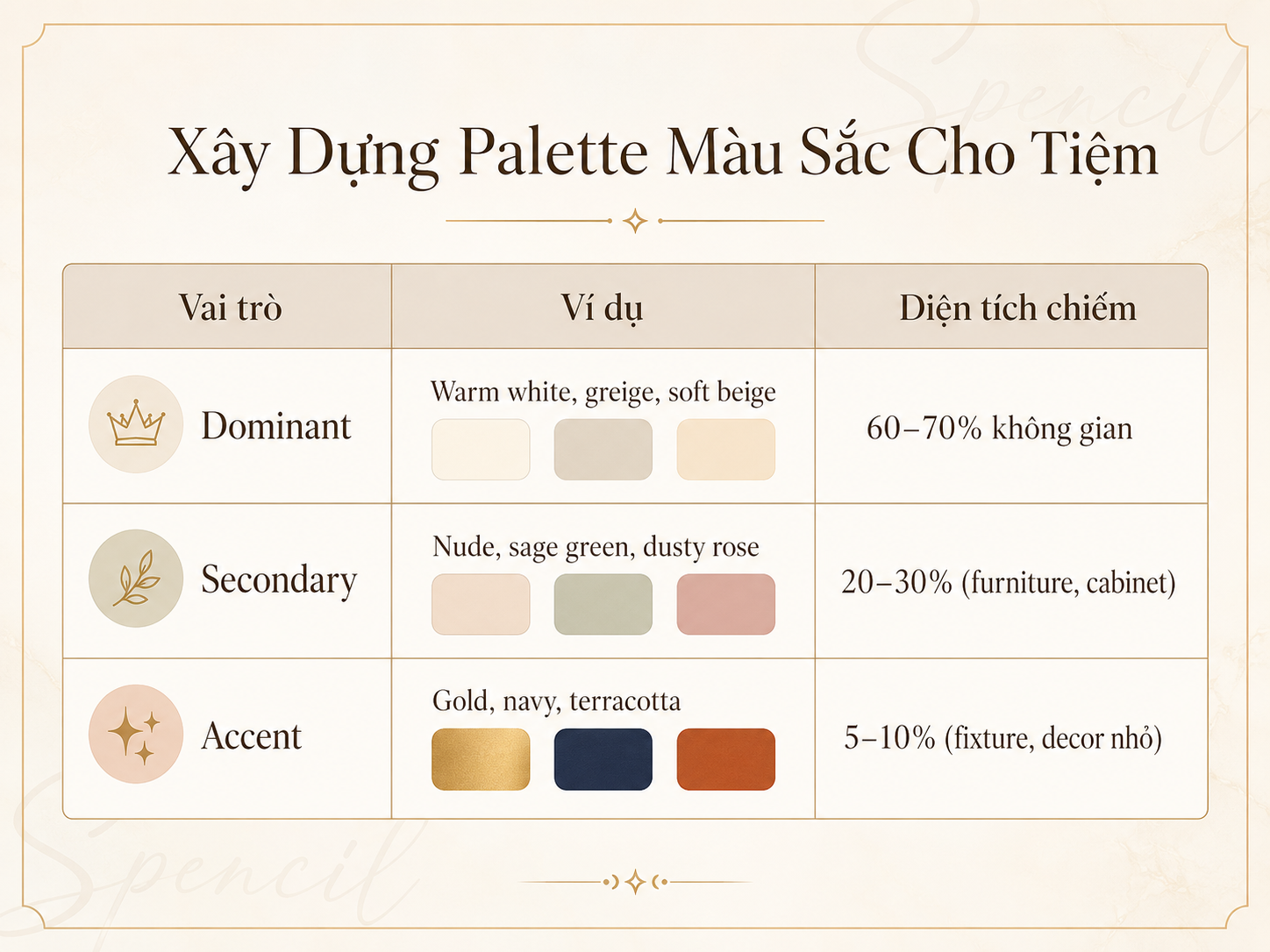
The rule of three colors: one dominant, one secondary, one accent.
The most common mistake: overusing the accent color. Accent colors create strong visual pull - use them beyond 10% of visual surface area and the space feels heavy rather than distinctive.
How to test your palette before committing:
Photograph the existing space. Use a color tool like Adobe Color or Coolors to test combinations directly against the photo. Then view the result under both daylight and artificial light — colors shift significantly between sources, and what looks right in natural light can read differently under LED.
Neutral is a deliberate choice, not a default. Warm white, applied correctly, creates a premium feel that many bolder colors struggle to achieve.
3. Step 3: Decorate Each Nail Salon Zone
Reception - No Second Chance at a First Impression
Reception sets the expectation for everything that follows. Clients form a first impression in the first few seconds and that impression anchors how they experience the rest of the visit.
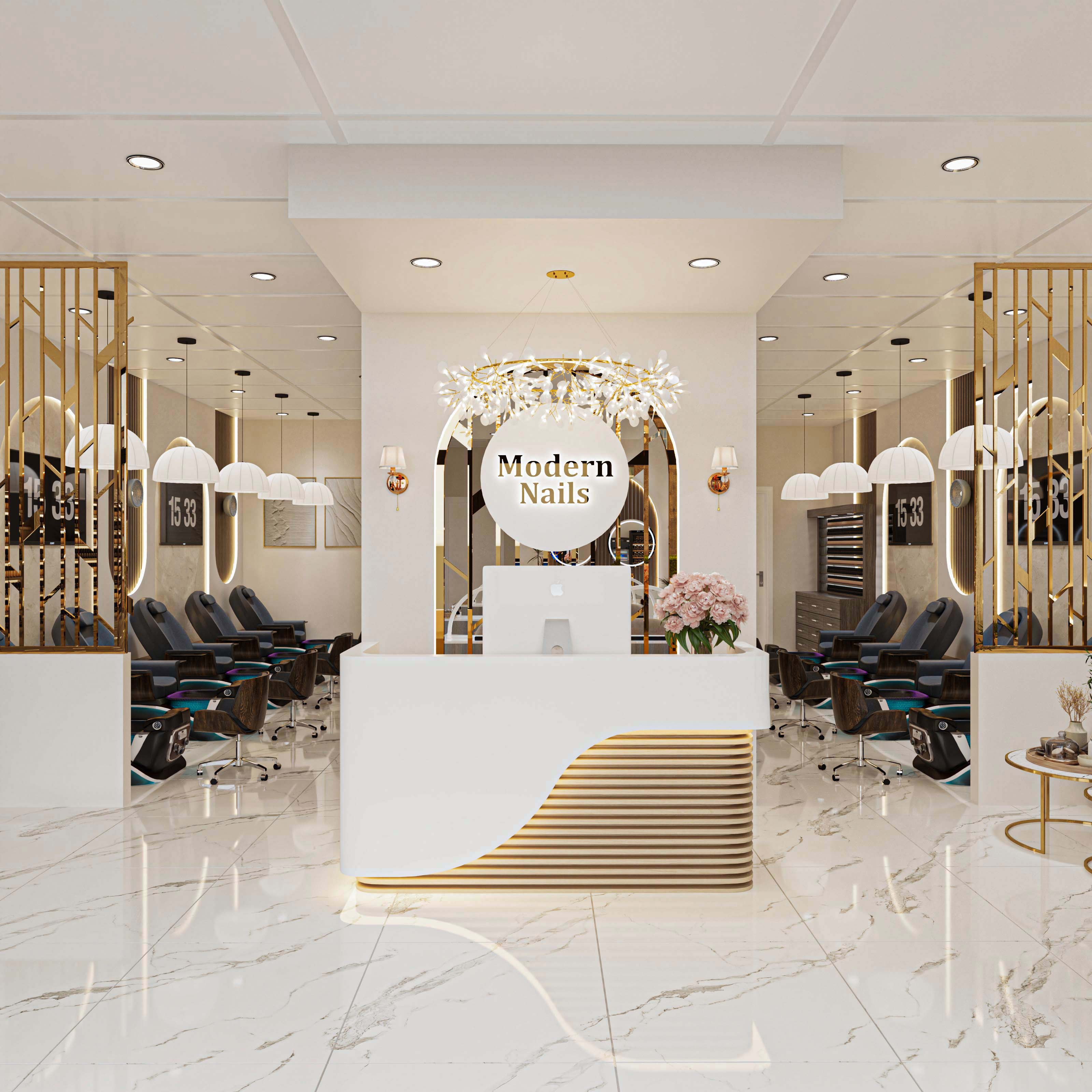
- Salon name or logo should be visible immediately from the entrance - not just on outside signage but on the wall behind the reception desk
- The reception counter should hold only what clients need to see: service menu, a small display - nothing else
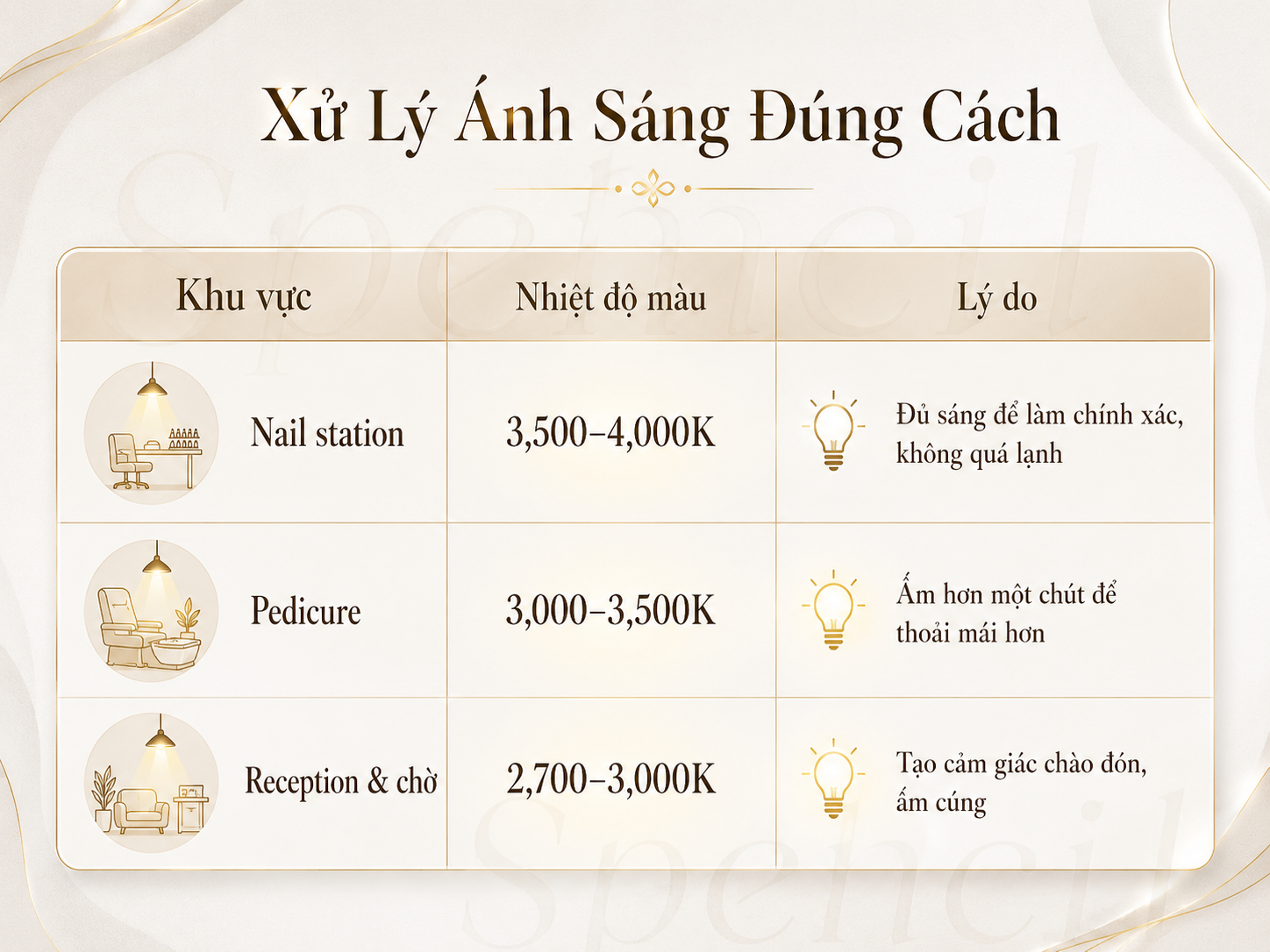
- Reception lighting should be warmer than the rest of the salon - it signals welcome before anyone says a word
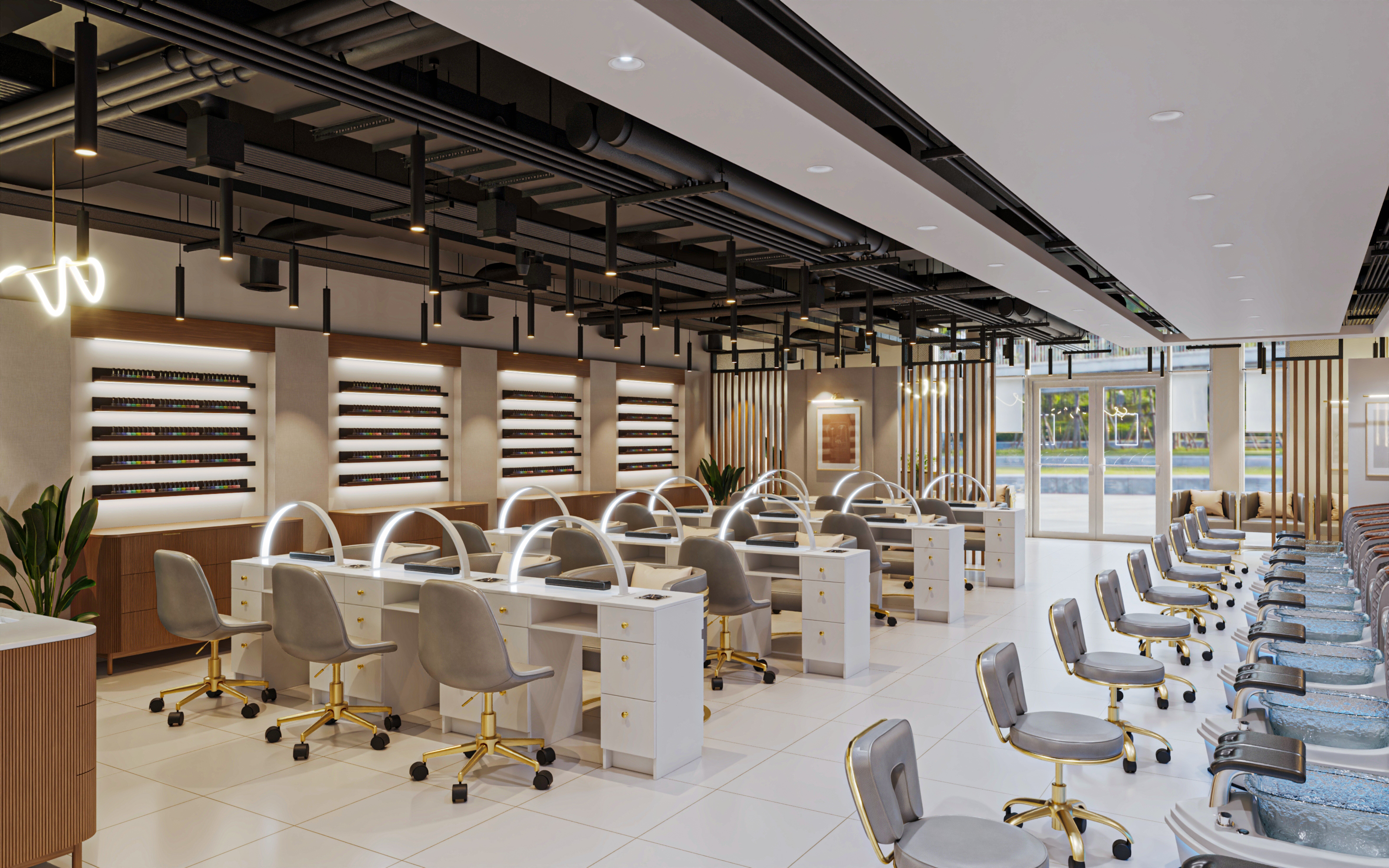
Nail Station Area - Functional Beauty
This is where clients spend the most focused time and direct the most attention - it requires the highest level of consistency.
- Table surfaces: stone-look or solid surface materials are easy to clean, scratch-resistant, and maintain their appearance longer than alternatives
- Cable management is non-negotiable - exposed wiring is the single most common visual problem Spencil sees in existing salons, and it undermines any design investment regardless of cost
- Station spacing: minimum 36 inches between tables for technician movement - tight spacing affects service speed and the experience of both technician and client
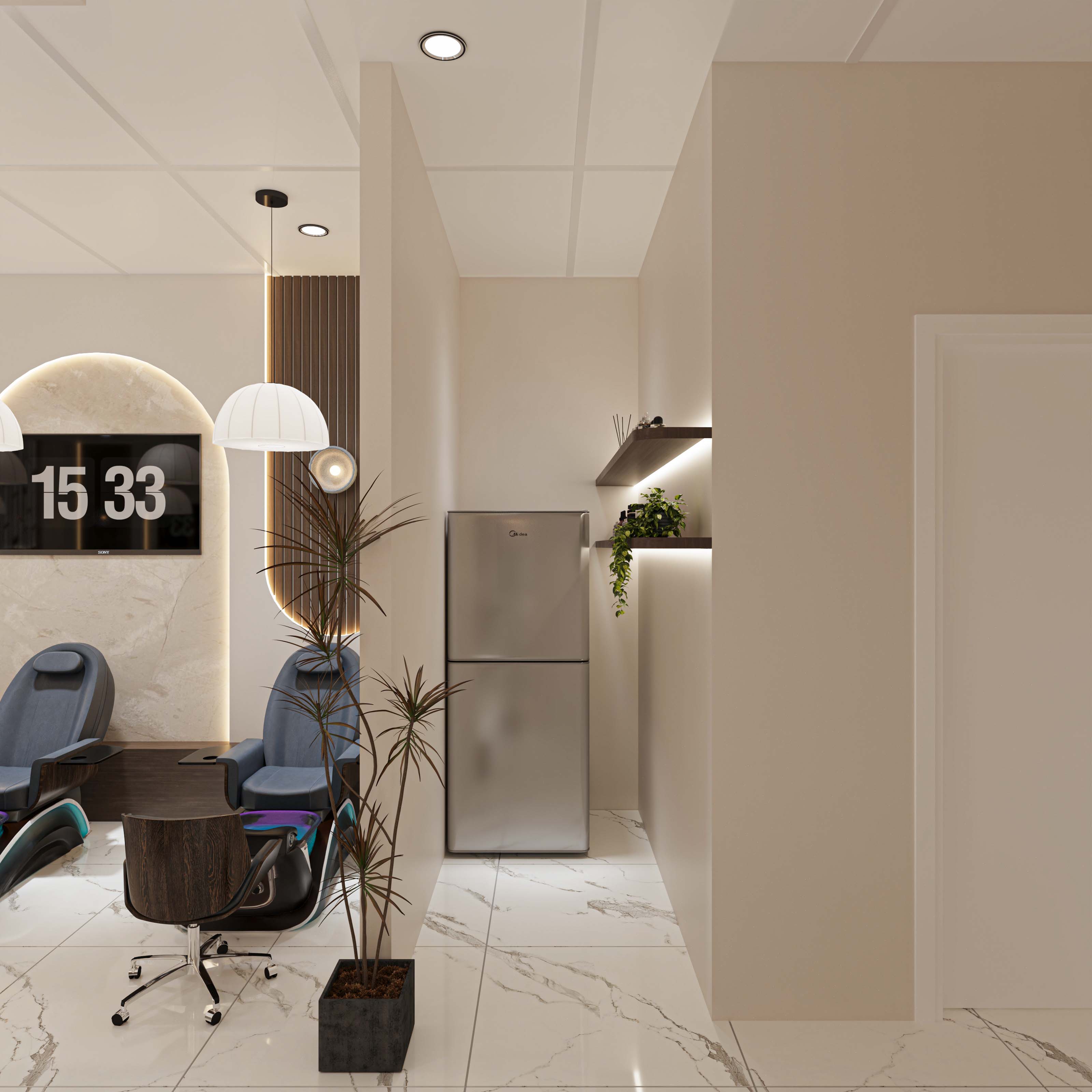
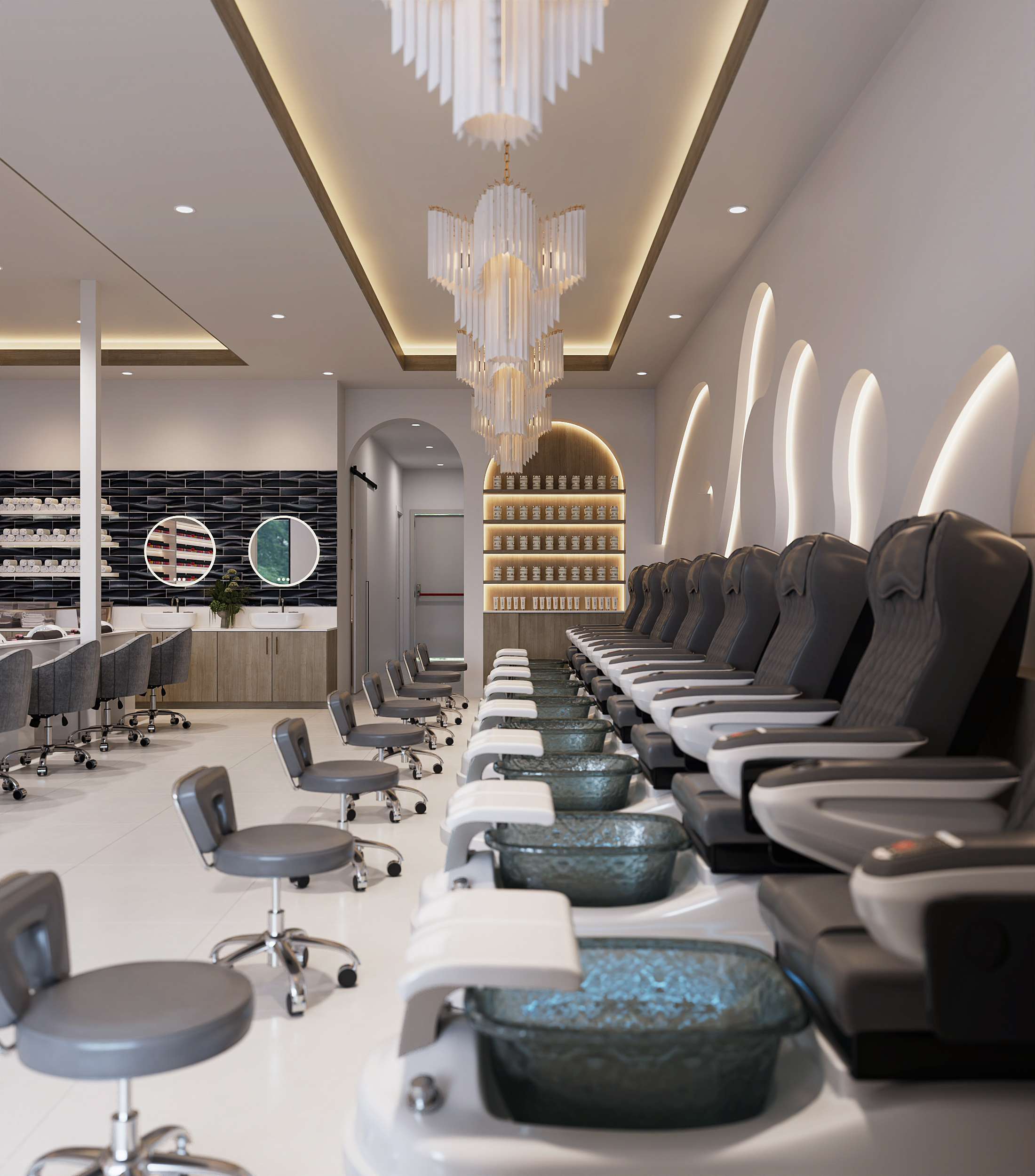
Pedicure Area - Comfort Is the Aesthetic
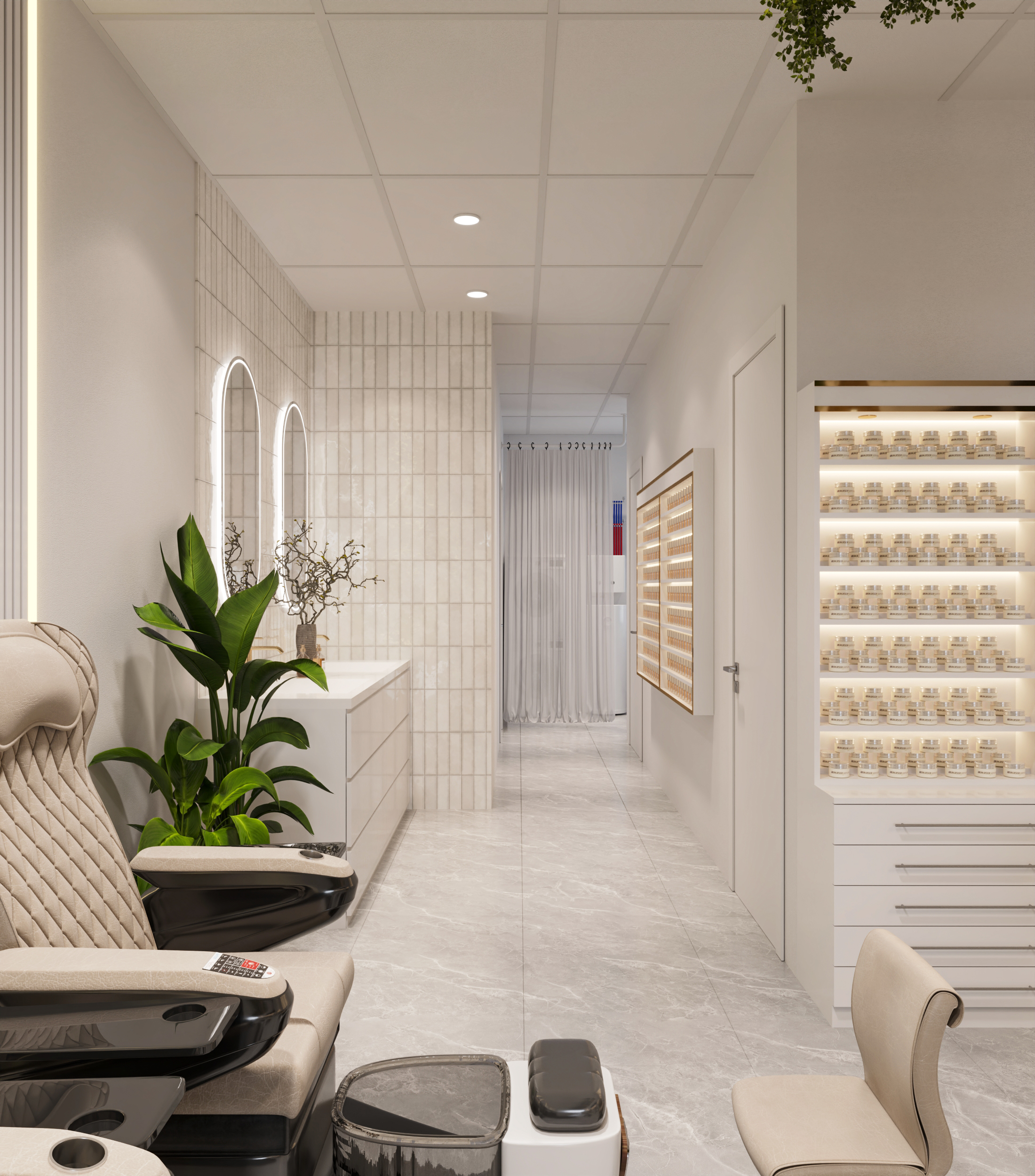
Clients sit here for 45–90 minutes. Chair comfort is the most important aesthetic decision in this zone - more than wall color or lighting.
- Quality pedicure chairs are a direct investment in Google and Yelp reviews
- In-seat entertainment (small screen or tablet) is a 2026 trend that meaningfully changes how clients experience the wait time
- Light privacy partitions between chairs create a sense of individual attention without building permanent walls
Waiting Area - Your Free Marketing Channel
The waiting area is typically the most under-decorated zone. It's also the one with the best opportunity to create an intentional Instagram moment: an accent wall, a floral installation, a neon sign. Clients who wait photograph the space. Those photos appear on their followers' feeds. Your salon gets visibility that no paid ad can fully replicate.
4. Step 4: Get the Lighting Right
Lighting is the lowest-cost element to change with the highest impact on how a space reads and the most frequently wrong variable Spencil encounters in existing salons.
Color temperature by zone:
Avoid cool fluorescent white (6500K) throughout the salon: It reads like a clinic, not a nail salon. Nail color accuracy suffers under cold light clients choose colors in-salon but see a different result at home.
Natural light is an asset: If your salon has large windows, position nail stations to take advantage of this. Natural light improves technical accuracy for technicians and makes the space feel more premium without any additional cost.
5. Step 5: Finish With Small Details
These are the lowest-budget elements with the highest impact on how the space feels overall:
Plants integrated into decor
Pothos, snake plant, and ZZ plant tolerate low light and chemical environments - the three most suitable species for nail salon conditions. Place at reception, waiting areas, and pedicure zones. Avoid positioning directly at nail stations where chemical exposure is highest.
Nail polish display organized by color gradient
Arranging polish by color family rather than by brand is simultaneously better-looking, easier for clients to browse, and more photogenic. One of the most-photographed details in any well-decorated nail salon.
Consistent ambient scent
A light, consistent fragrance - not a strong air freshener - creates brand memory that distinguishes your salon in ways clients remember without being able to explain. A diffuser with lavender, eucalyptus, or light citrus works better than spray because it disperses evenly and doesn't spike in intensity.
Cable management throughout
Visible wiring undermines any design investment regardless of how much was spent elsewhere. Cable channels along table legs or behind-wall conduit during construction are inexpensive to install and create permanent visual improvement.
Staff dress code
Creates visual consistency between the people and the space. A full uniform isn't required - a simple color policy (all staff in black, or a specific shade of the dominant palette) creates a professional impression that reinforces the salon's design direction.
FAQ
How much does it cost to decorate a nail salon?
A cosmetic refresh (repainting, replacing some decor, adding plants, reorganizing displays): $2,000–$8,000 if self-managed. Full furniture replacement with new lighting: $15,000–$40,000. See complete nail salon interior package for a full component breakdown.
What colors work best for nail salon decoration?
Warm neutrals (warm white, greige, soft beige) are the most reliable foundation - versatile, they don't date quickly, and photograph consistently well. Accent colors (dusty rose, sage green, navy) add personality but use them at 5–10% of visual surface area, not more.
Do I need a designer to decorate my nail salon?
Not for a small cosmetic refresh. For a full build-out or major renovation, a nail salon 3D design service lets you review the actual result before spending on construction - the most effective way to avoid costly post-construction corrections.
How do I make a small nail salon look better?
Three principles for small spaces: (1) Light, consistent palette - three colors maximum; (2) Mirrors - they create a genuine sense of expanded space; (3) Correct lighting temperature - a dark or cold-lit space reads smaller than it is.
Which salon zone should I prioritize decorating first?
In order: (1) Reception - first impression; (2) Nail stations - where clients spend the most focused attention; (3) Waiting area - Instagram marketing opportunity. In the pedicure area, chair quality takes priority over decor decisions.
Conclusion
Decorating a nail salon interior well isn't about spending more or buying more - it's about building a consistent logic from the first decision through the last detail.
The five steps in this guide follow a specific sequence for a reason: the wrong concept produces the wrong palette, a mismatched palette makes each zone feel disconnected, and incorrect lighting makes everything read differently from how it was intended - regardless of how carefully each element was chosen on its own.
If you're setting up a new salon or refreshing an existing space and want to see the final result before committing to build-out costs, Spencil can take you from initial concept through a complete 3D render.
📞 888-995-0058
📍 535 Mission St, San Francisco, CA 94105
🌐 spencil.co
📩 facebook.com/spencilco

Hien Tran is a Content Researcher at Spencil, collaborating closely with designers and business owners on nail salon, spa, coffee, and retail projects throughout the United States. Her work is grounded in real project experience, market trends, and industry best practices, providing business owners with practical insights to enhance customer experience, optimize space planning, and maximize investment value.