Nail Salons in the US: Market, Costs and Outlook 2026
This article is for anyone seriously considering opening a nail salon in the US, or for existing owners who want a clearer picture of the industry to make better business decisions. Not a motivational piece - real numbers, real regulations, and the factors that actually determine whether a salon survives or not.
1. The US Nail Salon Industry: Size and the Vietnamese American Role
The US nail salon industry generates over $9 billion in annual revenue, with more than 56,000 salons currently in operation nationwide. This is not a niche market and Vietnamese Americans are at the center of it.
Estimates place Vietnamese American ownership at approximately 51–53% of all nail salons in the US. The highest concentrations are in California (~8,000 salons), Texas (~9,000 salons), Florida, and Georgia - four states that account for the majority of Vietnamese nail professionals in the country.
This did not happen by accident. In 1975, actress Tippi Hedren sponsored vocational training for 20 Vietnamese refugee women at Hope Village in California. Those 20 women became the seed of a business community that has spread across the entire country over 50 years. Today, the Vietnamese American network of training, informal lending, lease referrals, and client introductions is a genuine competitive advantage - one that no other community has easily replicated.

2. How Much Does It Cost to Open a Nail Salon in the US?
There is no fixed number - startup costs depend heavily on state, market, and salon size. But there is a baseline framework every owner needs to calculate before signing anything.
Lease and Space
Rent at a strip mall in a mid-tier market averages $20–$35 per sqft per year. A 1,000 sqft space in Texas might run $1,800–$3,000 per month. In California, the same square footage can easily exceed $4,000–$6,000 per month. Landlords typically require a 2–3 month security deposit plus first month's rent - meaning $6,000–$18,000 is needed just to sign the lease.
Furniture and Build-Out
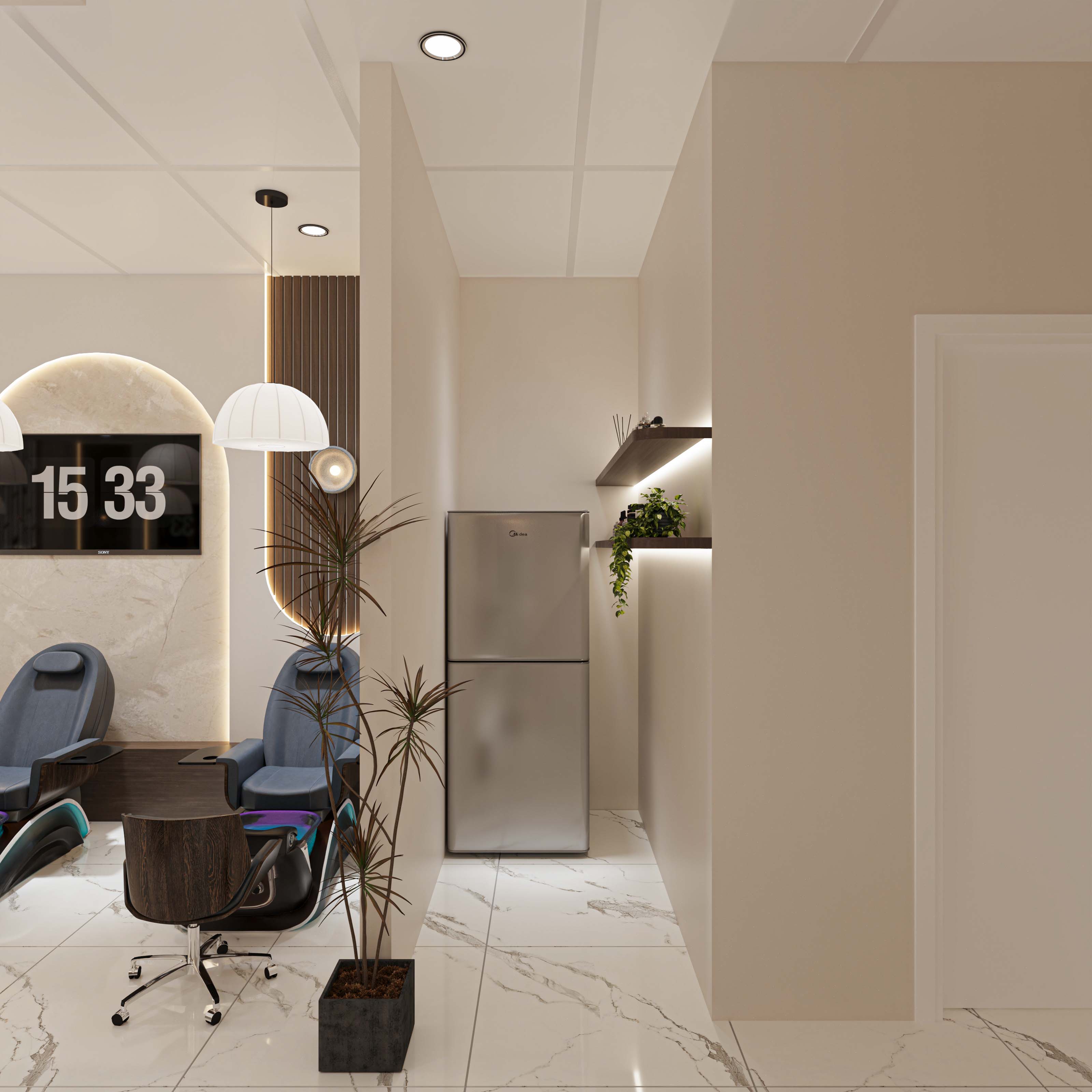
This is the largest line item and the most commonly underestimated. A 1,000 sqft salon with 8–10 nail stations and 4–5 pedicure chairs requires $45,000–$75,000 in commercial-grade furniture alone. Add construction, electrical, plumbing, and ventilation - the total build-out typically lands between $80,000 and $150,000. For a detailed breakdown of furniture costs and what a complete interior package includes, see Complete Nail Salon Interior Package.
Licenses and Permits
Requirements vary by state, but the standard costs to plan for include:
- Business license: $50–$500 depending on county
- Salon license from the state cosmetology board: $100–$400
- Building permit for any construction: $500–$5,000 depending on scope
- Health inspection: typically free or under $200
Working Capital
This is the item most first-time owners underbudget. The first three months rarely generate enough revenue to cover operating costs. Having 3–4 months of operating expenses in reserve - covering rent, payroll, utilities, and supplies - is not conservative, it is the minimum responsible planning threshold.
Estimated startup costs for a 1,000 sqft nail salon:
| Item | Estimated Cost |
| Lease (deposit + first month) | $6,000 – $18,000 |
| Furniture + build-out | $80,000 – $150,000 |
| Licenses + permits | $1,000 – $8,000 |
| Initial supplies | $3,000 – $8,000 |
| Working capital (3–4 months) | $15,000 – $40,000 |
| Total | $105,000 – $224,000 |
3. Income and Profitability: When Does a Nail Salon Turn a Profit?
The more useful question than "is a nail salon profitable?" is: profitable by which month and under what conditions?
A salon running steadily with 6–8 technicians in a mid-tier market like Texas, Georgia, or Florida can generate $25,000–$45,000 in monthly revenue. After subtracting rent, labor (typically 45–55% of revenue), supplies, utilities, and fixed costs - a well-managed salon operates at a net profit margin of 10–17%.
In practical terms: a salon doing $30,000 per month in revenue yields approximately $3,000–$5,000 per month in net profit for the owner. Against an initial investment of $100,000 or more, that puts the typical breakeven point between month 18 and month 30.
What separates consistently profitable salons from those that break even indefinitely is usually not higher revenue - it is labor cost control and client retention. A 10-percentage-point improvement in retention rate can add $500–$1,500 to monthly net profit without acquiring a single new client.
4. Regulations and Licensing: What You Cannot Afford to Get Wrong
Most first-time owners learn this section through experience - which means after receiving a fine or a temporary closure notice.
Nail Technician License
Each state sets its own minimum training hour requirements. California requires 400 hours for a nail technician license. Texas (TDLR) requires 600 hours. Florida requires 240 hours. A technician working without a valid license exposes not only themselves but the salon owner to legal liability during any state inspection.
Ventilation and Workplace Standards
OSHA requires adequate ventilation to control chemical vapor levels in nail salon environments. Many states layer additional requirements on top of federal standards: Texas enforces TDLR ventilation specifications, California applies its own Board of Barbering and Cosmetology rules. A salon that fails a ventilation inspection faces fines or suspension of operations - not a risk worth taking for a build-out shortcut. State-specific requirements for Texas are covered in detail at Nail Salon Design in Texas.
Health and Safety Inspections
Most states inspect nail salons one to two times per year. The violations that most commonly result in citations: improperly sanitized implements, missing chemical product labels, no eyewash station, and non-compliant drainage. None of these are expensive to fix in advance - all of them are expensive to correct under enforcement pressure.
5. Competition: What Actually Differentiates a Salon
With more than 56,000 nail salons nationwide, many neighborhoods have three to five options within a single mile. In that environment, competing on price alone is the fastest path to negative margin.
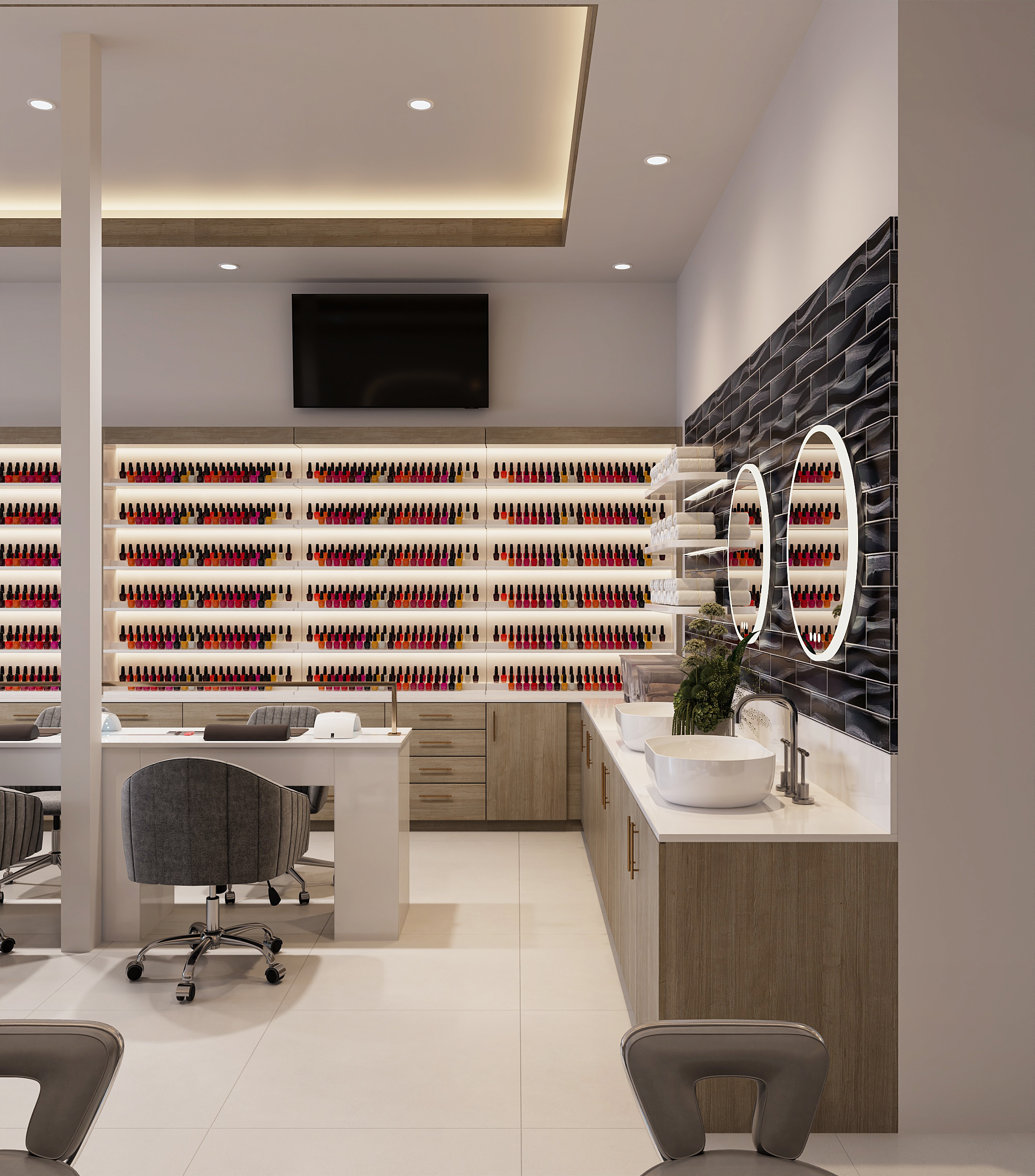
Salons with strong retention rates share a consistent profile - not the lowest prices, but: a clean and comfortable environment, consistently skilled technicians, and predictable wait times. All three of these depend heavily on how the space was designed and how operations were structured from the start. They are not easy to retrofit after opening day.
Based on project data from Spencil, salons that invest correctly in interior design and layout from the beginning show 18–22% higher average tickets and meaningfully better client retention than those that cut corners on the initial build to preserve startup capital.
FAQ
How many nail salons do Vietnamese Americans own in the US?
Current estimates put Vietnamese American ownership at 51–53% of the 56,000+ nail salons in the US - more than 28,000 locations. The highest concentrations are in California and Texas.
What do you need to open a nail salon in the US?
A compliant commercial space, a business license, a salon license from the state cosmetology board, technicians with valid nail tech licenses, a ventilation system that meets OSHA and state requirements, and enough capital to operate for at least 3–4 months before reaching profitability.
How much does it cost to open a nail salon in the US?
For a 1,000 sqft salon in a mid-tier market: total startup capital typically falls between $105,000 and $224,000, covering lease, furniture, build-out, permits, and working capital.
How much does a nail salon owner make per month?
A salon with 6–8 technicians in a mid-tier market generates $25,000–$45,000 in monthly revenue. After expenses, net profit for the owner typically runs $3,000–$7,500 per month depending on size and management quality.
Which US states have the most nail salons?
Texas and California lead the country with 8,000–9,000+ salons each. Florida and Georgia rank third and fourth.
What to Do Before You Commit
Nail salons in the US have a relatively low barrier to entry but a much higher barrier to sustainable operation than most people anticipate. Adequate capital, the right licenses, and a space designed correctly from day one are the three foundations that determine whether a salon makes it past year three.
If you are mapping out a specific space and budget for your build-out, Spencil can provide a free layout consultation and interior estimate - drawn from real projects across Texas, California, Florida, and other markets.
Send your floor plan or space photos to get started:
Phone: 888-995-0058
Address: 535 Mission St, San Francisco, CA 94105
Website: spencil.co
Facebook: facebook.com/spencilco

Hien Tran is a Content Researcher at Spencil, collaborating closely with designers and business owners on nail salon, spa, coffee, and retail projects throughout the United States. Her work is grounded in real project experience, market trends, and industry best practices, providing business owners with practical insights to enhance customer experience, optimize space planning, and maximize investment value.