Luxury Nail Salon Design in the US: The Elements That Actually Define High-End
Luxury nail salon design in the US is widely misunderstood as a budget question. It is not. Salons that invest in $5,000 pedicure chairs under cold fluorescent lighting, with cluttered walls and a disorganized reception counter, end up expensive-looking rather than high-end. This guide breaks down what genuinely creates a luxury feel in a US nail salon - where the investment has real impact and where most salons are currently spending in the wrong places.
Luxury Feel Comes From Consistency, Not Individual Pieces
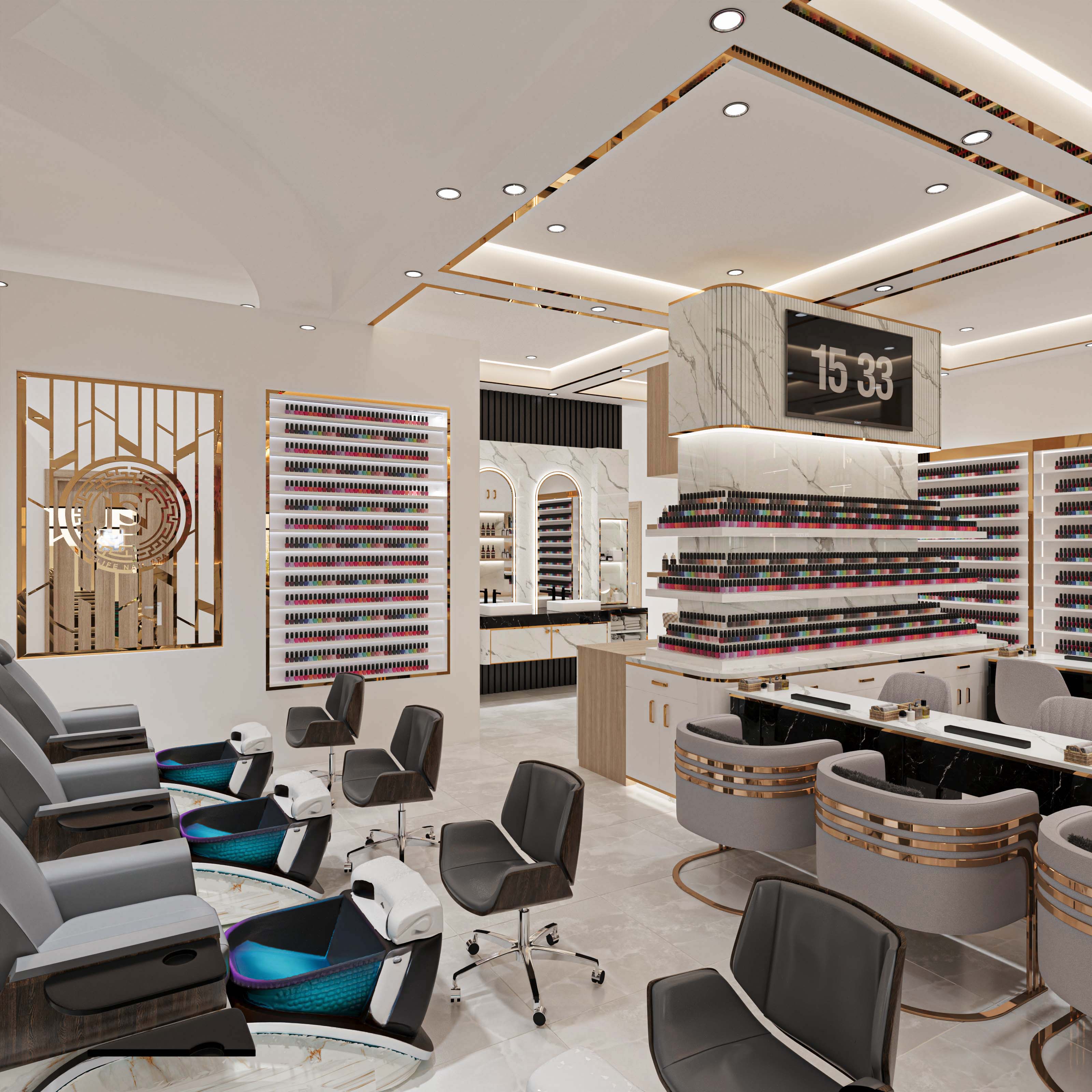
The first difference between a salon that reads as premium and one that reads as ordinary is not any single piece of furniture. It comes from coherence - when every element in the space belongs to the same design language, the visitor's brain processes the environment as high-end automatically.
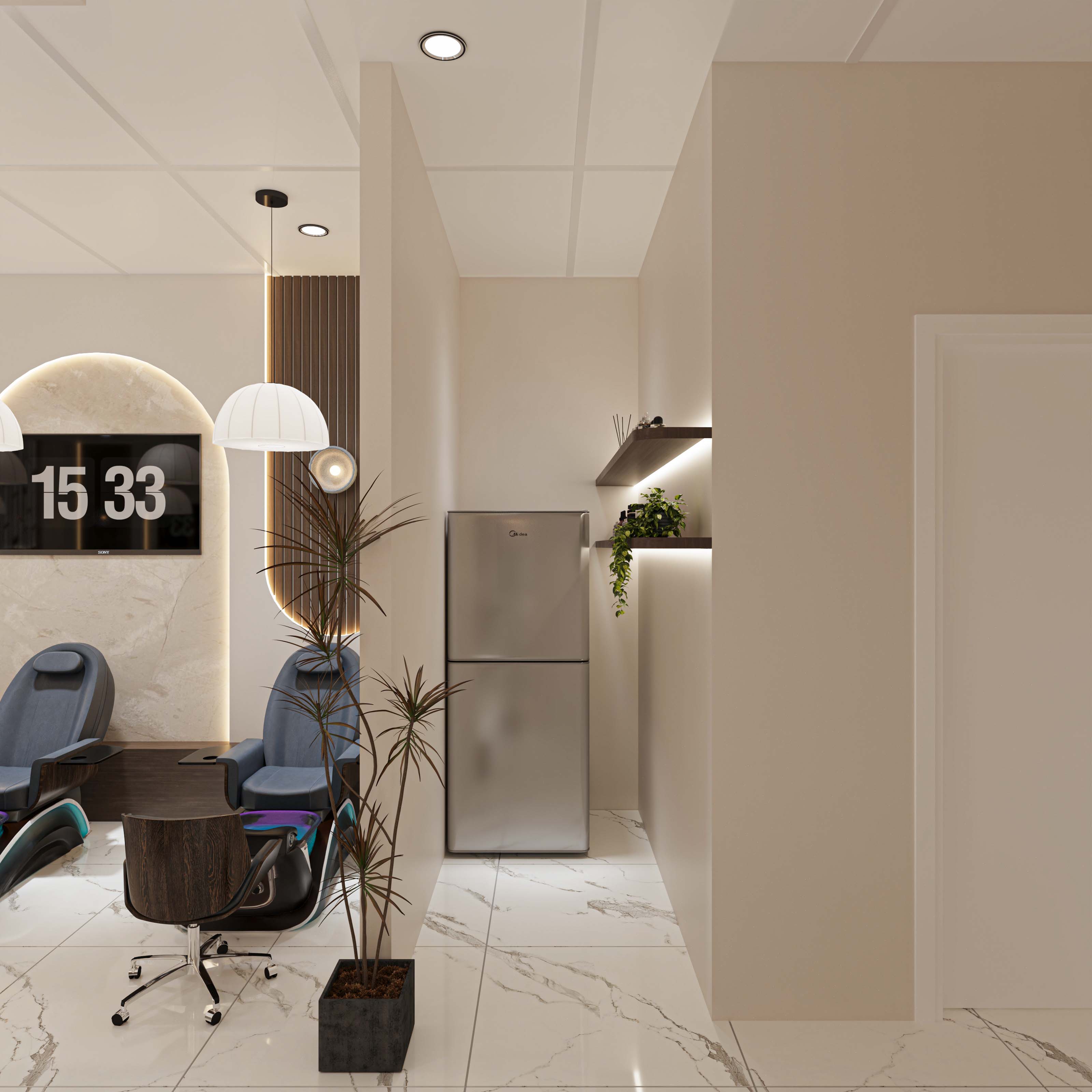
A marble nail station in a salon with yellow walls, dark flooring, and mismatched black chairs does not create a luxury feel. It creates conflict. Luxury in nail salon design emerges when every choice - wall color, flooring material, lighting temperature, chair tone, polish display organization points toward the same aesthetic result.
Materials: Invest in the Right Spots, Not Everywhere
A high-end nail salon in the US does not need every piece of furniture to be premium grade. Clients look at certain surfaces more than others and those are the places where material quality pays off.
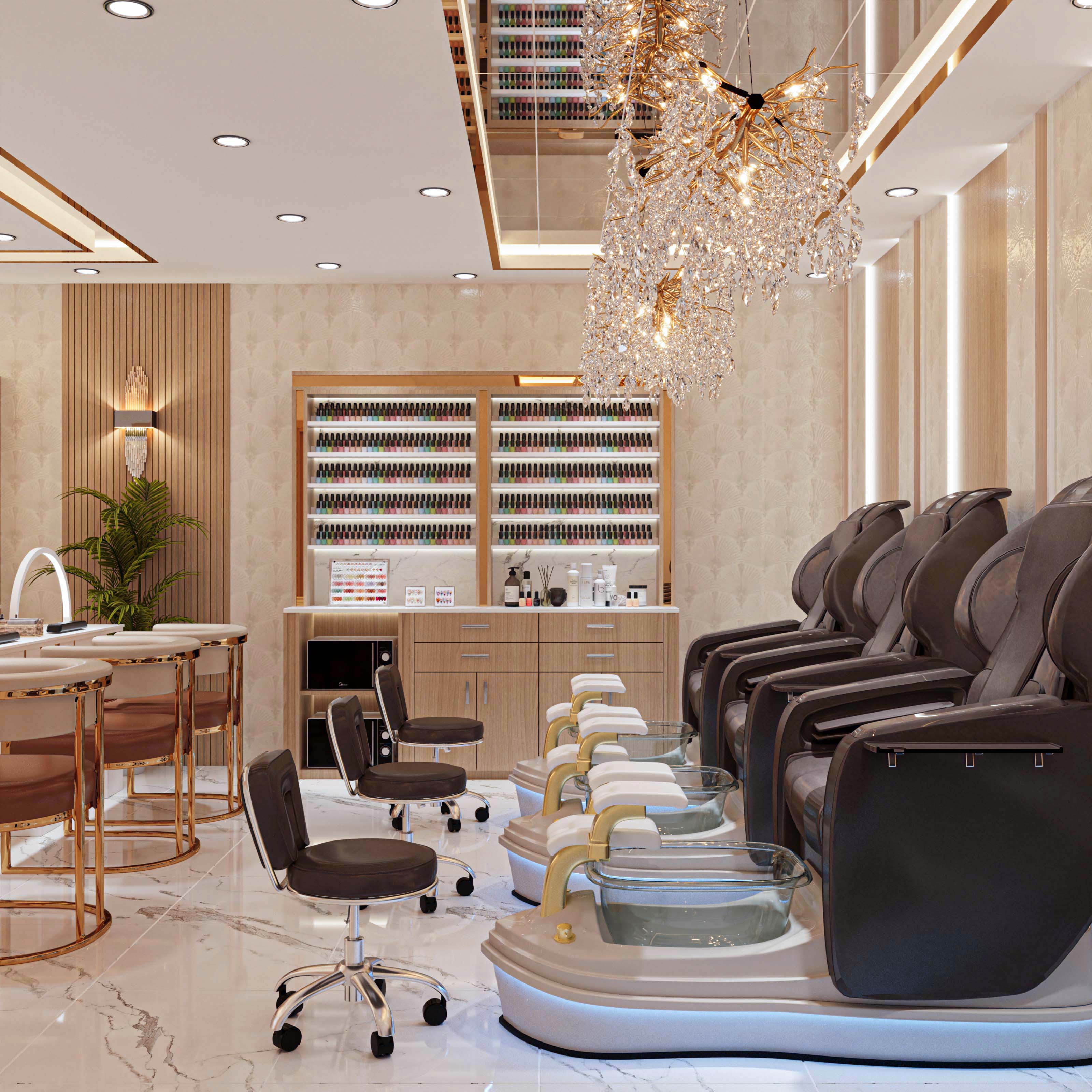
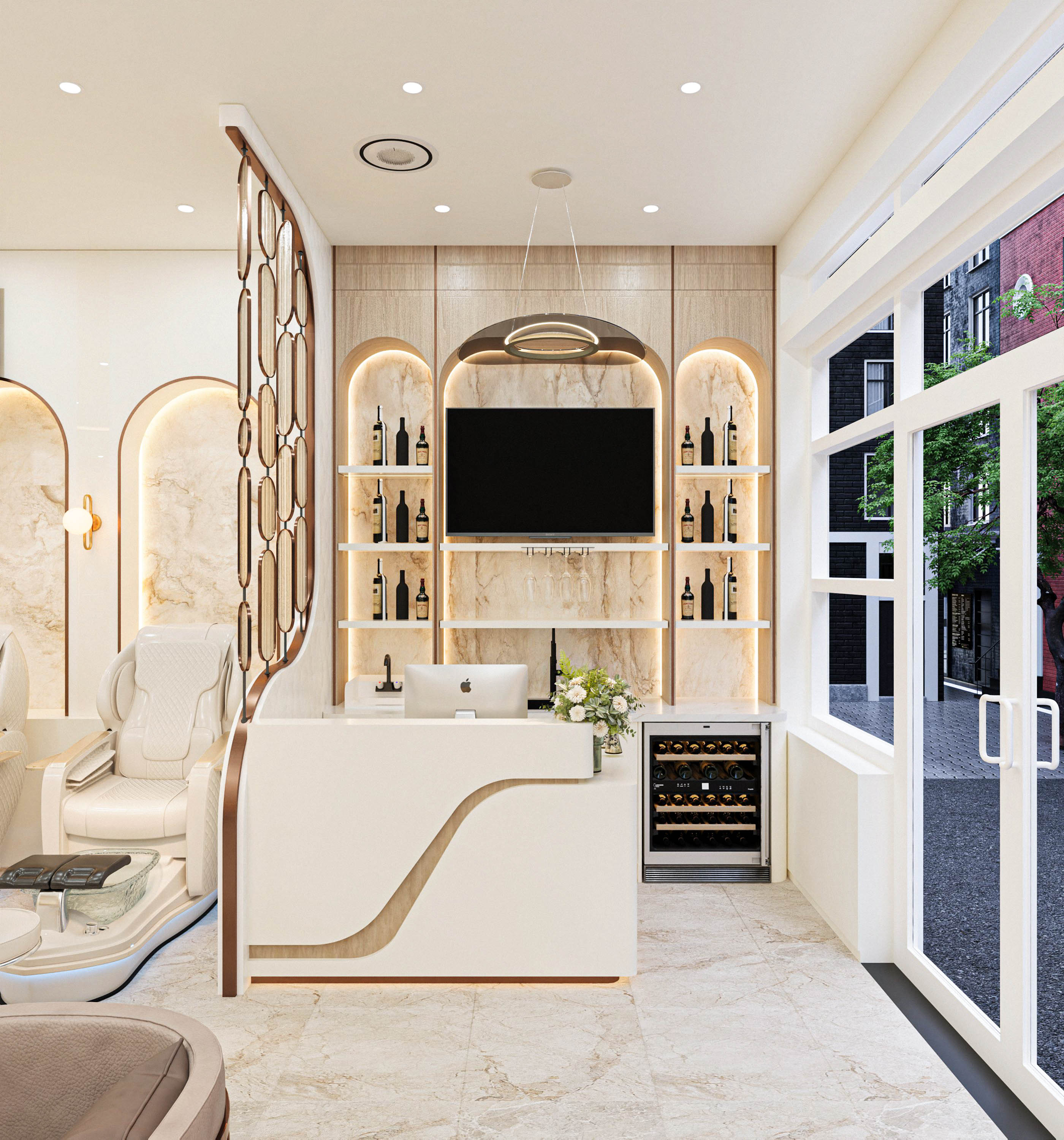
The nail station surface and reception counter are the two surfaces clients look directly at and come into physical contact with most. Sintered stone (porcelain slab) or high-quality solid surface at these points creates more perceived luxury than any expensive chair in the room. Marble-look sintered stone is currently the most common material choice in luxury nail salon design in the US - chemical-resistant, non-yellowing, and visually consistent over time.
The floor is the largest surface in the client's field of vision. Light wood vinyl plank or neutral stone-look tile does not need to be the most expensive option available - it needs to be visually clean, properly installed, and consistent with the overall palette.
Walls and ceiling - materials do not need to be expensive here. They need to be clean, correctly painted, and free of anything that creates visual noise: no posters, no mismatched artwork, no accumulated clutter that breaks the spatial language.
Lighting: The Most Underestimated Element in Luxury Nail Salon Design
Lighting is the element most often cut from the budget and the element most responsible for destroying a luxury impression when done incorrectly.
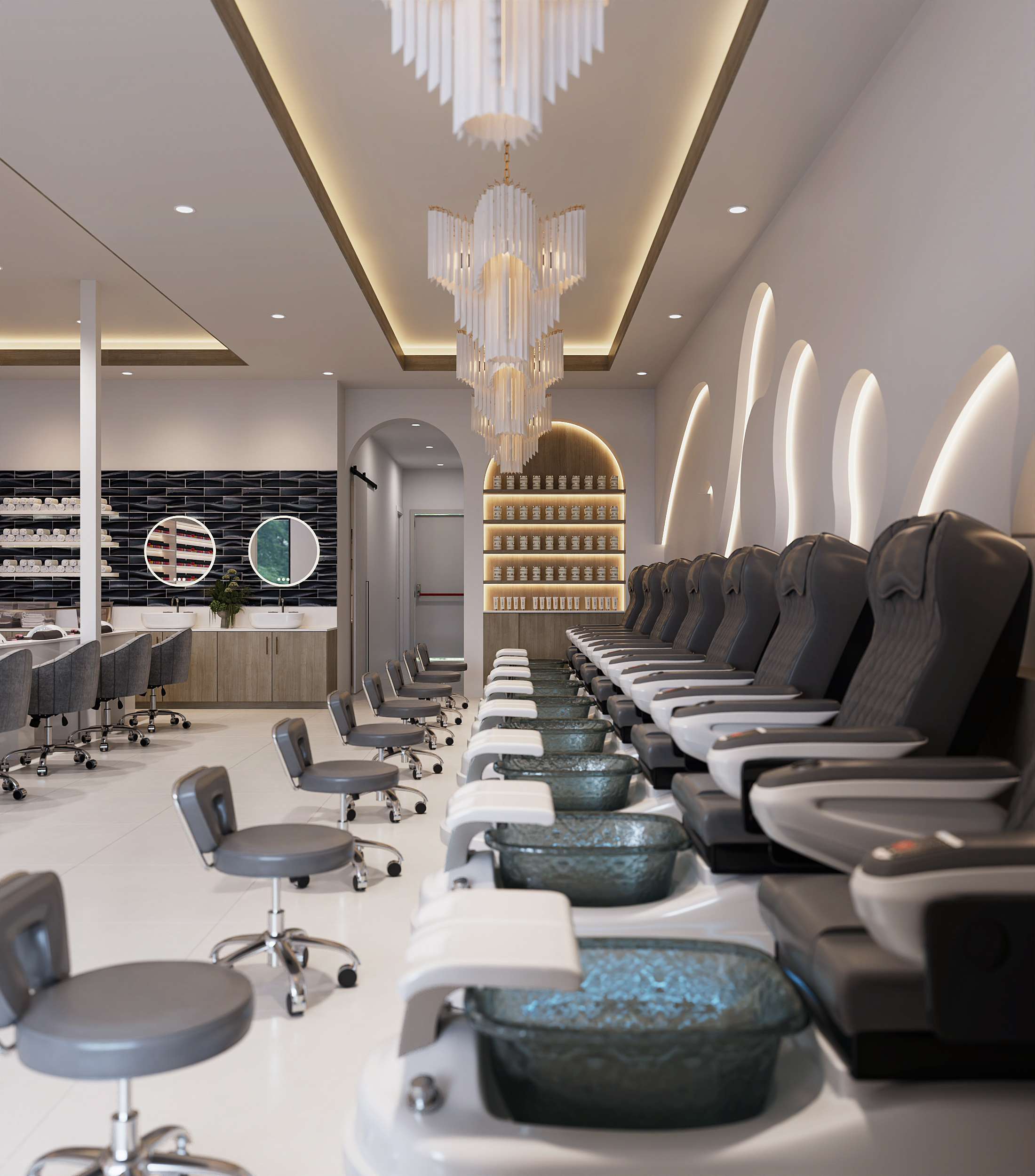
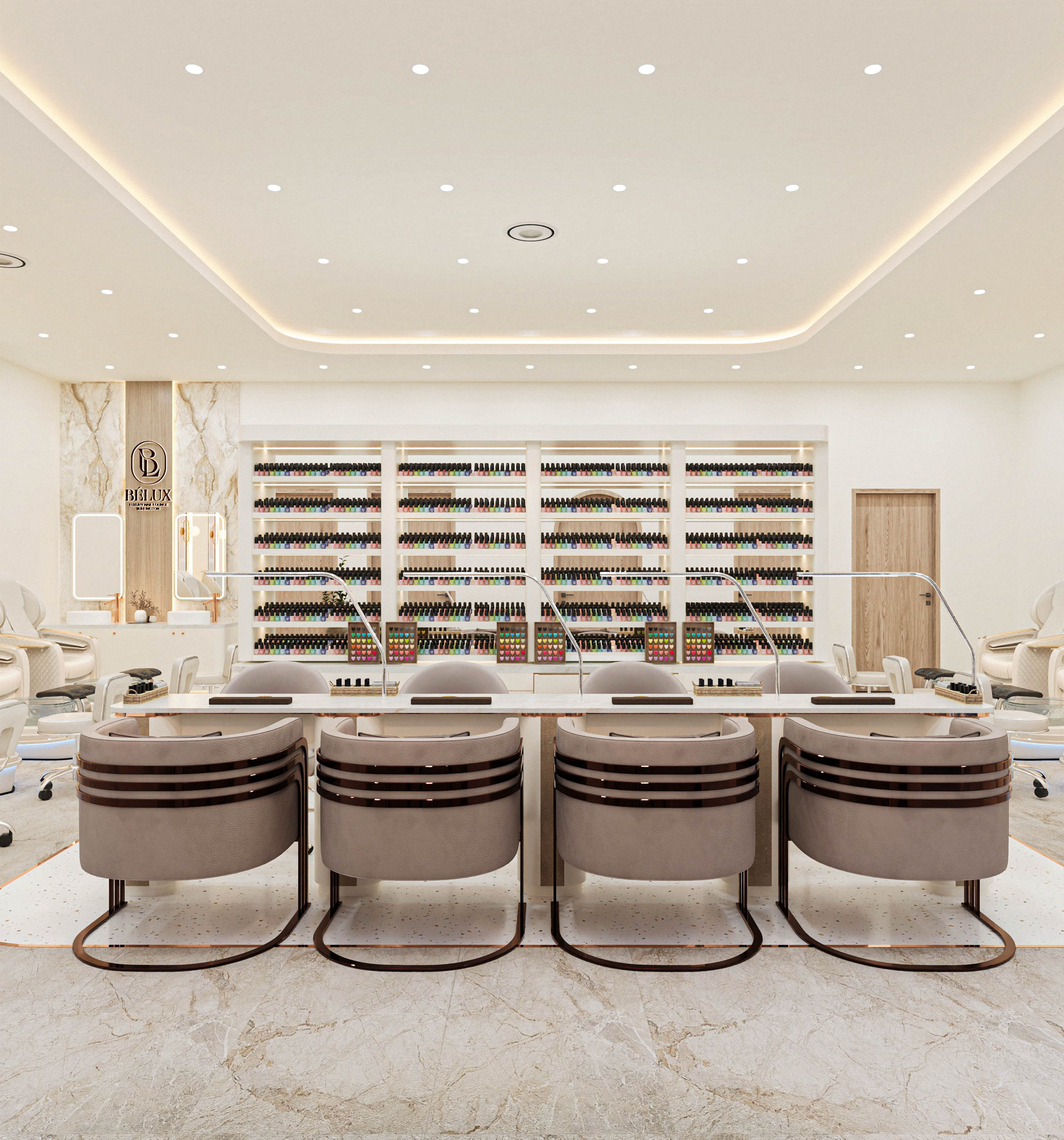
Cold fluorescent white light (above 4,000K) turns any space into a clinic, regardless of how expensive the furniture beneath it is. High-end nail salons in the US use warm lighting at 2,700–3,000K, distributed across multiple small sources rather than a few dominant fixtures. The result is diffused light with no hard shadows - the single most recognizable visual characteristic of a premium space.
The reason lighting affects perceived luxury more deeply than almost any other element: warm light triggers a physiological comfort response. Clients under warm salon lighting don't just perceive the space as more beautiful - they feel more cared for. This is why high-end spas invest in lighting more heavily than most other design elements.
Designed Empty Space
A luxury nail salon in the US is not the salon with the most beautiful things. It is the salon that has removed the most.
A clear reception counter no menus taped to the surface, no retail products stacked in visible disarray, no personal items left out by technicians. Clean nail station surfaces between clients. Walls that hold only what is deliberate — no overcrowded display areas, no unrelated frames or decorations competing for attention.
Empty space in luxury nail salon design is not a sign of incompleteness. It is an intentional signal: this salon is confident enough not to fill every surface. That confidence is one of the most reliable visual markers of a premium space, and it costs nothing to achieve once the design decision is made.
Details That Build Brand Recognition
A luxury nail salon in the US is remembered not only for looking beautiful but for having something distinct. A well-designed logo wall, a polish display organized by color gradient, or a photo corner planned deliberately in the design process all become details clients remember and share to social media.
Every time a client posts a photo from inside the salon, the brand appears on the feeds of people who don't yet know the salon exists - with no advertising cost. Luxury nail salons generate this through design, not by asking clients to share. The space does the work.
See how Spencil approaches the full design process from concept through construction at nail salon 3D design service and nail salon complete interior package.
FAQ
How much does luxury nail salon design cost in the US?
There is no fixed threshold. A cosmetic refresh that achieves a luxury feel - correct paint color, warm lighting, cleared surfaces - can be done for $15,000–$30,000. A full redesign with custom furniture and premium materials typically starts from $80,000. More important than total budget is allocation: lighting and nail station surfaces drive perceived luxury more than any other single line item.
Which design style creates the best luxury feel for US nail salons?
Korean minimalist warm tone is the strongest match for the current US market - it achieves a luxury feel without a luxury budget, photographs well, and holds up visually over time. Dark luxury (deep walls, rich wood, warm gold lighting) also creates a clear high-end impression but requires the entire space to be executed with full consistency. For a full style comparison, see nail salon design ideas for the US market.
What is the most common mistake in luxury nail salon design?
Investing in a few expensive individual pieces while neglecting overall coherence. A $4,000 pedicure chair under cold white lighting in an inconsistently designed space does not look more premium than a $1,500 chair in a well-designed room. The second most common mistake: filling every surface out of fear of empty space. Luxury design requires deliberately designed emptiness.
Does a luxury nail salon need a large square footage?
No. Luxury feel comes from correct furniture proportions, right materials, and proper lighting - not from floor area. A well-designed 600 sqft salon reads more premium than a 1,500 sqft salon with poor execution. The critical rule for small luxury salons: nail stations and chairs must be proportionally sized so walkway clearance is maintained at every point.
Is real marble necessary for a high-end nail salon?
No. Marble-look sintered stone or quality solid surface creates the same visual impression without the drawbacks of real marble: real marble is heavier, more expensive, and vulnerable to chemical staining from nail products if the surface sealing is not maintained. Sintered stone is non-porous, fully chemical-resistant, and visually indistinguishable from real marble in a finished salon environment.
Conclusion
Luxury nail salon design in the US is a decision problem, not a budget problem. Warm lighting, chemical-resistant materials at the surfaces clients see most, intentional empty space, and at least one detail that builds brand recognition: these four elements can be achieved across a wide range of budgets.
The most practical next step is seeing the real result before committing to construction. A 3D design lets you evaluate every element - wall tone, lighting, furniture layout - before any build cost is locked in.
📞 888-995-0058
📍 535 Mission St, San Francisco, CA 94105
🌐 spencil.co
📩 facebook.com/spencilco

Hien Tran is a Content Researcher at Spencil, collaborating closely with designers and business owners on nail salon, spa, coffee, and retail projects throughout the United States. Her work is grounded in real project experience, market trends, and industry best practices, providing business owners with practical insights to enhance customer experience, optimize space planning, and maximize investment value.