Nail Salon Design Trends in the US for 2026
Nail salon design trends 2026 in the US are not a sharp break from last year - they're a deeper commitment to what has already proven to work. Clients are choosing salons visually before they choose by price, and design has become a real competitive factor. Here are the five trends defining the US market in 2026.
1. Korean Minimalist Continues to Lead and Is Getting Warmer
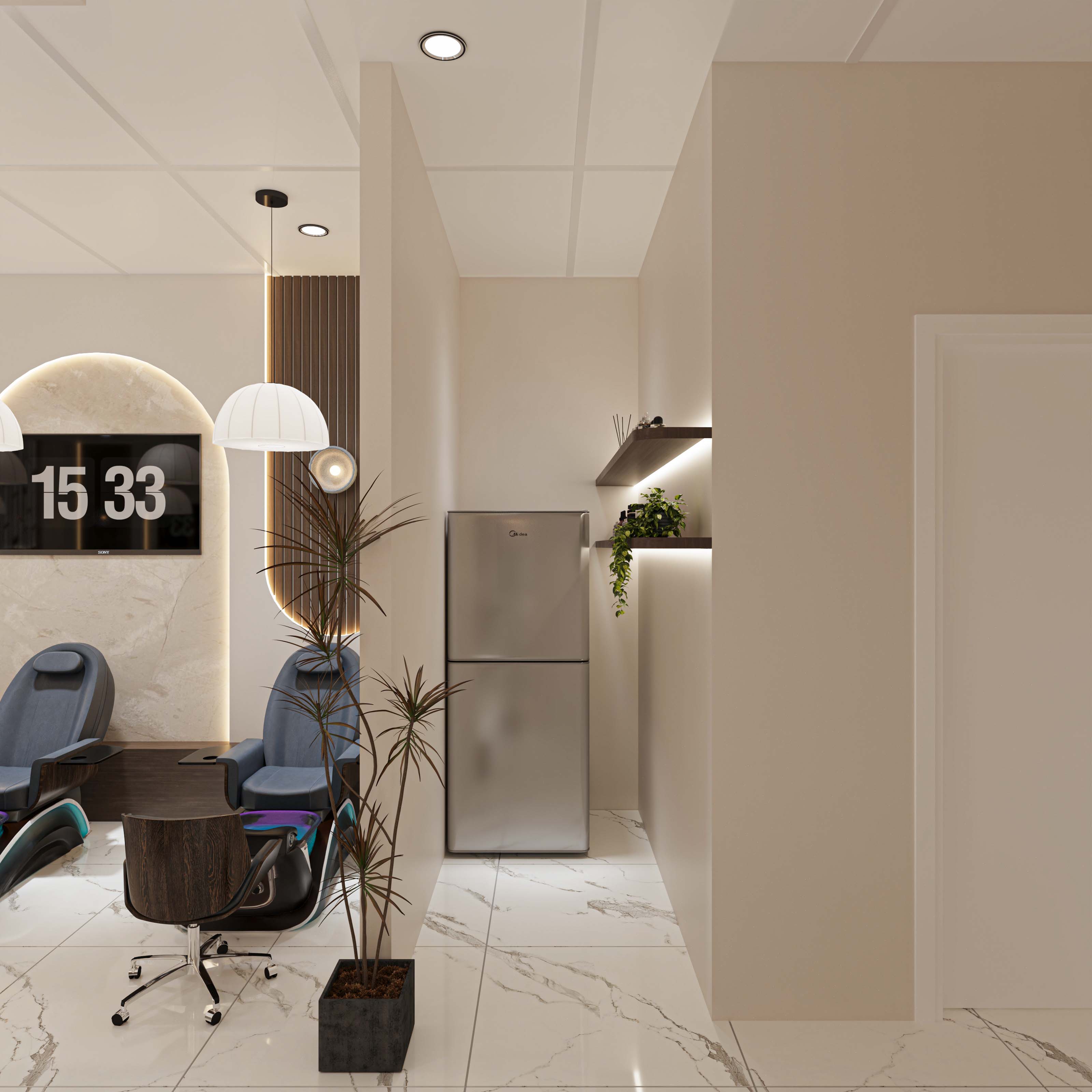
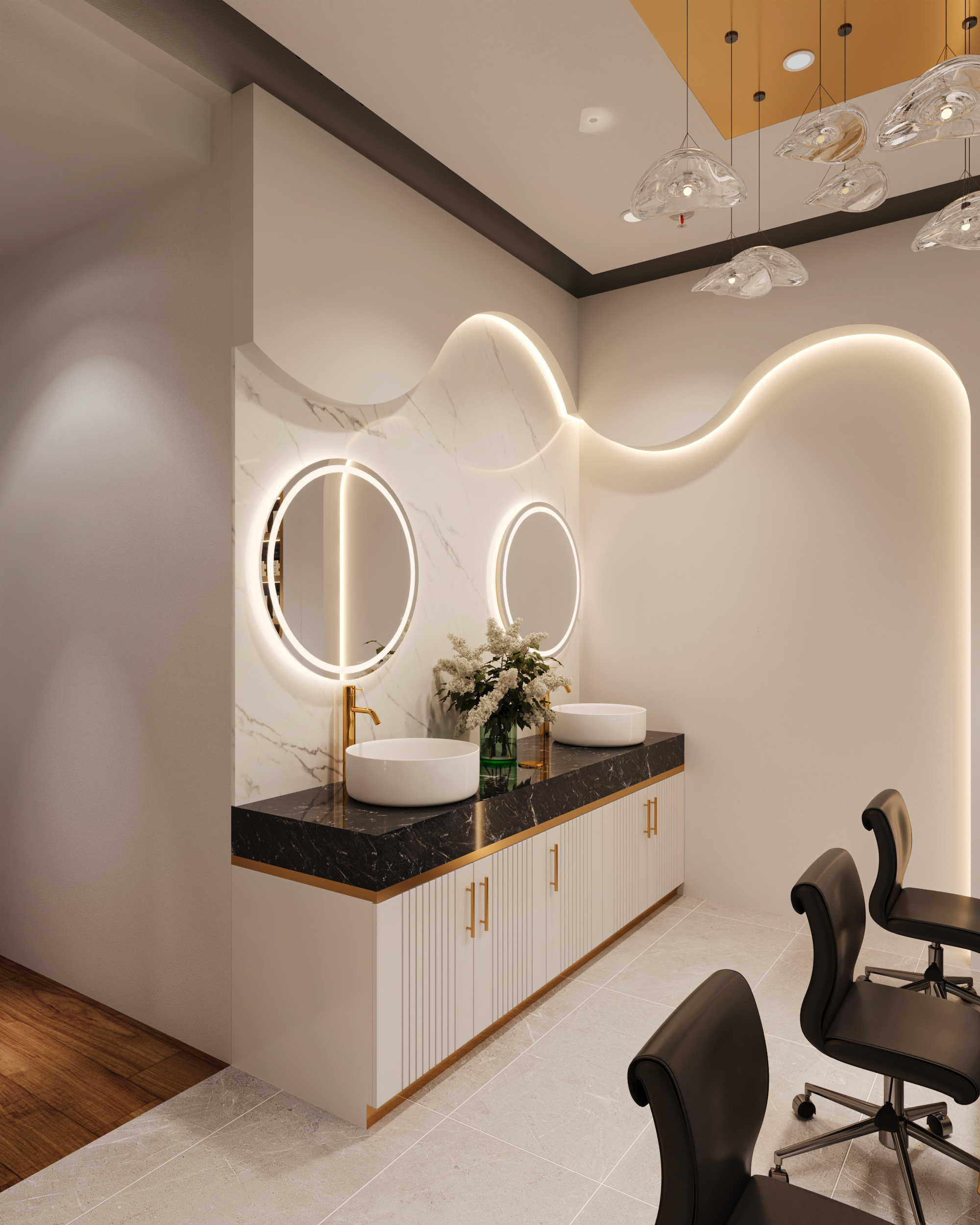
Korean minimalist is no longer a new trend - it has become the reference point that most new nail salons in the US are building toward. The shift in 2026 is a warmer palette: cream and warm white replacing stark white, light earth tones (dusty terracotta, warm sand) appearing more frequently as accent colors.
Salons executing this well are not simply painting walls white and placing a few plants. They control every variable - lighting color temperature, nail station surface material, how the polish display is organized — to produce a space that reads consistently from entry to the pedicure area.
2. Biophilic Design: Nature That's Calculated, Not Decorative
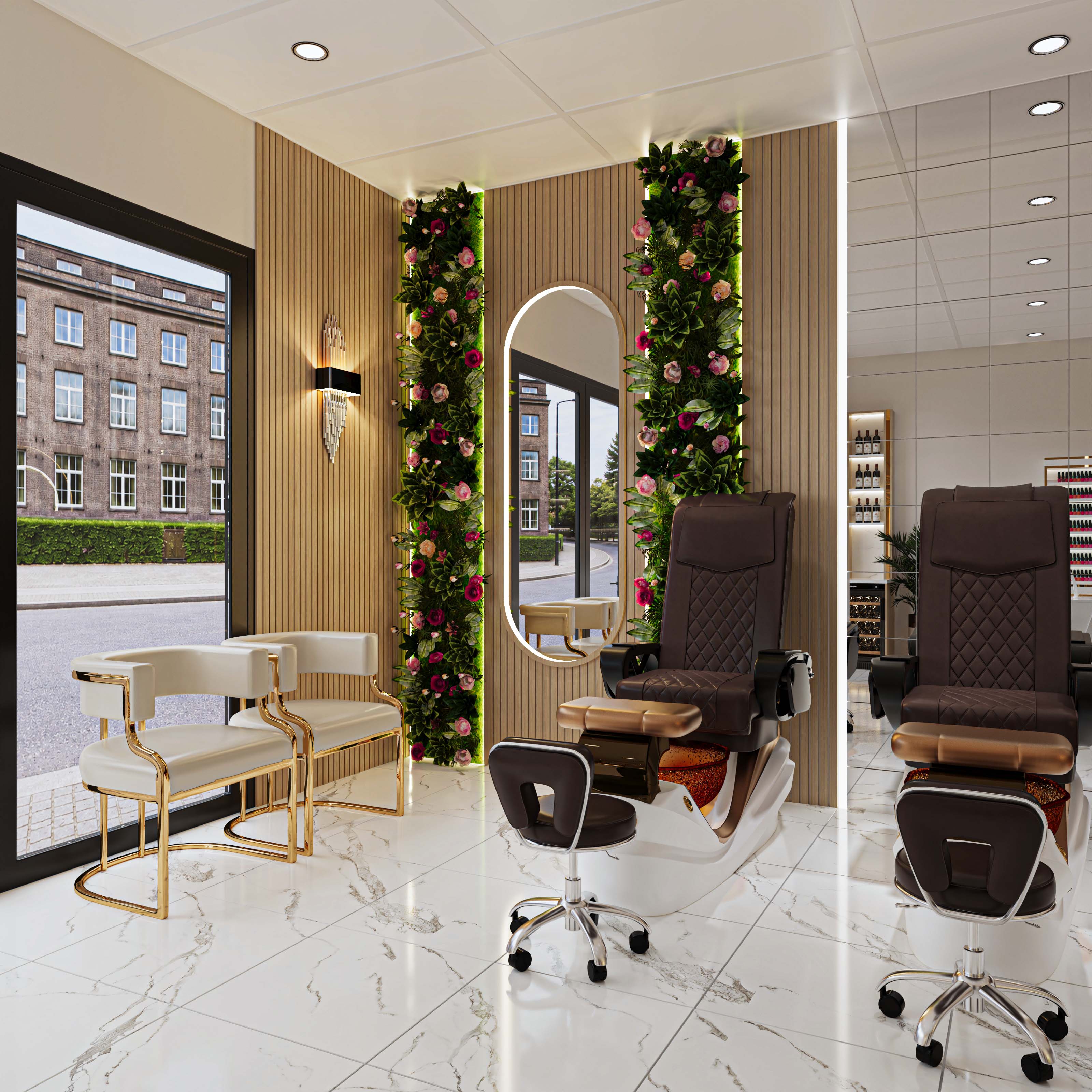
Plants in nail salons are not new. What's different in 2026 is how they're used: placed deliberately rather than scattered throughout. One larger plant at reception, one mid-size green element in the station area - enough to create focal points and a sense of life without making the space feel cluttered.
Natural materials are also expanding beyond light wood. Subtle stone texture, rattan, linen, and boucle fabric are appearing more frequently as small details that add depth without introducing additional color.
3. Warm Lighting Replacing Cold White Completely
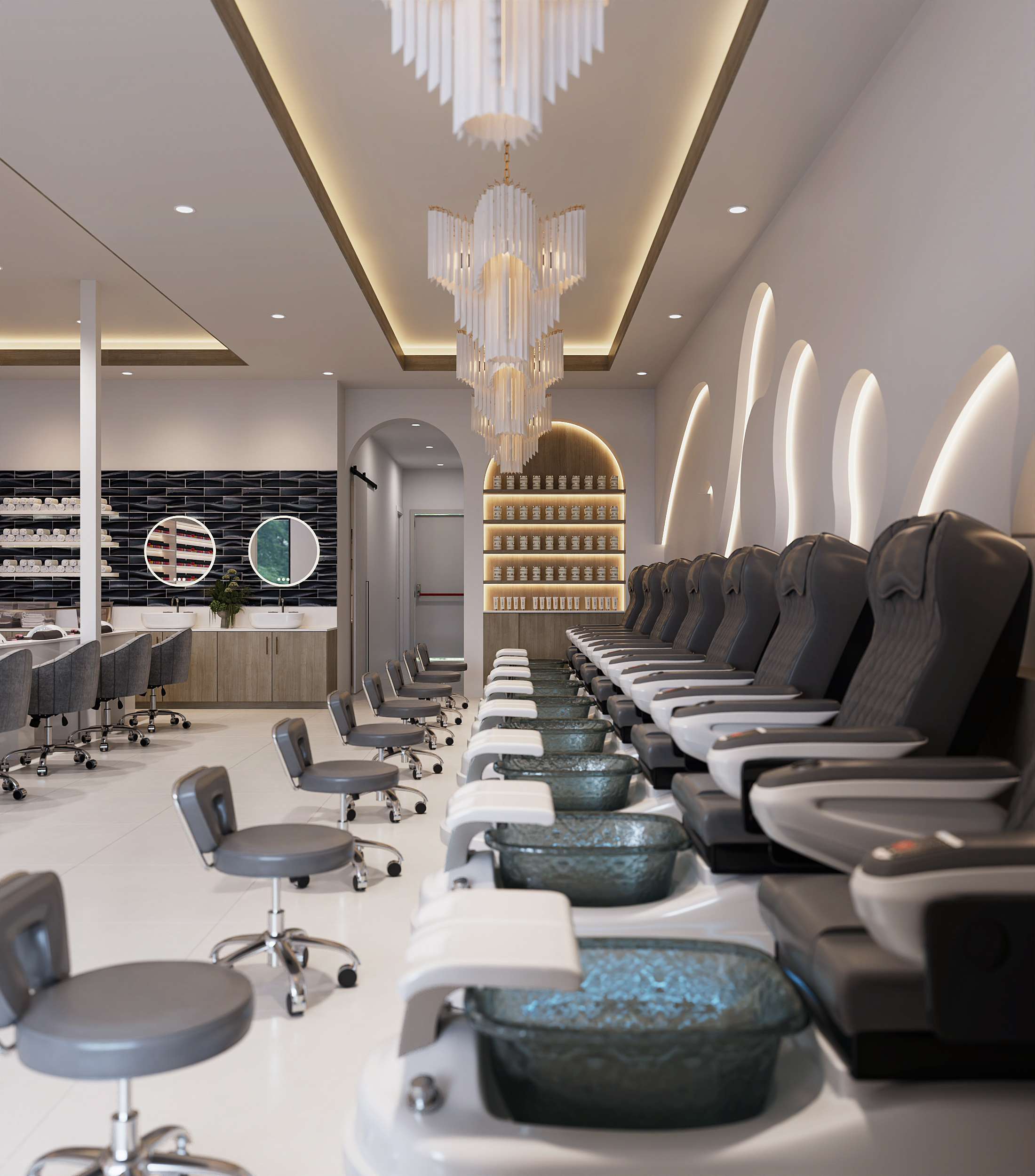
This is likely the single change with the biggest impact on how clients experience the space. Cold white lighting (above 4,000K) is being removed from most new salon designs - not only for aesthetic reasons, but because it distorts nail color accuracy when clients choose shades and creates a clinical feel rather than a care environment.
The 2,700–3,000K range, distributed across multiple small sources instead of a few dominant fixtures, is the standard in 2026 nail salon design. Diffused, even light - no dark corners, no harsh shadows.
4. Details That Build Brand Recognition
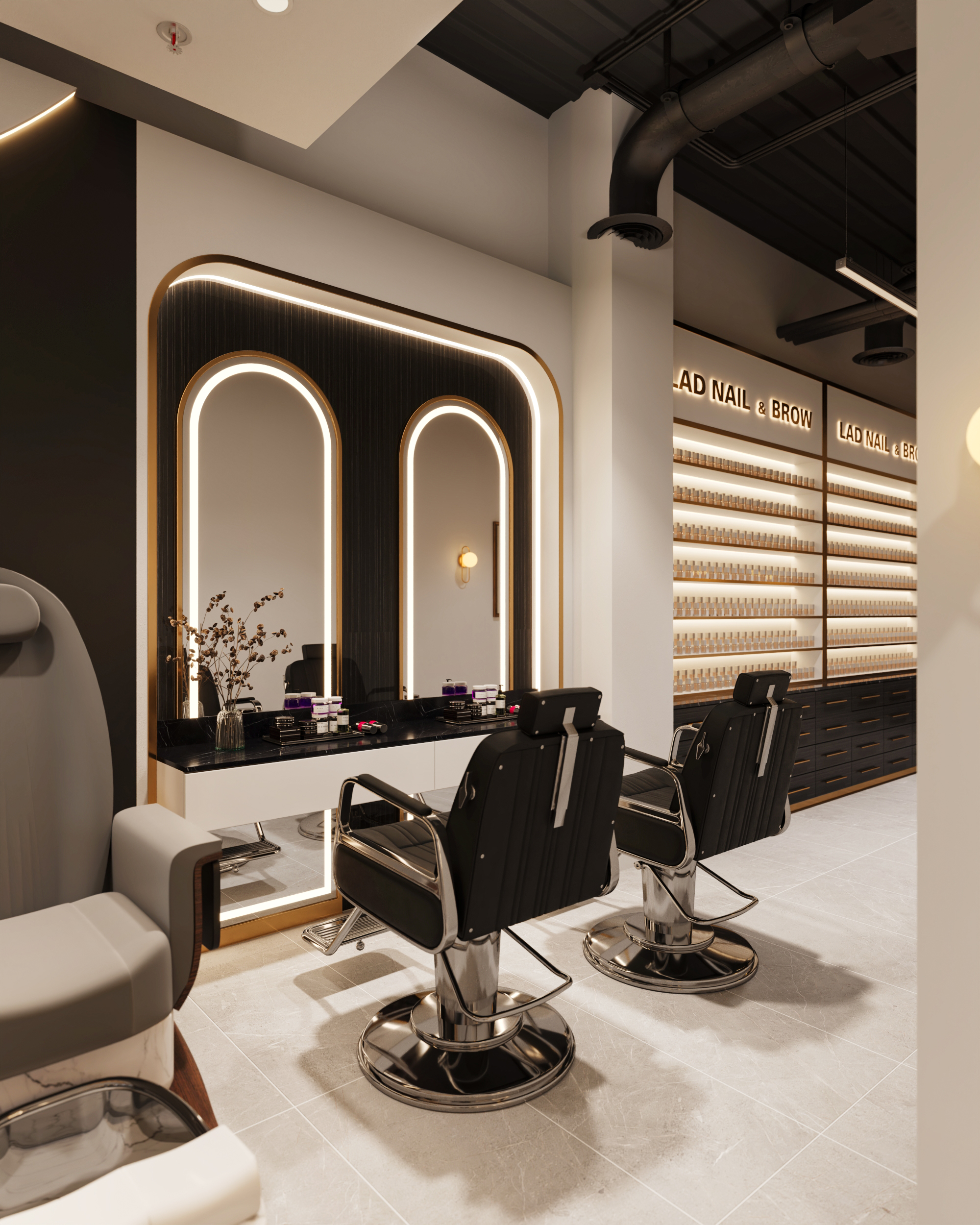
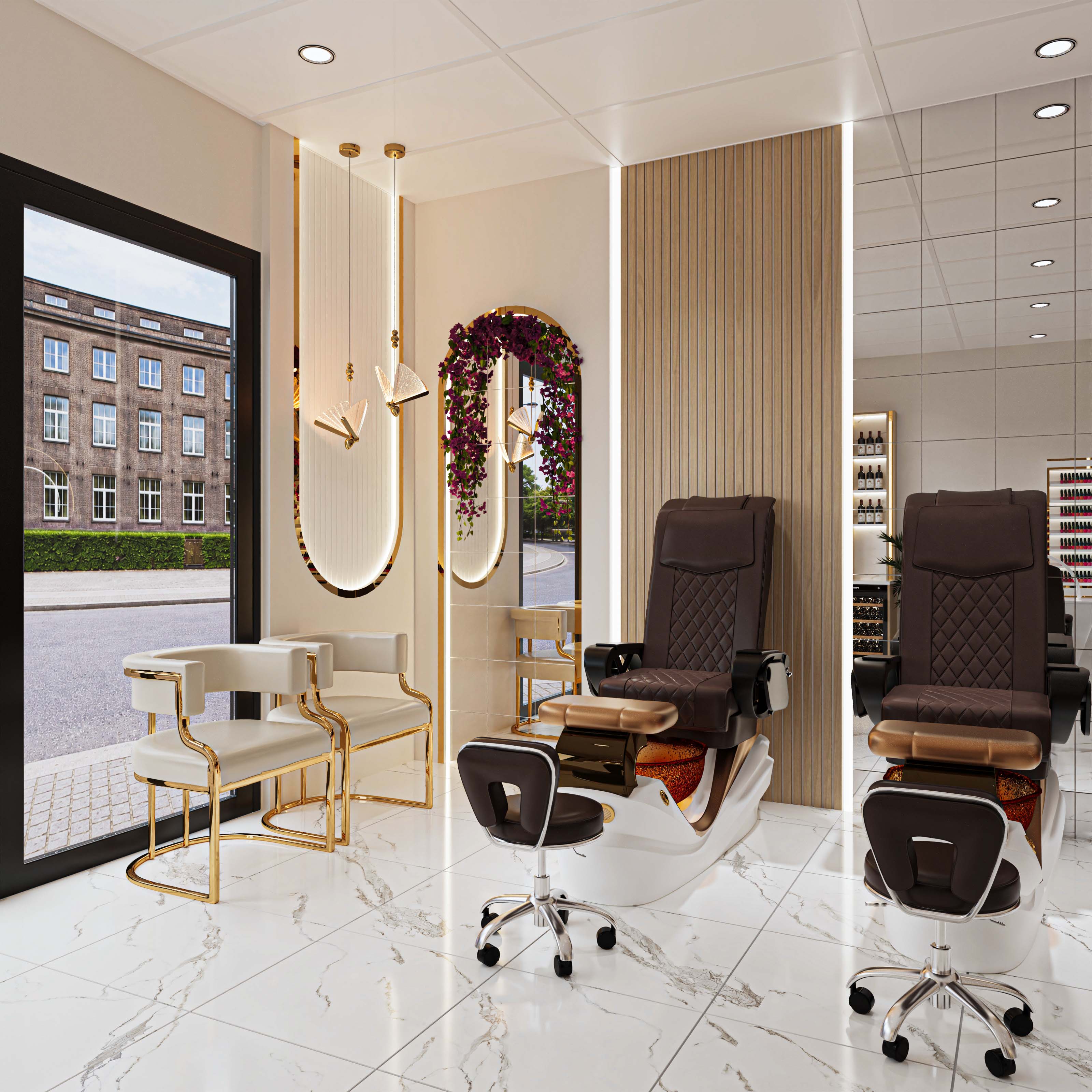
In 2026, a nail salon that simply looks clean and tidy is no longer enough. Salons that retain clients and generate organic marketing all have at least one element that makes the space recognizable: a well-designed logo wall, a nail polish display organized by color gradient, or a photo corner planned deliberately in the design drawings.
Clients photographing themselves in the salon and posting to social media is not accidental - it's the result of intentional design. Each client post reaches their followers without any additional advertising spend.
5. Luxury Feel Without a Luxury Budget
The clearest visible trend in the 2026 US market: nail salons are "spa-ifying" without spa-level budgets. Clients want to be cared for in a space that looks and feels premium and they don't need to pay premium prices if the design delivers that feeling.
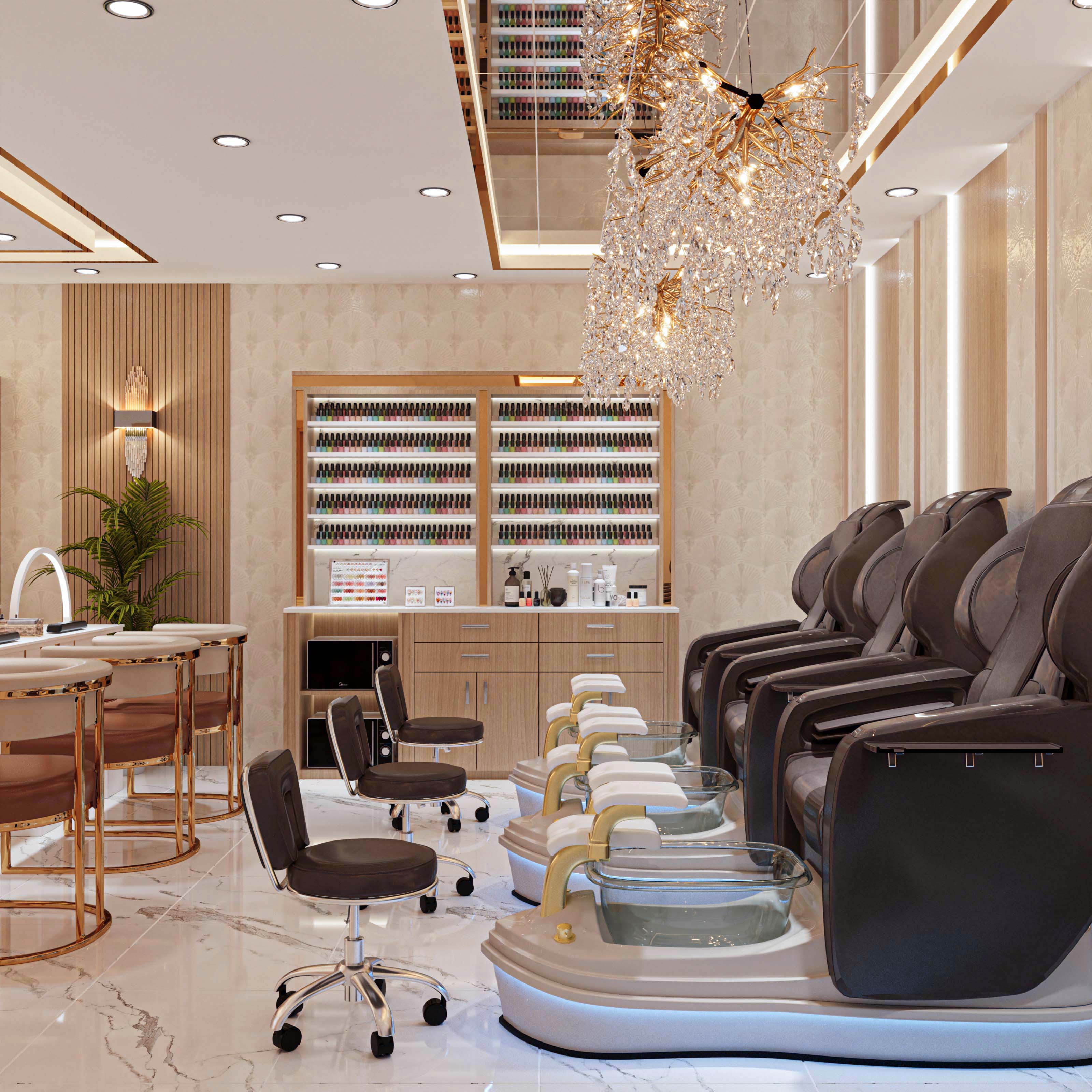
The elements that create a luxury feel at a reasonable cost: marble-look nail station surfaces, neutral-tone pedicure chairs instead of dark colors, light wood vinyl plank flooring, and a properly warm lighting system. Custom furniture and imported materials are not required to achieve this - consistency across every design choice is.
FAQ
Which 2026 trend works best for a small nail salon under 700 sqft?
Korean minimalist is the strongest functional choice for small spaces - a light palette reflects more light, proportionally scaled furniture doesn't consume unnecessary floor area, and minimal decor makes the space read larger than it is. Biophilic design also works well in small salons when limited to 1–2 deliberate plant placements rather than distributed throughout.
Does following 2026 trends require a full salon renovation?
Not necessarily. The two changes with the biggest impact and lowest cost: replacing the lighting system with 2,700–3,000K fixtures and repainting walls with a warm palette. These two steps alone significantly change how the space feels without touching any furniture. The next step - reorganizing the nail polish display by color gradient - costs nothing at all.
Does achieving a luxury feel in 2026 mean spending more?
No. Luxury feel comes from consistency, not from material price. A salon with a $400 marble-look nail station surface, light wood vinyl plank flooring, and a properly installed warm lighting system reads more premium than a salon that invested in expensive pedicure chairs but ignored lighting and painted the walls the wrong tone.
Conclusion
In 2026, nail salon design in the US is converging toward one direction: spaces with less in them, more purpose behind each element, and an atmosphere that signals care from the moment a client walks in. Salons winning on design are not spending more - they're making sure every decision in the space has a reason.
If you're considering designing or renovating your nail salon and want to see the real result before committing to construction, Spencil handles the full process from concept through completed space.
📞 888-995-0058
📍 535 Mission St, San Francisco, CA 94105
🌐 spencil.co
📩 facebook.com/spencilco

Hien Tran is a Content Researcher at Spencil, collaborating closely with designers and business owners on nail salon, spa, coffee, and retail projects throughout the United States. Her work is grounded in real project experience, market trends, and industry best practices, providing business owners with practical insights to enhance customer experience, optimize space planning, and maximize investment value.