Nail Salon Startup Costs US 2026: Complete Breakdown
How much does it cost to open a nail salon in the US? The answer depends on square footage, state, and build-out scope - but every cost can be broken into clear categories for accurate planning.
This guide covers five main cost groups: lease, build-out, equipment, licenses and insurance, and initial operating capital. A summary table by salon size appears at the end.
1. Lease and Build-Out Costs
Commercial lease
Most US nail salons open in strip mall spaces. Lease rates vary significantly by state and location:
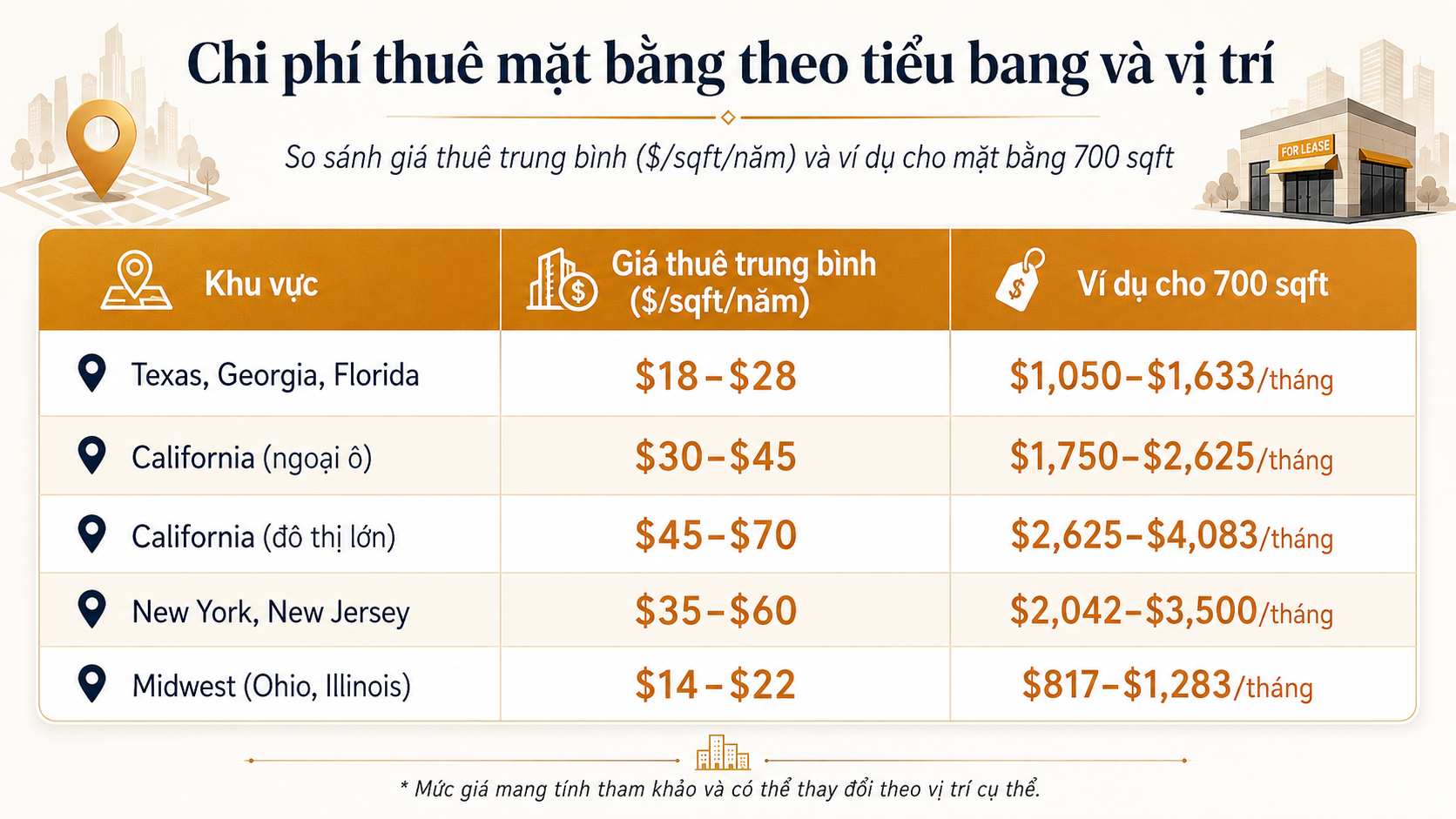
Most leases require a 2–3 month security deposit plus first month's rent upfront. Total upfront lease cost before opening is typically equivalent to 3–4 months' rent.
Build-out costs
Build-out is usually the largest and most variable cost in opening a nail salon:
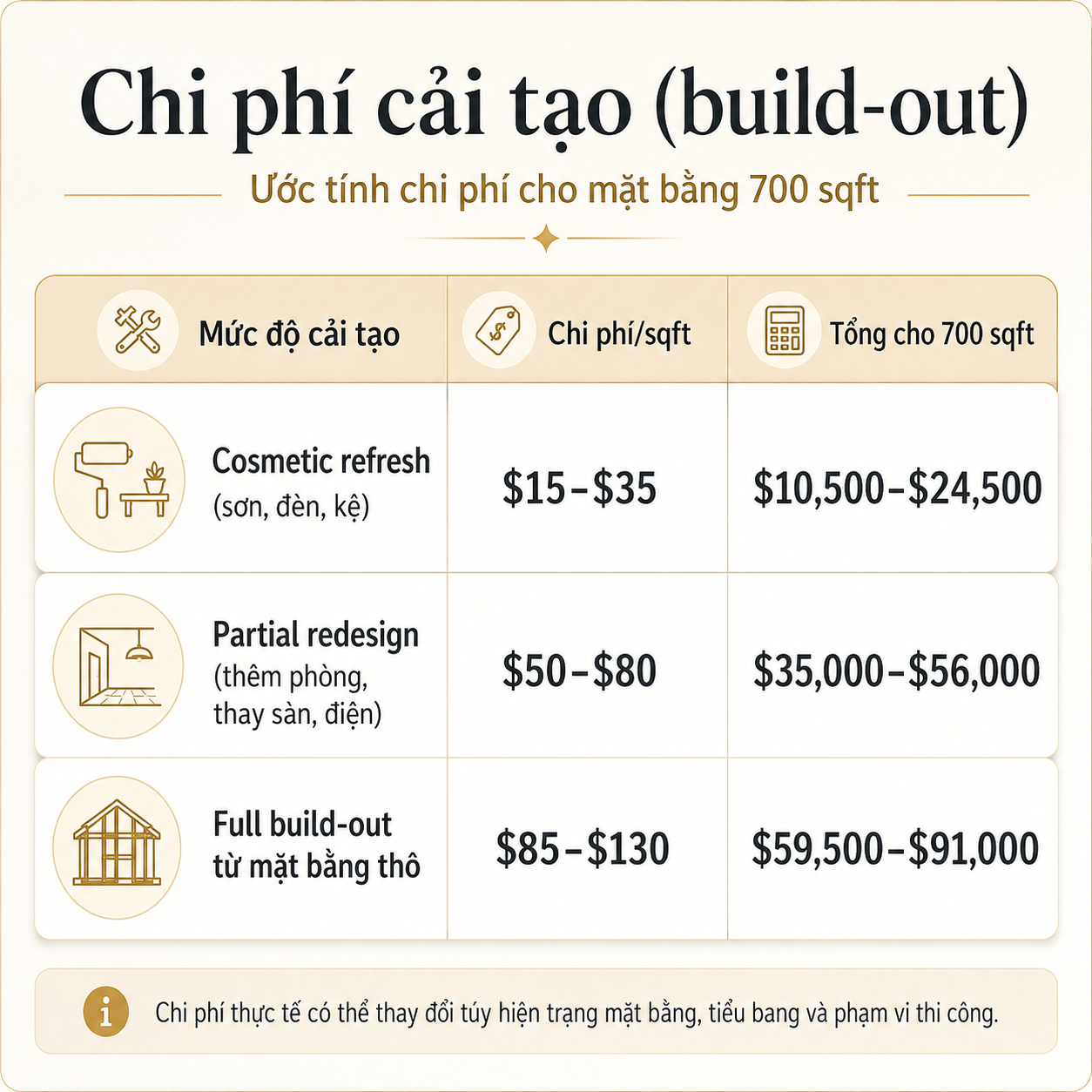
Shell space - bare concrete walls, basic electrical only, no completed plumbing or ventilation - is the starting point for most new nail salons in strip malls. Going from shell to a functioning salon typically lands at the high end of the ranges above.
Ventilation is non-negotiable in nail salon construction. A dedicated ventilation system for a nail salon runs $3,000–$10,000 depending on square footage and design. It is required by most health departments and directly affects the health of both technicians and clients.
2. Equipment and Furniture Costs
Nail stations
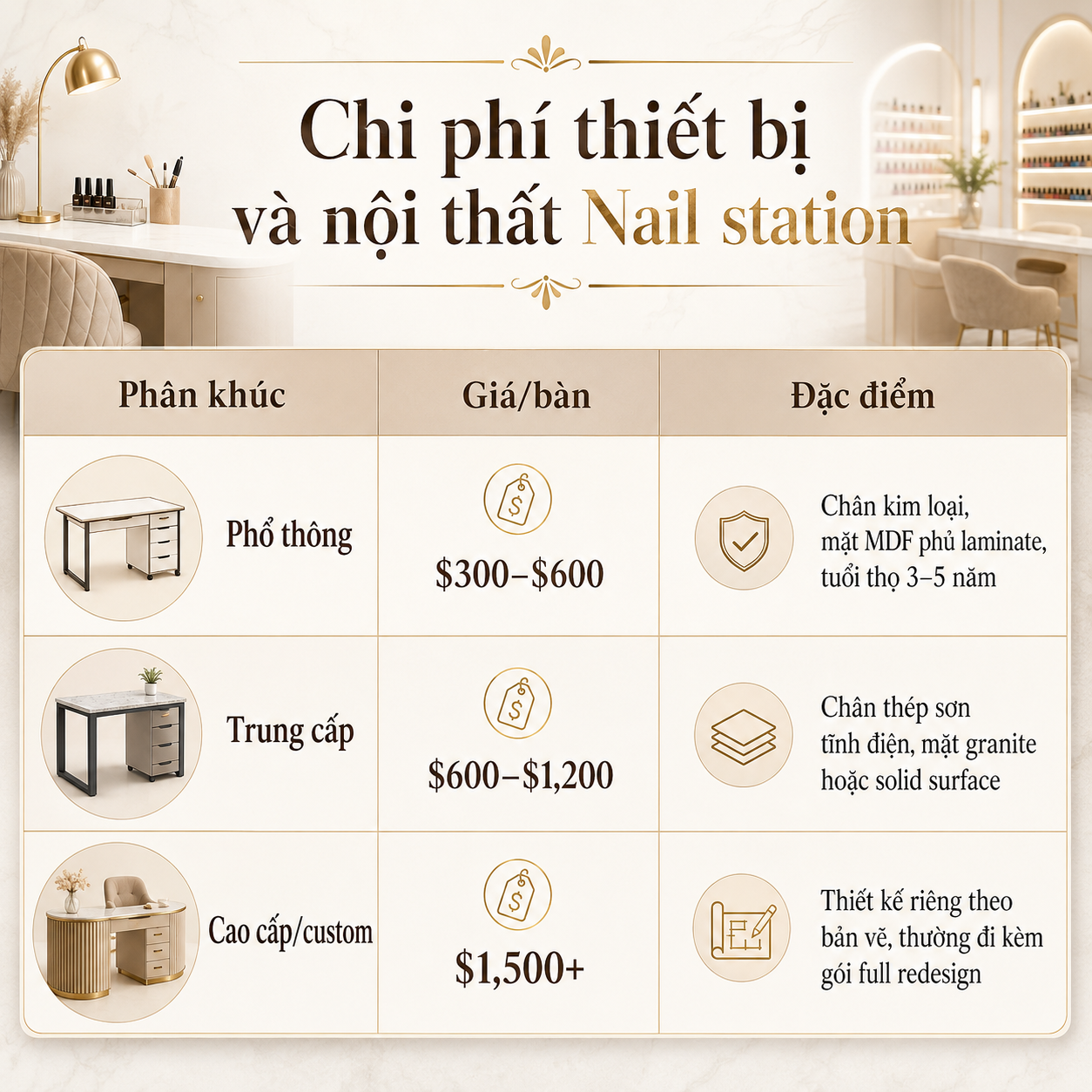
Pedicure chair
Practical note: Dark-colored chairs hide wear better but conflict with Korean minimalist design. Cream, light gray, or greige chairs are a middle ground - they maintain the aesthetic and conceal dirt better than pure white.

Other equipment
.png)
3. Licenses, Insurance, and Legal Fees
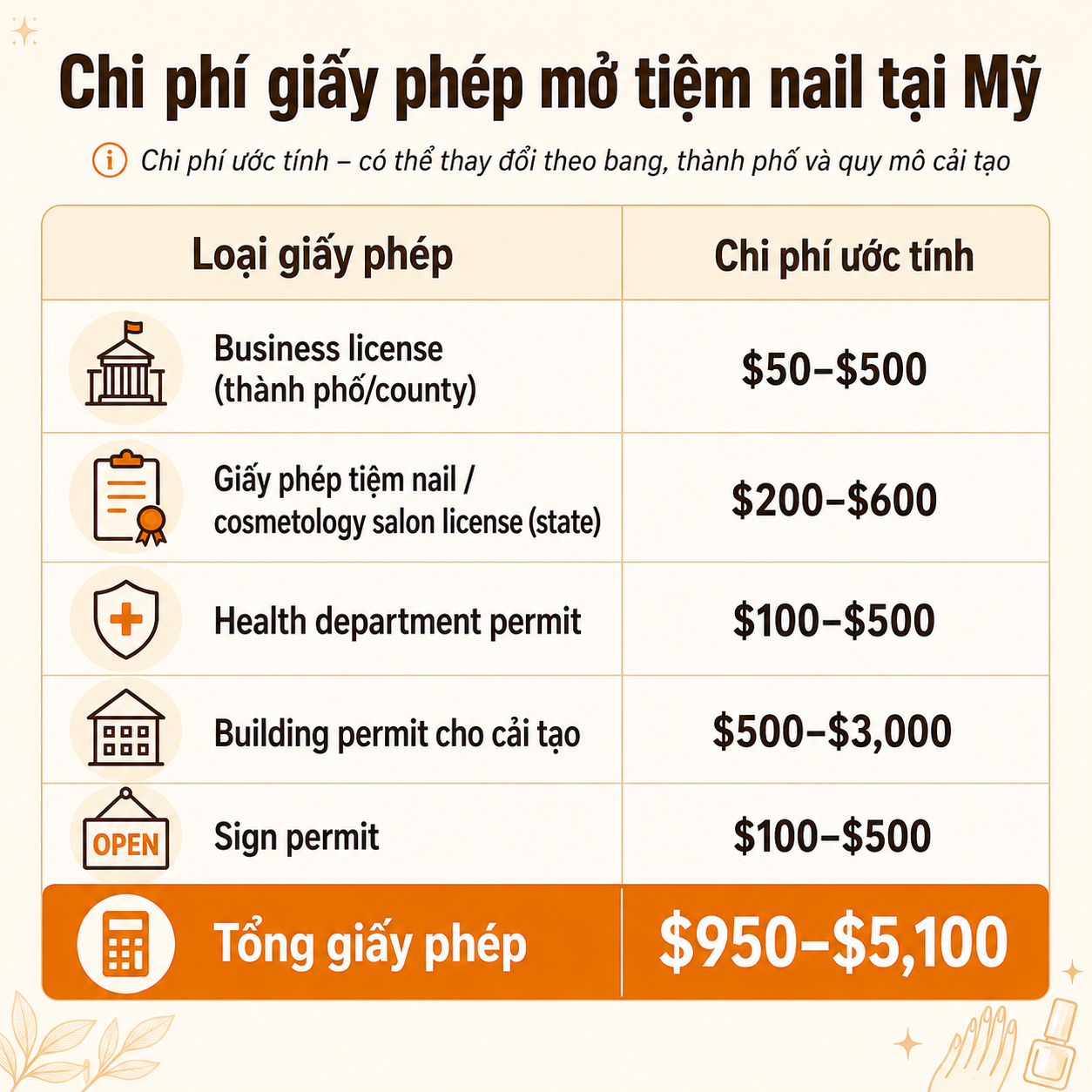
Nail salon licensing in the US is state-administered - there is no federal system. Costs and procedures vary significantly by state and county.
California, New York, and Texas have more complex licensing processes and require health and fire inspections before opening. Add 4–8 weeks for permits in these states when building your opening timeline.
Insurance

Most commercial leases require proof of general liability insurance before signing. Paying a real estate attorney to review the lease ($300–$800) regularly pays for itself by catching unfavorable clauses around renovation cost repayment or early termination conditions.
4. Operating Costs for the First 3 Months
Most new nail salons do not turn a profit in the first 3–6 months. Operating capital must be planned from the start - not treated as something to pull from revenue after opening.
Initial supply stock
The first inventory order covers nail polish, gel, acrylic, gloves, acetone, nail forms, bits, and daily-use consumables. For a 6–8 station salon: $4,000–$10,000 to stock 60–90 days without emergency reordering.
Payroll
Market wages for nail technicians in the US in 2026 range from $12–$22/hour depending on state, or 40–50% commission on services. For a salon running 4–5 technicians through the first 3 months before revenue stabilizes: budget $15,000–$30,000.
.png)
Many utility providers require a deposit of 1–2 months upfront for new commercial accounts.
Marketing
Exterior signage is not optional - salons without clear visible signage lose most of their natural foot traffic from the strip mall. Basic signage: $1,500–$4,000. Add interior photography, Google Business Profile setup, and Facebook/Instagram advertising for the first 3 months: $1,000–$3,000.
5. Cost Summary by Salon Size
California and New York typically run 20–35% above national averages. Texas, Georgia, and Florida typically run 10–20% below.
6. Hidden Costs Most Owners Overlook
ADA compliance: Nail salons are public accommodations and must meet ADA (Americans with Disabilities Act) requirements - including minimum 44-inch walkways and accessible restrooms. If the space is not already compliant, remediation costs add to the total build-out.
Contractor overruns: In commercial construction, 10–20% budget overruns are common, especially when structural or plumbing issues are discovered during construction. Keep a contingency fund of 10–15% of total build-out cost.
Permit wait time: Every week waiting on permits is a week still paying rent. Some major cities like Los Angeles can take 6–12 weeks to issue building permits. Build this buffer into the opening timeline from the start.
Equipment lead times: Some suppliers require 30–50% deposits at order and have 4–8 week lead times for custom-color pedicure chairs or bulk nail station orders. Equipment delivery dates need to align with construction completion — not assumed to be instant.
.png)
FAQ
What is the minimum capital needed to open a nail salon in the US?
A small 500–700 sqft salon with full build-out needs a minimum of $80,000–$120,000 in average US markets. This covers build-out, equipment, licenses, and 3-month operating capital. In California and New York, the realistic minimum is typically $120,000 or more.
Which costs can be reduced without significantly affecting quality?
A cosmetic refresh instead of full build-out works when the space already has solid infrastructure. Mid-range equipment instead of premium for nail stations and pedicure chairs is a sound trade-off. What not to cut: ventilation, chemical-resistant flooring, and adequate operating capital reserves.
Have nail salon startup costs increased in 2026 compared to prior years?
Yes, meaningfully. Commercial construction labor and materials are 15–25% higher than 2022–2023 levels. Rising minimum wages in multiple states have increased ongoing labor costs. Equipment costs from established suppliers have remained relatively stable, though subject to change based on tariff policy.
Should I take out a loan to open a nail salon?
SBA loans are the most common financing route - lower interest rates than commercial loans, longer repayment terms. The critical error to avoid: using the full loan for build-out and equipment without retaining operating capital for at least 3 months before revenue stabilizes.
Is a turnkey design and build package worth the premium over hiring contractors separately?
Hiring contractors separately costs less on paper but requires the owner to manage the full process, coordinate material orders, and handle issues as they arise. A turnkey package typically costs 10–20% more but reduces the risk of delays and cost overruns from inexperience managing commercial construction. See nail salon interior complete package for what this covers.
Conclusion
Three things to carry into any nail salon startup financial plan in the US:
First, there is no single "cost to open a nail salon" number. The range is wide because state, build-out scope, and equipment choices all move the total significantly. Reliable figures come from analyzing each category against a specific space in a specific market.
Second, operating capital is consistently underestimated. Most nail salon financial difficulties in the first year are not caused by excessive startup costs - they come from running out of cash to cover operations during the 3–6 months before revenue stabilizes. A minimum of 3 months of operating capital, and ideally 6, needs to be reserved before opening.
Third, design quality directly affects payback speed. A well-designed salon retains clients longer, earns higher Google and Yelp ratings, and generates organic social media marketing through client photos in the space - none of which costs anything after the initial design investment.
If you want to know the realistic cost for a specific space before signing a lease, Spencil provides a free preliminary consultation based on square footage, location, and budget range.
📞 888-995-0058
📍 535 Mission St, San Francisco, CA 94105
🌐 spencil.co
📩 facebook.com/spencilco

Hien Tran is a Content Researcher at Spencil, collaborating closely with designers and business owners on nail salon, spa, coffee, and retail projects throughout the United States. Her work is grounded in real project experience, market trends, and industry best practices, providing business owners with practical insights to enhance customer experience, optimize space planning, and maximize investment value.