Read, share, inspire

Read our latest interior design guides, tutorials, and how-tos.

Thank you! Your submission has been received!
Oops! Something went wrong while submitting the form.
Interior Designers
3D Nail Salon Design Service: Process, Cost, and What to Expect
August 31, 2025
All Items

3D Nail Salon Design Service: Process, Cost, and What to Expect

Most layout mistakes in nail salons are discovered after construction is done - at which point fixing them costs thousands of dollars, not hundreds, and risks pushing back your opening date. A 3D nail salon design service exists to solve exactly that: it lets you see your actual space before a single dollar goes into build-out.

This guide covers how 3D nail salon design actually works, what the process looks like from brief to final render, what it realistically costs, and when it's genuinely worth it and when it isn't.

1. What 3D Nail Salon Design Is  And Isn't

A 3D nail salon design service is the process of building a three-dimensional model of your salon based on your actual floor plan - before construction starts. The output is a set of rendered images showing exactly where each nail station, pedicure chair, reception desk, and display unit sits, along with wall colors, flooring materials, and lighting - all within your specific space dimensions.

It is not:

- A mood board of pretty salon photos pulled from Google or Pinterest

- A simple 2D floor plan

- A guarantee that the finished build will look identical to the render - actual colors shift based on real light sources and human perception; renders are the closest approximation, not a promise

It actually is:

- A shared reference point for the salon owner and designer to agree on the space *before* construction locks in decisions

- The cheapest stage to catch layout problems - aisles too narrow, chairs that don't fit, doors blocked by furniture

- A handoff document that tells your build-out contractor exactly what they're building

2. The Real Process From Brief to Final Render

At Spencil, the 3D nail salon design process runs through four stages:

Stage 1 - Information Gathering (2–3 days)

The designer needs: your floor plan or detailed field measurements, the number of nail stations and pedicure chairs you want, style references (images or descriptive direction), and your build-out budget so material recommendations stay realistic. Missing any of this upfront means more revision rounds later - which costs time on both sides.

Stage 2 - 2D Layout and Concept (3–5 days)

The designer builds out the floor plan in 2D and confirms the traffic flow and station count with you before moving into 3D. This is the most important stage. A layout error here carries through to the render and into construction. Changing the layout after a render is built typically means restarting from this stage.

Stage 3 - 3D Build and Rendering (5–10 days)

From the approved layout, the designer builds the full 3D model with materials, colors, furniture, and lighting. Standard packages deliver 4–8 rendered views depending on the service tier.

Stage 4 - Revisions and Handoff (2–5 days)

Most standard packages include 1–2 revision rounds: swapping wall colors, changing flooring material, adjusting furniture placement. Structural layout changes — moving walls, changing the number of stations - typically incur additional fees since they require rebuilding from Stage 2.

Realistic timeline: 2–4 weeks from brief to approved final render. The slowest variable is usually turnaround time from the salon owner, not the designer.
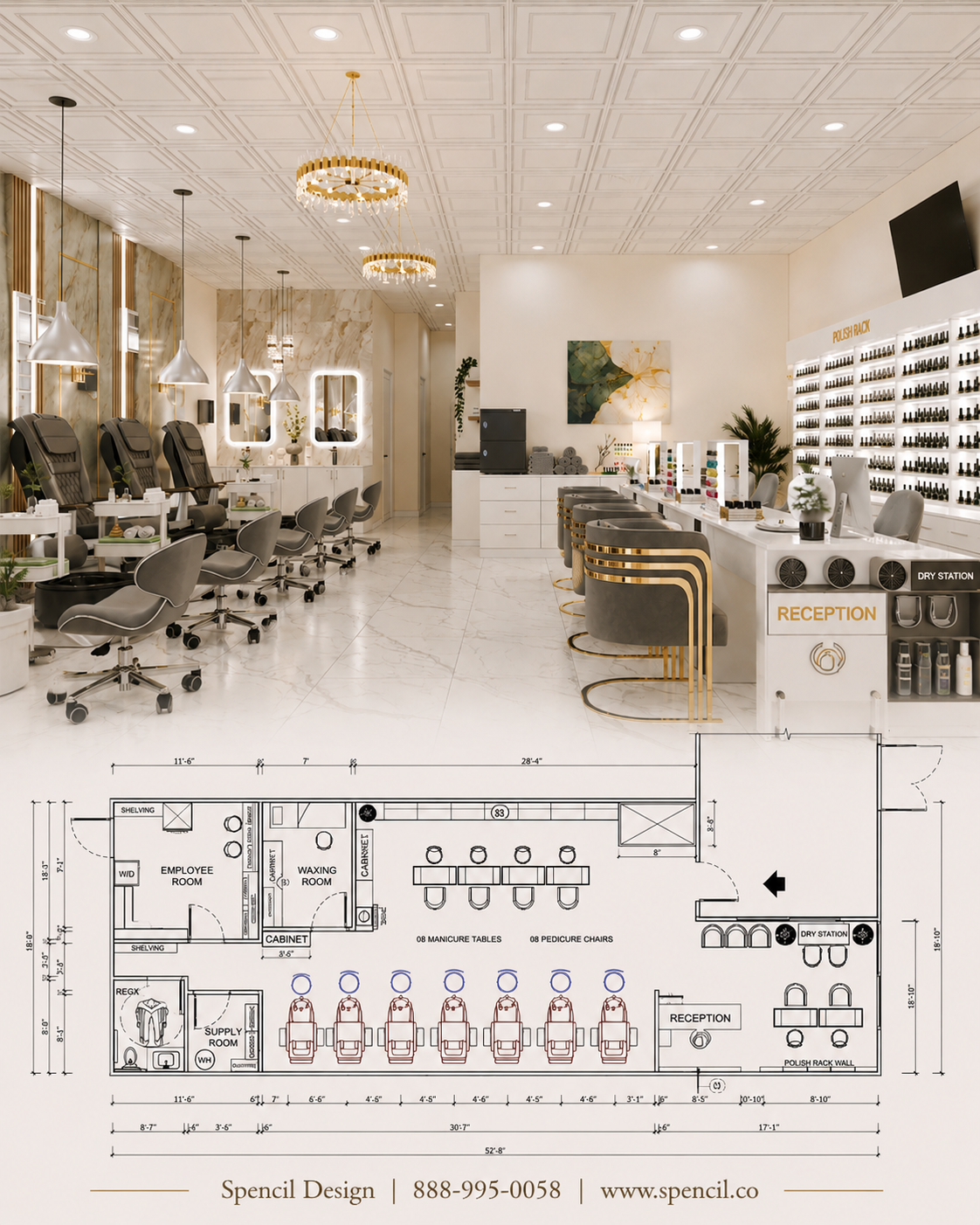
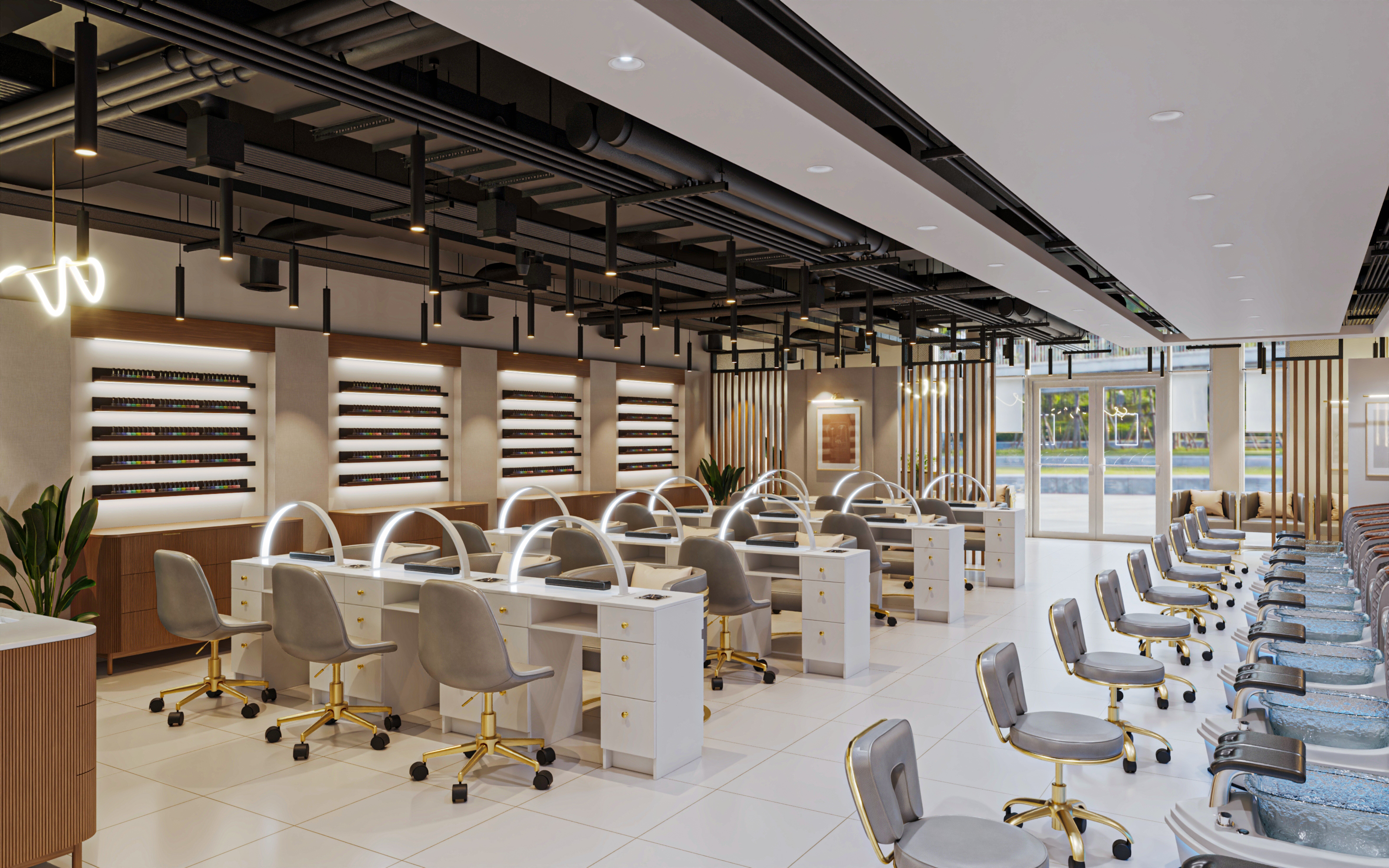
3D nail salon design process - from 2D floor plan to finished render visualization by Spencil

3. Cost Breakdown by Salon Size

Costs scale with salon size and the level of render detail included:
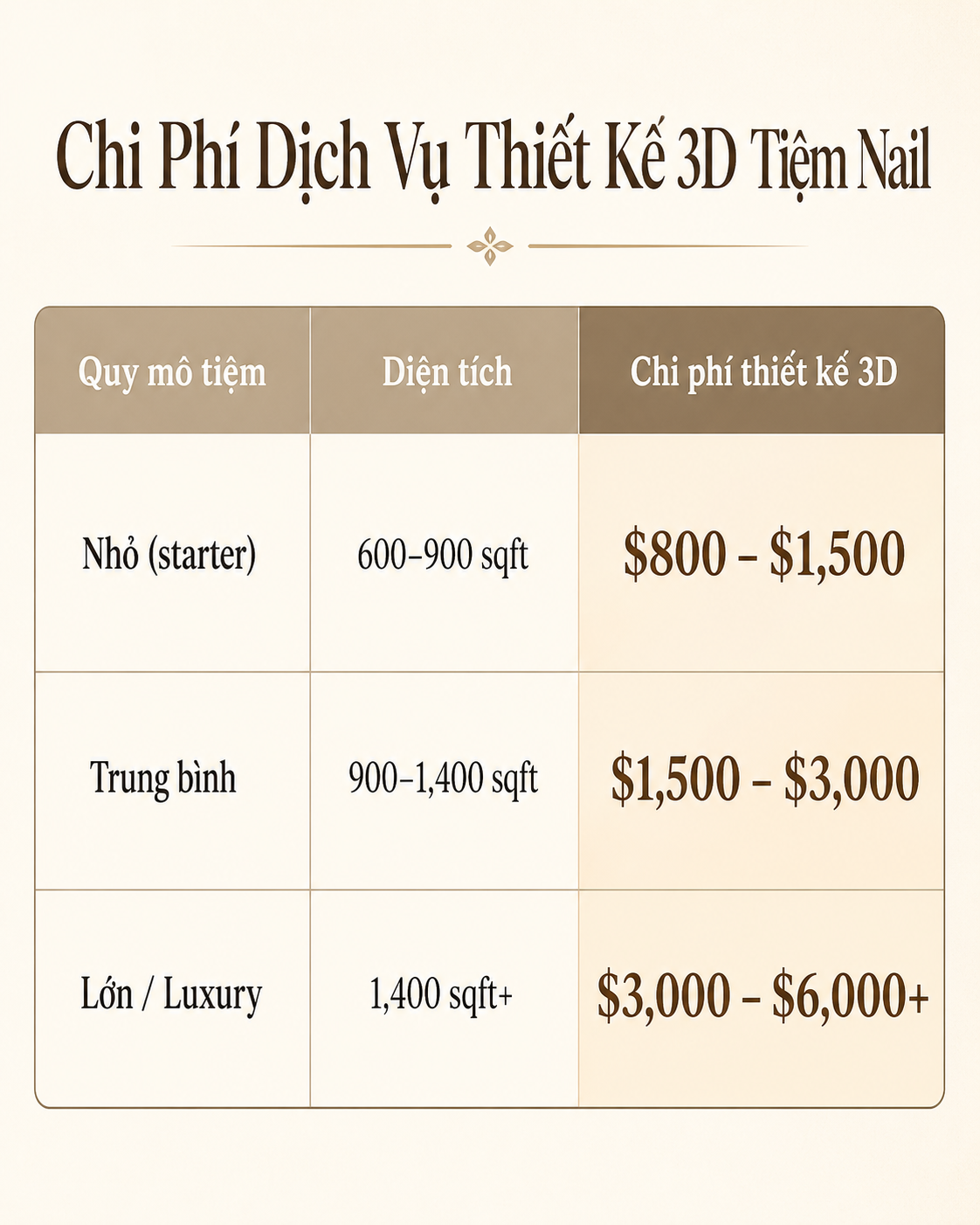
Cost of 3D Nail Salon Design Services

When 3D design is bundled with a full build-out package, the design fee is typically folded into the total project cost and runs 20–30% lower than hiring it as a standalone service.

See also: complete nail salon interior package full cost breakdown by project component.

What's typically not included in a base package:

- Virtual walkthrough or animation (add $500–$1,500)

- Revisions beyond the contracted number of rounds

- Shop drawings for the build-out contractor - these are technical construction documents, distinct from rendered images, and often billed separately if not specified upfront

4. When to Use It, When to Skip It

Use 3D design when:

- Opening your first salon in a new space - you can't visualize what the finished space will look like, and a layout mistake at this stage is the most expensive point in the project to fix

- Full redesign with a budget of $60,000 or more - at that investment level, $1,500–$3,000 for 3D visualization is the cheapest insurance you can buy

- Owner and designer are in different states - 3D renders replace the need to meet in person for design approvals

- Unusual floor plan - columns in the middle of the room, angled walls, partial low ceilings - these are nearly impossible to evaluate accurately from a 2D drawing alone

You can skip 3D design when:

- You're only changing furniture while keeping the existing layout - catalog photos and references are enough

- The salon is under 600 sqft with a straightforward single-row layout

- You've opened multiple salons and know exactly what you want

5. Common Misconceptions About 3D Nail Salon Design

A great render means the salon will look great

Not necessarily. Real colors depend on the natural light in your specific space, the color temperature of the fixtures you choose, and how human eyes read the room. A good designer will tell you about this gap upfront — not just hand you a beautiful render and move on.

Once I have renders, I can go straight to construction

Renders are not construction documents. Your build-out contractor needs shop drawings - technical plans with exact dimensions, structural details, and mechanical specs. These are a separate deliverable. Confirm whether your 3D design contract includes them before you sign.

More revision rounds mean the designer is being thorough

Multiple revisions usually indicate the brief wasn't clear enough upfront - not that the process is getting more rigorous. Spending more time on information gathering and 2D layout approval eliminates more revisions than anything else in the process.
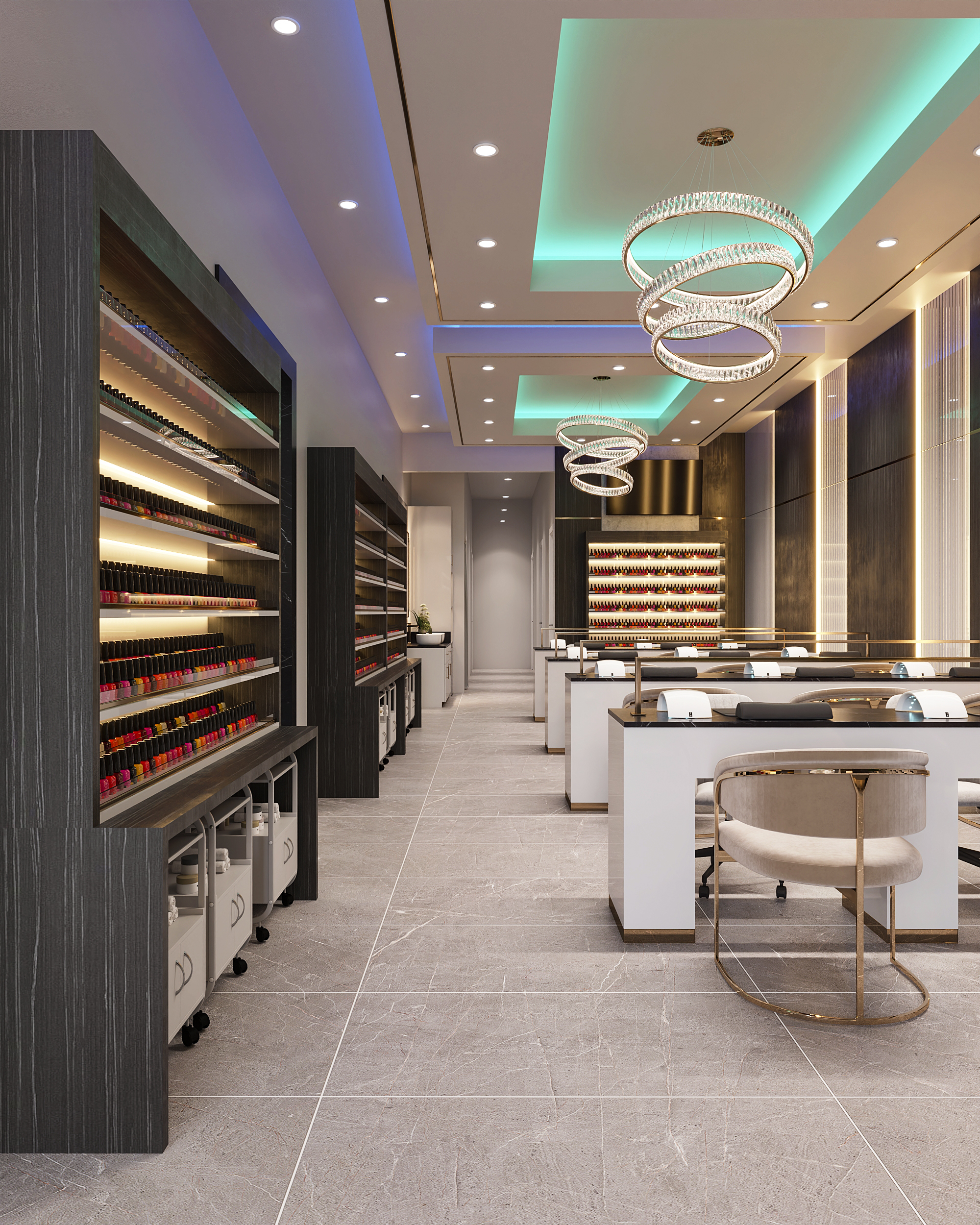
Nail salon 3D design service - Spencil designer working on interior visualization for nail salon build-out

FAQ

How long does a 3D nail salon design take?

Typically 2–4 weeks from initial brief to approved final render. Actual timeline depends more on how quickly the salon owner provides feedback than on the designer's production time.

Do I need to provide a floor plan?

Yes - or detailed field measurements including room dimensions, door and column positions, and existing plumbing and electrical locations. Without accurate dimensions, the render won't reflect your real space and has no practical value.

Does 3D design include material and furniture recommendations?

Depends on the package. Base packages typically use sample materials. Full-service packages include consultations on specific materials, furniture selection, and vendor recommendations within your budget.

Can I use the renders to hire my own contractor?

Yes - renders show contractors what the finished space should look like. But you'll still need shop drawings for them to build accurately. Confirm whether your design contract includes these before moving to the contractor stage.

Conclusion

A 3D nail salon design service isn't a mandatory step for every project. But for a brand-new salon or a major redesign - especially when the owner and designer aren't in the same city - it's the most cost-effective way to catch mistakes before construction money is already spent.

Three things to keep in mind when evaluating any 3D design service:

- Renders approximate, they don't guarantee - ask your designer about the gap between screen and reality before signing off

-  A clear brief determines revision count - more than anything else in the process

- Shop drawings are a separate document - confirm the contract includes them before you commit

If you're not sure whether your project actually needs 3D design or want a realistic cost estimate for your specific floor plan - that's exactly the kind of question Spencil can answer before you need to commit to anything.

📞 888-995-0058

📍 535 Mission St, San Francisco, CA 94105

🌐 spencil.co

📩 facebook.com/spencilco
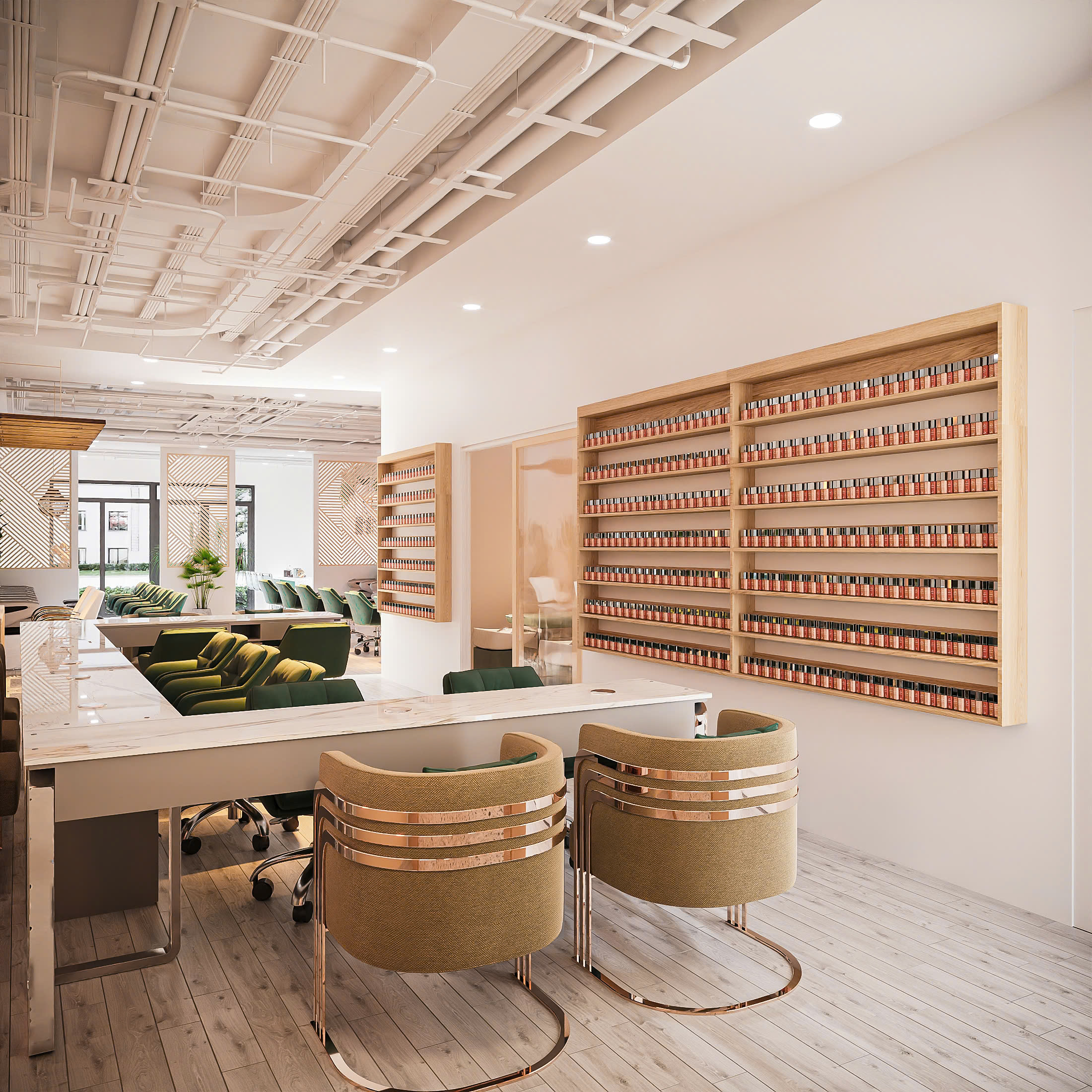
Interior Designers
Nail Salon Startup Costs US 2026: Complete Breakdown
August 20, 2025
All Items

Nail Salon Startup Costs US 2026: Complete Breakdown

How much does it cost to open a nail salon in the US? The answer depends on square footage, state, and build-out scope - but every cost can be broken into clear categories for accurate planning.

This guide covers five main cost groups: lease, build-out, equipment, licenses and insurance, and initial operating capital. A summary table by salon size appears at the end.

1. Lease and Build-Out Costs

Commercial lease

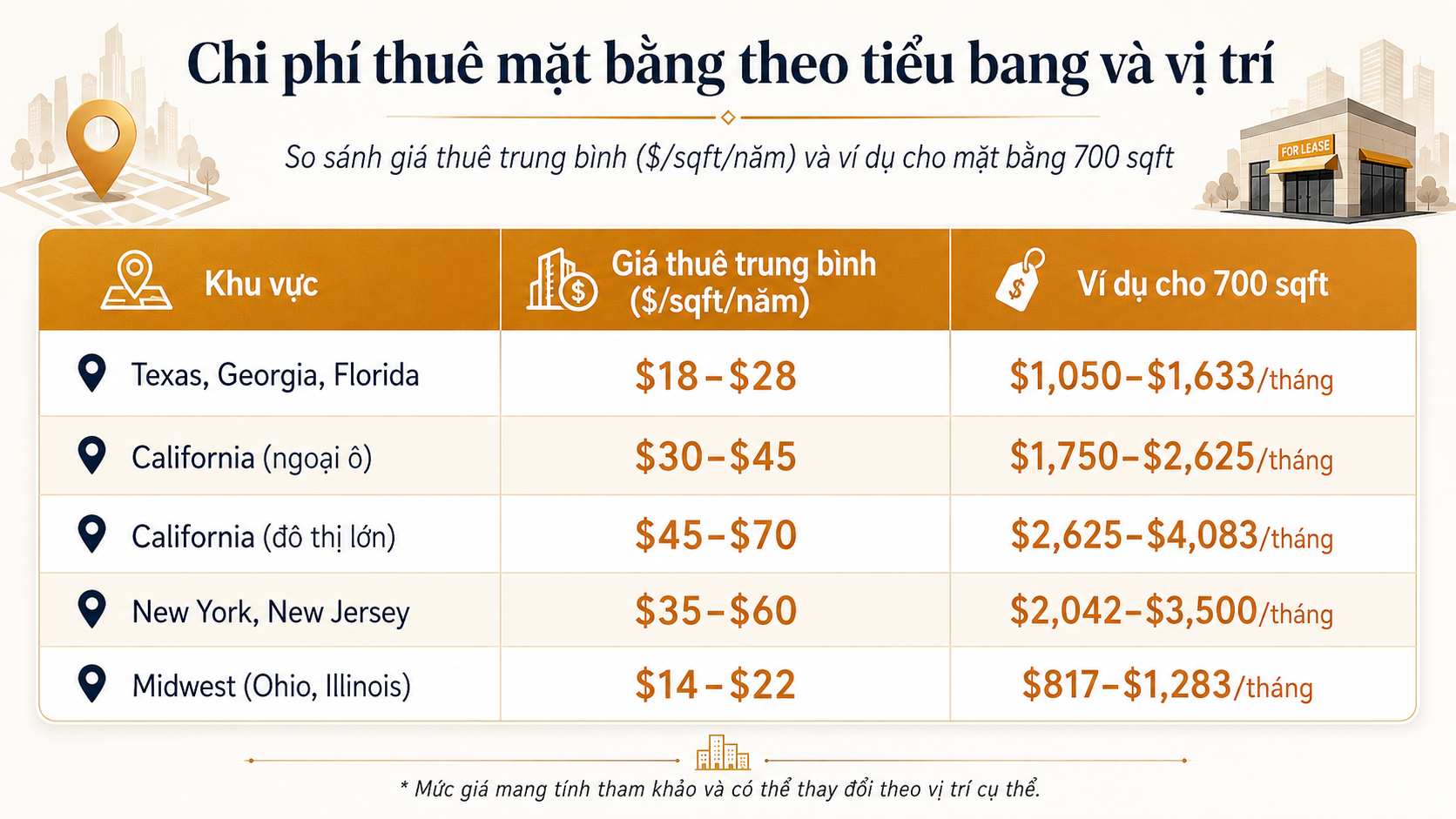
Most US nail salons open in strip mall spaces. Lease rates vary significantly by state and location:

Nail salon startup cost US 2026 - build-out of strip mall nail salon

Most leases require a 2–3 month security deposit plus first month's rent upfront. Total upfront lease cost before opening is typically equivalent to 3–4 months' rent.

Build-out costs

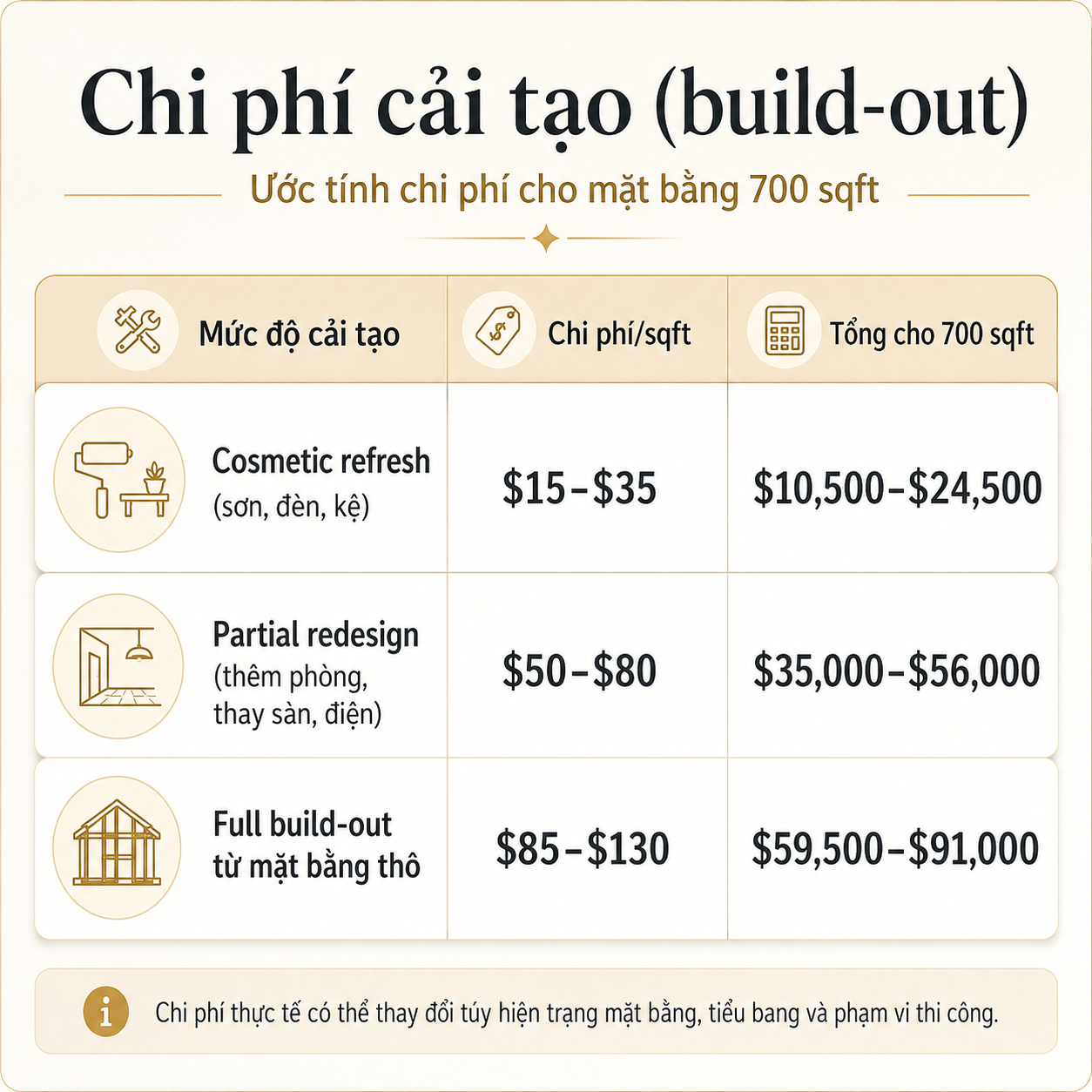
Build-out is usually the largest and most variable cost in opening a nail salon:

Build-out cost in opening a nail salon

Shell space - bare concrete walls, basic electrical only, no completed plumbing or ventilation - is the starting point for most new nail salons in strip malls. Going from shell to a functioning salon typically lands at the high end of the ranges above.

Ventilation is non-negotiable in nail salon construction. A dedicated ventilation system for a nail salon runs $3,000–$10,000 depending on square footage and design. It is required by most health departments and directly affects the health of both technicians and clients.

2. Equipment and Furniture Costs

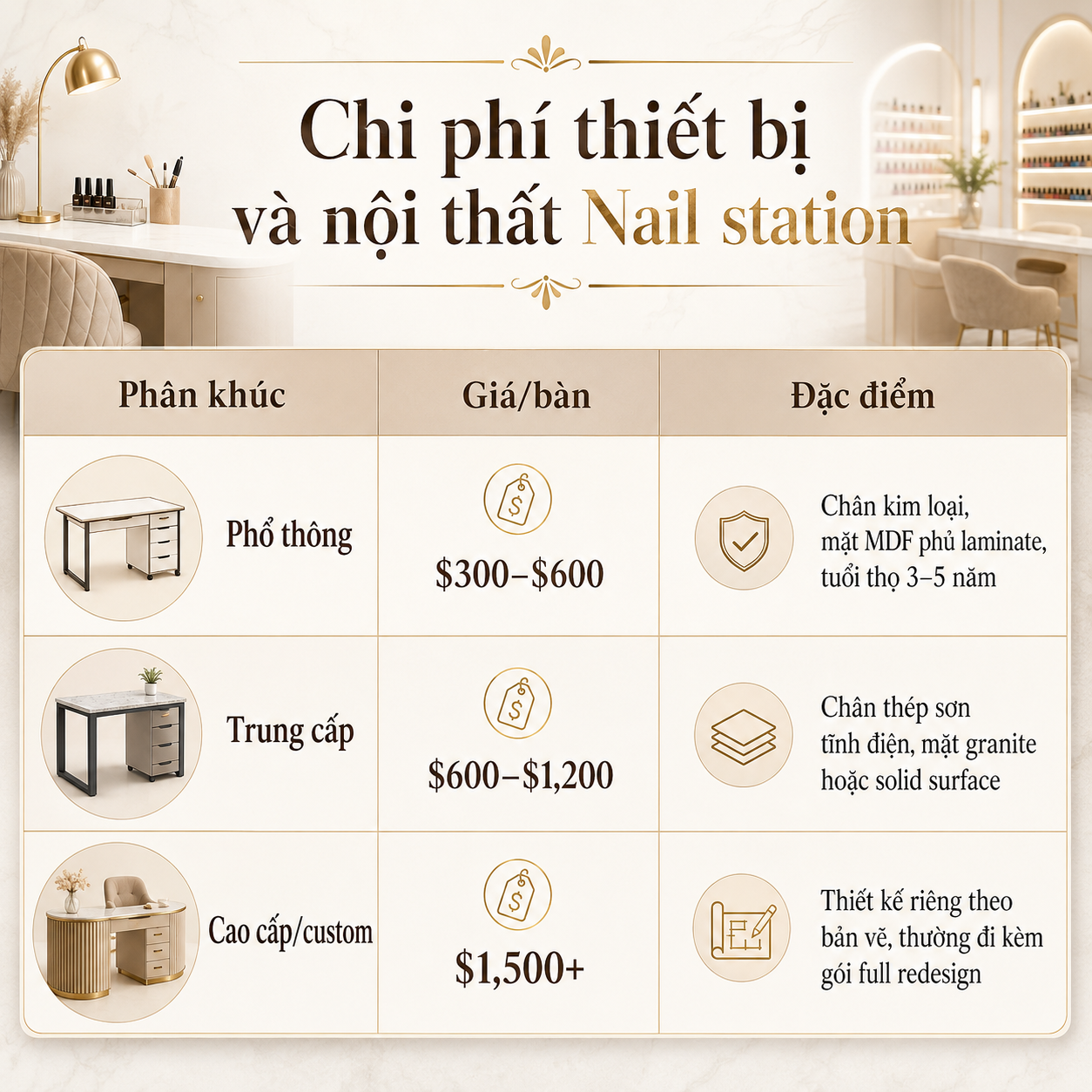
Nail stations

Equipment and Furniture Costs in opening a nail salon

Pedicure chair

Practical note: Dark-colored chairs hide wear better but conflict with Korean minimalist design. Cream, light gray, or greige chairs are a middle ground - they maintain the aesthetic and conceal dirt better than pure white.

Pedicure chair  Costs in opening a nail salon
Pedicure chair costs in opening a nail salon

Other equipment

Nail salon equipment cost US 2026 nail stations and pedicure chairs

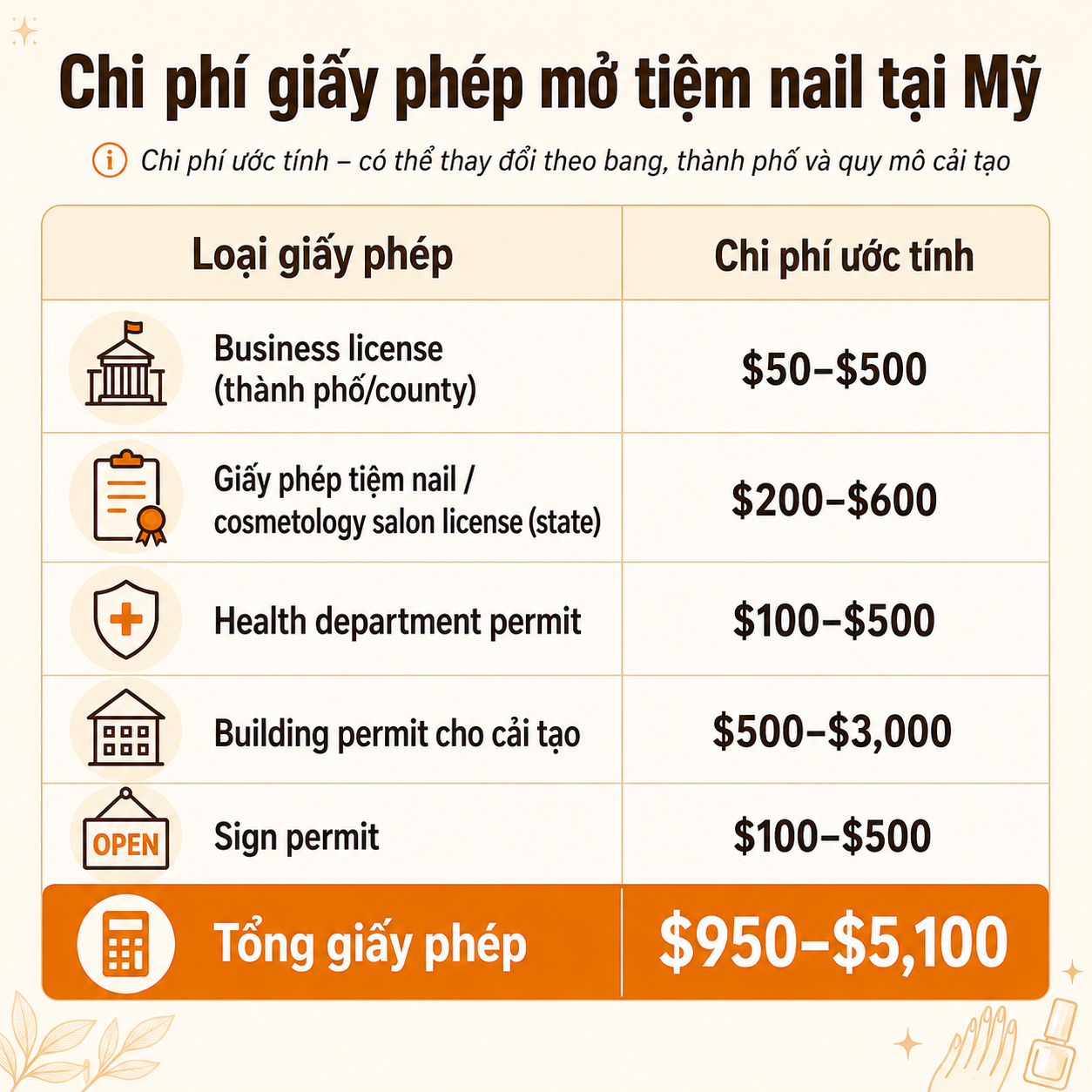
3. Licenses, Insurance, and Legal Fees

Nail salon licensing in the US is state-administered - there is no federal system. Costs and procedures vary significantly by state and county.

California, New York, and Texas have more complex licensing processes and require health and fire inspections before opening. Add 4–8 weeks for permits in these states when building your opening timeline.

Nail salon costs and licensing vary across the US
Nail salon costs and licensing requirements vary by state and county in the US

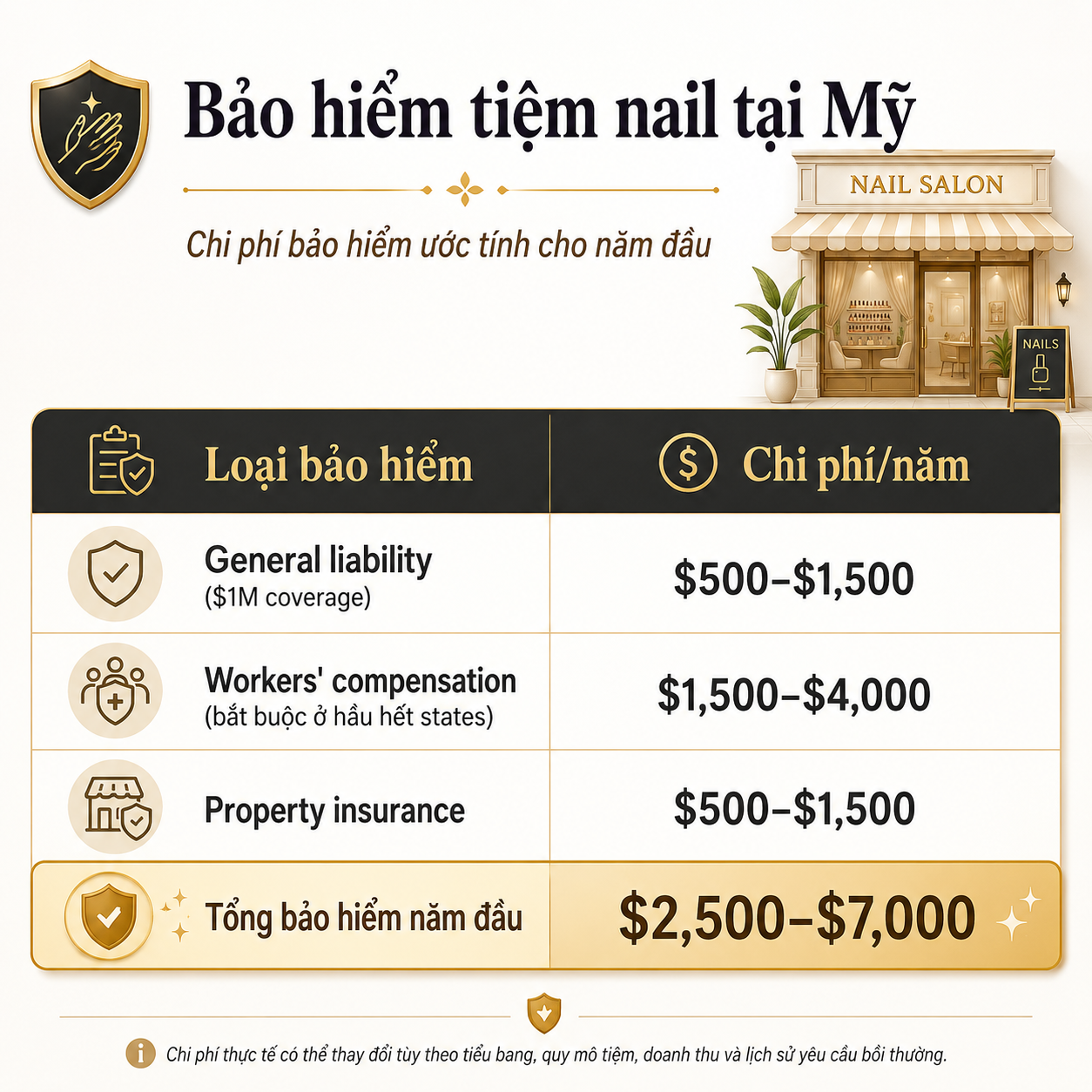
Insurance

Insurance Costs in opening a nail salon

Most commercial leases require proof of general liability insurance before signing. Paying a real estate attorney to review the lease ($300–$800) regularly pays for itself by catching unfavorable clauses around renovation cost repayment or early termination conditions.

4. Operating Costs for the First 3 Months

Most new nail salons do not turn a profit in the first 3–6 months. Operating capital must be planned from the start - not treated as something to pull from revenue after opening.

Initial supply stock

The first inventory order covers nail polish, gel, acrylic, gloves, acetone, nail forms, bits, and daily-use consumables. For a 6–8 station salon: $4,000–$10,000 to stock 60–90 days without emergency reordering.

Payroll

Market wages for nail technicians in the US in 2026 range from $12–$22/hour depending on state, or 40–50% commission on services. For a salon running 4–5 technicians through the first 3 months before revenue stabilizes: budget $15,000–$30,000.

Nail Salon Operating Costs for the First Year

Many utility providers require a deposit of 1–2 months upfront for new commercial accounts.

Marketing

Exterior signage is not optional - salons without clear visible signage lose most of their natural foot traffic from the strip mall. Basic signage: $1,500–$4,000. Add interior photography, Google Business Profile setup, and Facebook/Instagram advertising for the first 3 months: $1,000–$3,000.

5. Cost Summary by Salon Size

California and New York typically run 20–35% above national averages. Texas, Georgia, and Florida typically run 10–20% below.

6. Hidden Costs Most Owners Overlook

ADA compliance: Nail salons are public accommodations and must meet ADA (Americans with Disabilities Act) requirements - including minimum 44-inch walkways and accessible restrooms. If the space is not already compliant, remediation costs add to the total build-out.

Contractor overruns: In commercial construction, 10–20% budget overruns are common, especially when structural or plumbing issues are discovered during construction. Keep a contingency fund of 10–15% of total build-out cost.

Permit wait time: Every week waiting on permits is a week still paying rent. Some major cities like Los Angeles can take 6–12 weeks to issue building permits. Build this buffer into the opening timeline from the start.

Equipment lead times: Some suppliers require 30–50% deposits at order and have 4–8 week lead times for custom-color pedicure chairs or bulk nail station orders. Equipment delivery dates need to align with construction completion — not assumed to be instant.

Nail salon startup cost breakdown US 2026 - cost summary by salon size
Cost Summary by Salon Size

FAQ

What is the minimum capital needed to open a nail salon in the US?

A small 500–700 sqft salon with full build-out needs a minimum of $80,000–$120,000 in average US markets. This covers build-out, equipment, licenses, and 3-month operating capital. In California and New York, the realistic minimum is typically $120,000 or more.

Which costs can be reduced without significantly affecting quality?

A cosmetic refresh instead of full build-out works when the space already has solid infrastructure. Mid-range equipment instead of premium for nail stations and pedicure chairs is a sound trade-off. What not to cut: ventilation, chemical-resistant flooring, and adequate operating capital reserves.

Have nail salon startup costs increased in 2026 compared to prior years?

Yes, meaningfully. Commercial construction labor and materials are 15–25% higher than 2022–2023 levels. Rising minimum wages in multiple states have increased ongoing labor costs. Equipment costs from established suppliers have remained relatively stable, though subject to change based on tariff policy.

Should I take out a loan to open a nail salon?

SBA loans are the most common financing route - lower interest rates than commercial loans, longer repayment terms. The critical error to avoid: using the full loan for build-out and equipment without retaining operating capital for at least 3 months before revenue stabilizes.

Is a turnkey design and build package worth the premium over hiring contractors separately?

Hiring contractors separately costs less on paper but requires the owner to manage the full process, coordinate material orders, and handle issues as they arise. A turnkey package typically costs 10–20% more but reduces the risk of delays and cost overruns from inexperience managing commercial construction. See nail salon interior complete package for what this covers.

Conclusion

Three things to carry into any nail salon startup financial plan in the US:

First, there is no single "cost to open a nail salon" number. The range is wide because state, build-out scope, and equipment choices all move the total significantly. Reliable figures come from analyzing each category against a specific space in a specific market.

Second, operating capital is consistently underestimated. Most nail salon financial difficulties in the first year are not caused by excessive startup costs - they come from running out of cash to cover operations during the 3–6 months before revenue stabilizes. A minimum of 3 months of operating capital, and ideally 6, needs to be reserved before opening.

Third, design quality directly affects payback speed. A well-designed salon retains clients longer, earns higher Google and Yelp ratings, and generates organic social media marketing through client photos in the space - none of which costs anything after the initial design investment.

If you want to know the realistic cost for a specific space before signing a lease, Spencil provides a free preliminary consultation based on square footage, location, and budget range.

📞 888-995-0058

📍 535 Mission St, San Francisco, CA 94105

🌐 spencil.co

📩 facebook.com/spencilco
Interior Designers
How to Decorate a Nail Salon: 5 Practical Steps
August 1, 2025
All Items

How to Decorate a Nail Salon: 5 Practical Steps

Most nail salon owners start decorating by buying things that look good - then discover nothing quite goes together once it's all in place. Not because the individual choices were wrong, but because there was no connecting logic from the start.

This guide follows the actual sequence: lock in a concept before buying anything, build a color palette, decorate each zone with specific intent, get the lighting right, and finish with the small details that create the largest perception impact. Applies equally to new salons and existing spaces in need of a refresh.

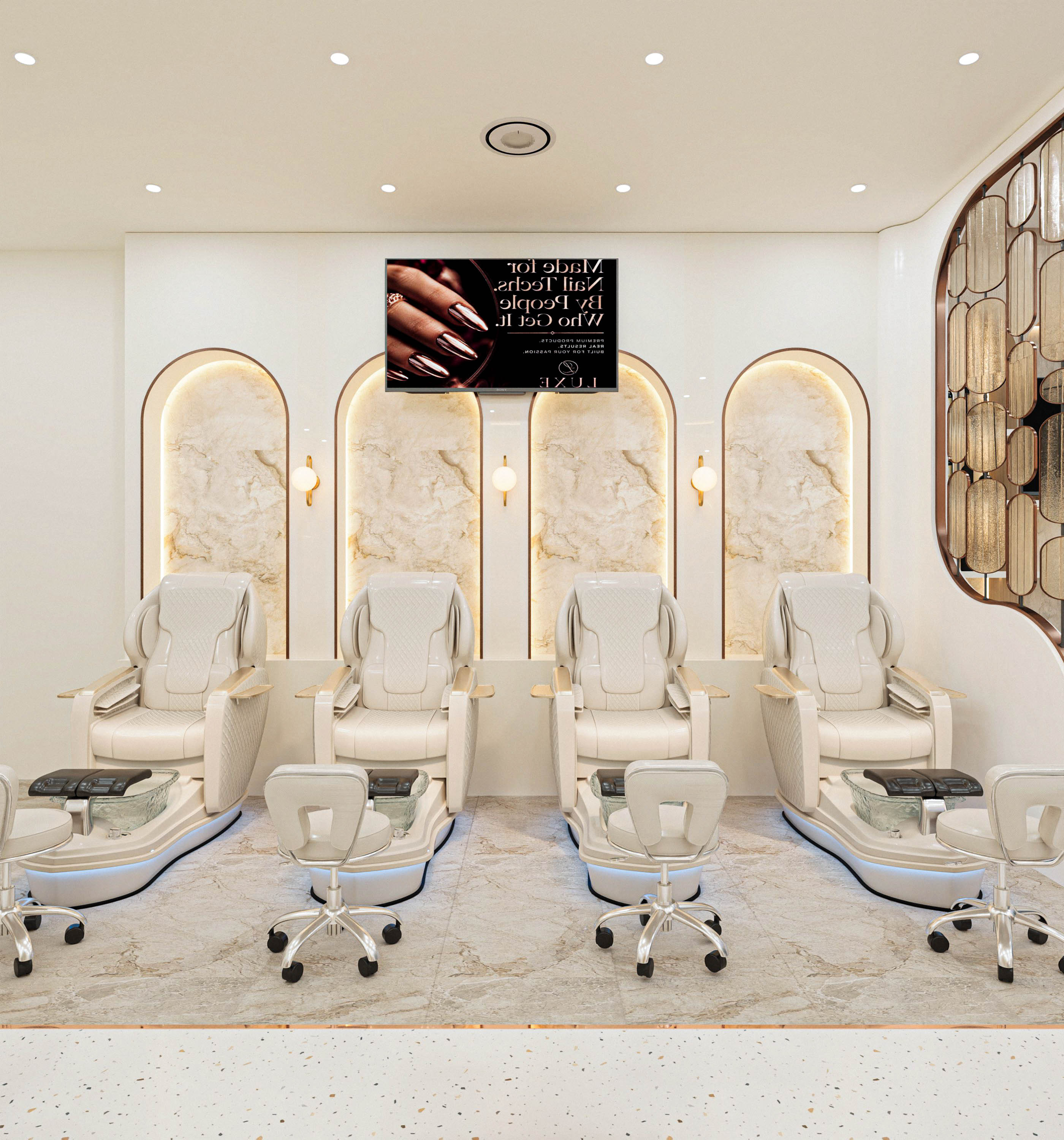
How to decorate a nail salon interior - complete space from a Spencil project showing all zones

1. Step 1: Lock In a Concept Before Buying Anything

This is the step most salon owners skip and the main reason a space looks inconsistent even when each individual piece looks fine on its own.

A concept is not your favorite color. A concept is the answer to: "What should clients feel when they walk in?"

Three directions that dominate the US market right now:

- Modern Minimalist - clean, professional, neutral. Few decorative elements, high consistency.

- Luxury - premium materials, attentive atmosphere, clients comparing you to a spa.

- Soft Aesthetic - pastel tones, floral touches, built so clients photograph themselves naturally.

Choosing the right concept for your specific market matters more than choosing the style you personally like. See the full breakdown of each style and which market conditions they fit in nail salon design ideas for the US market

After choosing a concept: Write three adjectives describing how you want clients to feel when they walk in. Every decoration decision after this point goes through one filter: "Does this fit those three words?"

2. Step 2: Build Your Color Palette

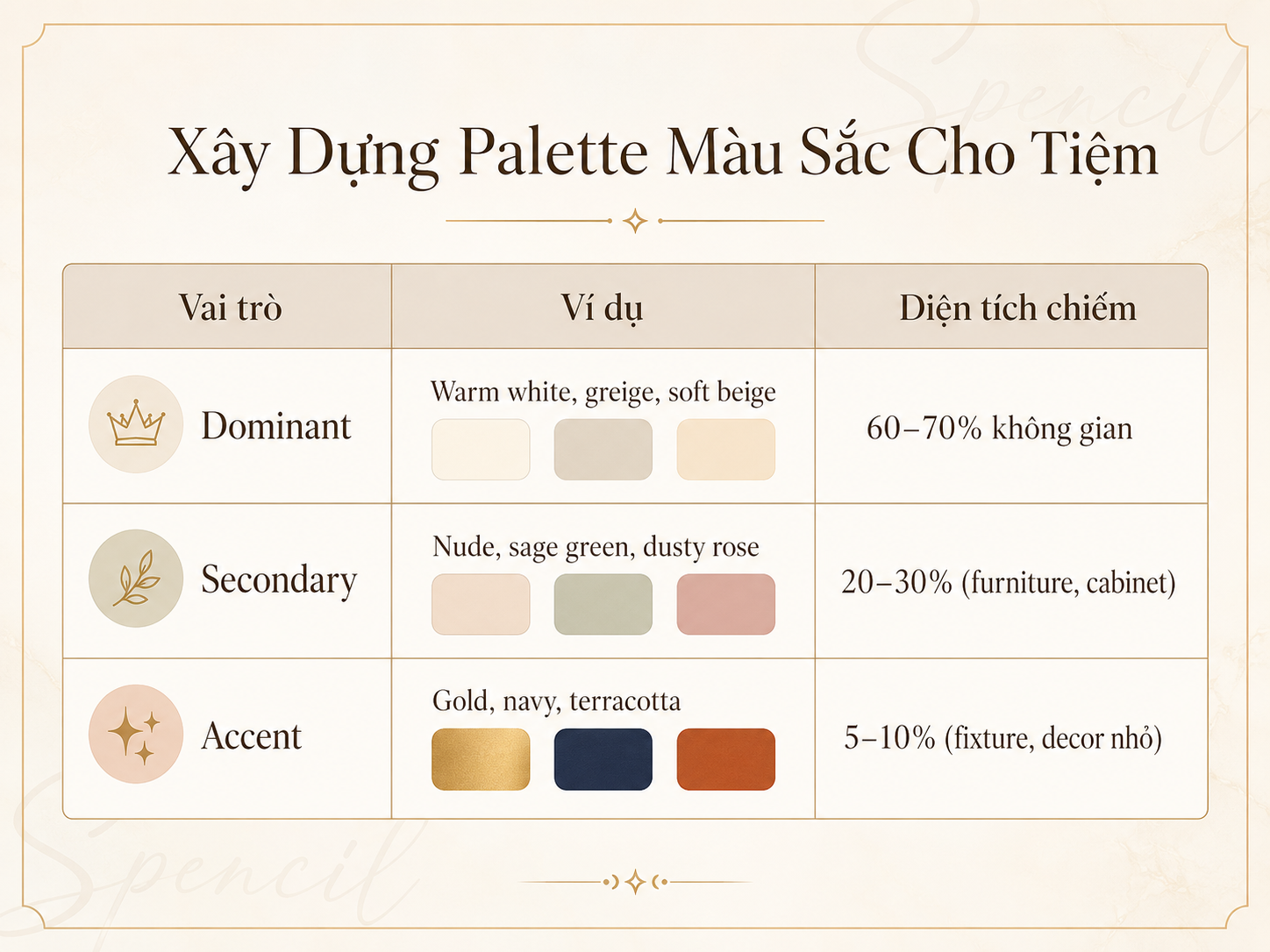
The rule of three colors: one dominant, one secondary, one accent.

The most common mistake: overusing the accent color. Accent colors create strong visual pull - use them beyond 10% of visual surface area and the space feels heavy rather than distinctive.

How to test your palette before committing:

Photograph the existing space. Use a color tool like Adobe Color or Coolors to test combinations directly against the photo. Then view the result under both daylight and artificial light — colors shift significantly between sources, and what looks right in natural light can read differently under LED.

Neutral is a deliberate choice, not a default. Warm white, applied correctly, creates a premium feel that many bolder colors struggle to achieve.

Stunning Nail Salon Interior Decorating Ideas
Combining colors for nail salon interior design

3. Step 3: Decorate Each Nail Salon Zone

Reception - No Second Chance at a First Impression

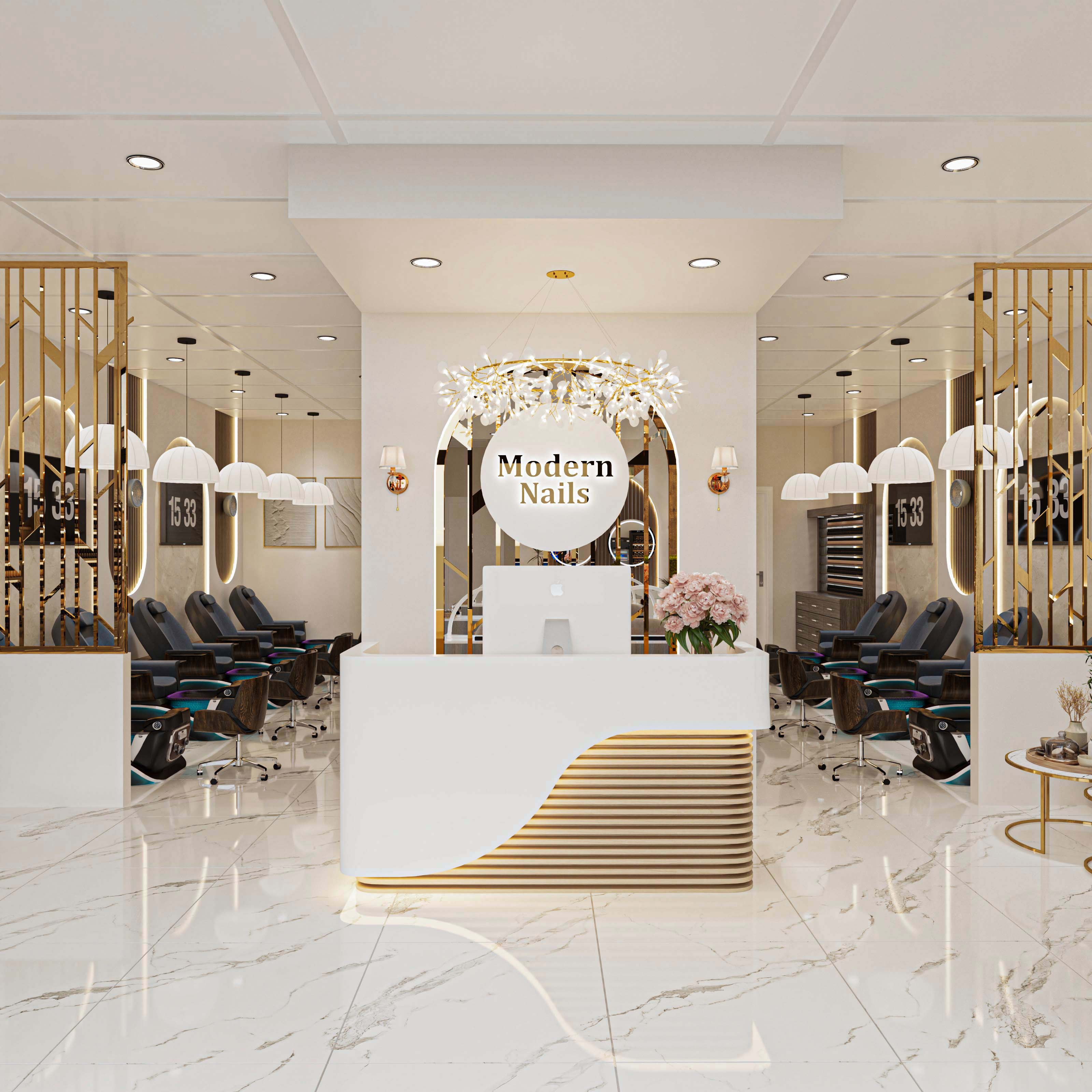
Reception sets the expectation for everything that follows. Clients form a first impression in the first few seconds and that impression anchors how they experience the rest of the visit.

- Salon name or logo should be visible immediately from the entrance - not just on outside signage but on the wall behind the reception desk

- The reception counter should hold only what clients need to see: service menu, a small display - nothing else

- Reception lighting should be warmer than the rest of the salon - it signals welcome before anyone says a word

How to decorate a nail salon reception clean desk with brand signage and warm lighting

Nail Station Area - Functional Beauty

This is where clients spend the most focused time and direct the most attention - it requires the highest level of consistency.

- Table surfaces: stone-look or solid surface materials are easy to clean, scratch-resistant, and maintain their appearance longer than alternatives

- Cable management is non-negotiable - exposed wiring is the single most common visual problem Spencil sees in existing salons, and it undermines any design investment regardless of cost

- Station spacing: minimum 36 inches between tables for technician movement - tight spacing affects service speed and the experience of both technician and client

Pedicure Area - Comfort Is the Aesthetic

Clients sit here for 45–90 minutes. Chair comfort is the most important aesthetic decision in this zone - more than wall color or lighting.

- Quality pedicure chairs are a direct investment in Google and Yelp reviews

- In-seat entertainment (small screen or tablet) is a 2026 trend that meaningfully changes how clients experience the wait time

- Light privacy partitions between chairs create a sense of individual attention without building permanent walls

Waiting Area - Your Free Marketing Channel

The waiting area is typically the most under-decorated zone. It's also the one with the best opportunity to create an intentional Instagram moment: an accent wall, a floral installation, a neon sign. Clients who wait photograph the space. Those photos appear on their followers' feeds. Your salon gets visibility that no paid ad can fully replicate.

4. Step 4: Get the Lighting Right

Lighting is the lowest-cost element to change with the highest impact on how a space reads and the most frequently wrong variable Spencil encounters in existing salons.

Color temperature by zone:

Avoid cool fluorescent white (6500K) throughout the salon: It reads like a clinic, not a nail salon. Nail color accuracy suffers under cold light  clients choose colors in-salon but see a different result at home.

Natural light is an asset: If your salon has large windows, position nail stations to take advantage of this. Natural light improves technical accuracy for technicians and makes the space feel more premium without any additional cost.

Modern nail salon decor ideas with stylish lighting arrangements
Lighting arrangement in the nail salon area

5. Step 5: Finish With Small Details

These are the lowest-budget elements with the highest impact on how the space feels overall:

Plants integrated into decor

Pothos, snake plant, and ZZ plant tolerate low light and chemical environments - the three most suitable species for nail salon conditions. Place at reception, waiting areas, and pedicure zones. Avoid positioning directly at nail stations where chemical exposure is highest.

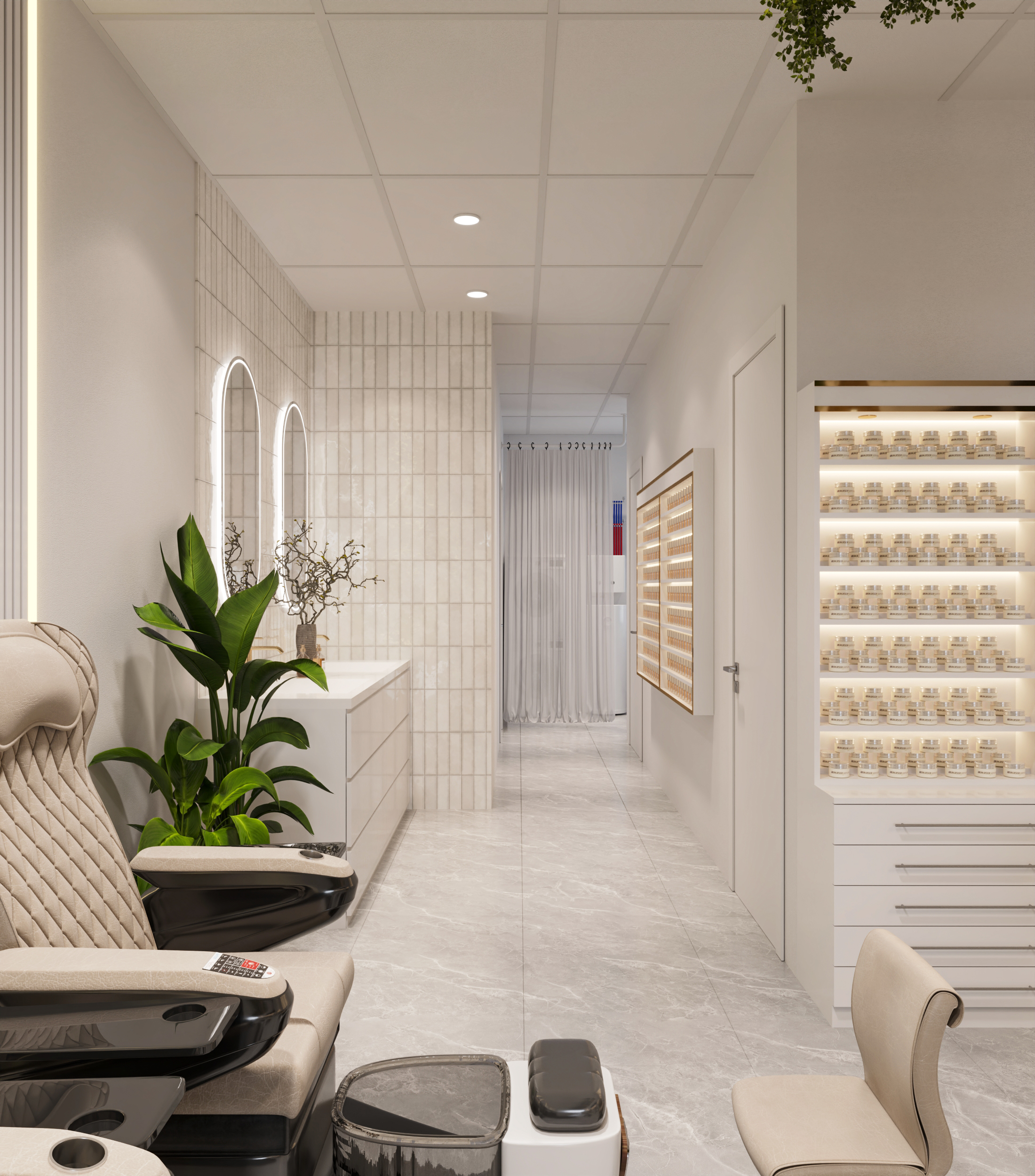
Nail polish display organized by color gradient

Arranging polish by color family rather than by brand is simultaneously better-looking, easier for clients to browse, and more photogenic. One of the most-photographed details in any well-decorated nail salon.

Consistent ambient scent

A light, consistent fragrance - not a strong air freshener - creates brand memory that distinguishes your salon in ways clients remember without being able to explain. A diffuser with lavender, eucalyptus, or light citrus works better than spray because it disperses evenly and doesn't spike in intensity.

Cable management throughout

Visible wiring undermines any design investment regardless of how much was spent elsewhere. Cable channels along table legs or behind-wall conduit during construction are inexpensive to install and create permanent visual improvement.

Staff dress code

Creates visual consistency between the people and the space. A full uniform isn't required - a simple color policy (all staff in black, or a specific shade of the dominant palette) creates a professional impression that reinforces the salon's design direction.

Nail salon decor finishing details - polish display by color, plants, and Instagram corner

FAQ

How much does it cost to decorate a nail salon?

A cosmetic refresh (repainting, replacing some decor, adding plants, reorganizing displays): $2,000–$8,000 if self-managed. Full furniture replacement with new lighting: $15,000–$40,000. See complete nail salon interior package for a full component breakdown.

What colors work best for nail salon decoration?

Warm neutrals (warm white, greige, soft beige) are the most reliable foundation - versatile, they don't date quickly, and photograph consistently well. Accent colors (dusty rose, sage green, navy) add personality but use them at 5–10% of visual surface area, not more.

Do I need a designer to decorate my nail salon?

Not for a small cosmetic refresh. For a full build-out or major renovation, a nail salon 3D design service lets you review the actual result before spending on construction - the most effective way to avoid costly post-construction corrections.

How do I make a small nail salon look better?

Three principles for small spaces: (1) Light, consistent palette - three colors maximum; (2) Mirrors - they create a genuine sense of expanded space; (3) Correct lighting temperature - a dark or cold-lit space reads smaller than it is.

Which salon zone should I prioritize decorating first?

In order: (1) Reception - first impression; (2) Nail stations - where clients spend the most focused attention; (3) Waiting area - Instagram marketing opportunity. In the pedicure area, chair quality takes priority over decor decisions.

Conclusion

Decorating a nail salon interior well isn't about spending more or buying more - it's about building a consistent logic from the first decision through the last detail.

The five steps in this guide follow a specific sequence for a reason: the wrong concept produces the wrong palette, a mismatched palette makes each zone feel disconnected, and incorrect lighting makes everything read differently from how it was intended - regardless of how carefully each element was chosen on its own.

If you're setting up a new salon or refreshing an existing space and want to see the final result before committing to build-out costs, Spencil can take you from initial concept through a complete 3D render.

📞 888-995-0058

📍 535 Mission St, San Francisco, CA 94105

🌐 spencil.co

📩 facebook.com/spencilco
No Category
Essential Nail Studio Equipment for Salon Owners
September 13, 2024
All Items

When opening a nail salon, selecting the right nail studio equipment is one of the most important investments you'll make. From manicure stations to high-quality sterilizers, the right equipment ensures not only a comfortable experience for your clients but also an efficient workflow for your technicians. Whether you're launching a new salon or upgrading your current setup, this guide will help you identify the essential tools and furniture for your business.

1. Manicure Tables and Stations

Photo by RDNE Stock project from Pexels

The centerpiece of any nail salon is the manicure table. A functional and sturdy table is crucial for both the technician and the client. When choosing a table, look for features such as:

  • Built-in storage: Drawers and compartments keep tools organized.
  • Ventilation systems: Some tables come with built-in vents to remove dust and fumes.
  • Comfort: Ensure the table allows for easy client access and technician mobility.

2. Pedicure Chairs

nail studio equipment pedicure chair

Image Source: Lexor

Offering a comfortable and luxurious experience is key to keeping clients coming back. A pedicure chair is a vital piece of nail studio equipment, especially with built-in foot spas and massage functionalities. Look for:

Offering a comfortable and luxurious experience is key to keeping clients coming back.

  • Hygienic designs: Chairs with easily cleanable surfaces and disposable liners.
  • Adjustable settings: Reclining and massaging options for client comfort.
  • Durability: High-quality materials ensure longevity and minimal maintenance.

3. Nail Polish Racks

nail studio polish rack

Organizing your collection of nail polishes not only makes them easily accessible but also adds a decorative element to your salon. Nail polish racks should:

  • Be visible: Display racks that showcase your range of colors can entice clients.
  • Save space: Wall-mounted racks are ideal for smaller studios.
  • Durable: Opt for acrylic or metal designs for a sleek, professional look.

4. Sterilization Equipment

Maintaining hygiene standards is non-negotiable in any nail salon. Sterilizers like autoclaves or UV sanitizers ensure all tools are disinfected properly. Make sure your salon is equipped with:

  • Autoclaves: A reliable option for sterilizing metal tools.
  • UV sterilizers: An excellent alternative for non-metallic equipment.
  • Disinfectant solutions: For cleaning surfaces and equipment between clients.

5. Nail Drills and E-Files

For precise nail shaping, especially with acrylic or gel nails, an electric nail file (or e-file) is a must-have tool. When choosing the right nail drill, consider:

  • Variable speeds: For better control during manicures and pedicures.
  • Lightweight design: Ensures ease of use over long periods.
  • Safety features: Look for drills with built-in safety stops to prevent overheating.

6. UV and LED Lamps

A professional nail salon cannot operate without UV or LED curing lamps for gel polish application. These lamps ensure a quick and durable finish. Key features to look for include:

  • Wattage: Higher wattage ensures faster curing times.
  • Timer settings: Helps prevent over-curing or damaging the nails.
  • Portable design: For mobility between stations.

7. Ventilation Systems

Proper ventilation is essential in maintaining air quality, especially when using acrylic products. A dedicated ventilation system will:

  • Remove dust: Capture nail dust particles during filing and buffing.
  • Filter harmful fumes: Ensure the air remains clean and breathable.
  • Comply with health regulations: Depending on your region, ventilation may be a legal requirement.

8. Client Seating and Waiting Area

nail salon furniture

Comfortable seating is just as important for your clients while they wait as it is during treatments. Invest in ergonomic and stylish client chairs and make your waiting area inviting with:

  • Soft seating: Plush chairs or sofas.
  • Magazines or nail art catalogs: To keep clients entertained while they wait.
  • A welcoming environment: Adding plants or artwork can make the space feel more relaxing.

9. Towels, Aprons, and Linens

Small details make a big difference in the overall salon experience. Stock up on high-quality towels, aprons, and linens for cleanliness and comfort:

  • Disposable options: Ideal for maintaining hygiene between clients.
  • Luxurious materials: High-thread-count linens can enhance the feel of your services.

10. Point of Sale (POS) System

Photo by RDNE Stock project from Pexels

Finally, streamline your business operations with a robust point-of-sale system. A good POS system allows you to:

  • Track inventory: Know when to reorder products.
  • Schedule appointments: Offer seamless booking experiences.
  • Accept various payments: Ensure clients can pay by card, cash, or even mobile apps.

Selecting the right nail studio equipment ensures that your salon runs smoothly, meets health standards, and offers the best possible experience for your clients. By investing in high-quality, durable tools and furniture, you'll set your business up for long-term success. Remember, the equipment you choose reflects your salon's professionalism and commitment to client satisfaction.

Featured Image Credit: Photo by RDNE Stock project from Pexels

No Category
Salon Interior Design: Key to Nail Salon Success
September 6, 2024
All Items

When you step into a nail salon, what's the first thing you notice? Is it the soothing atmosphere, the elegant decor or the general vibe that makes you feel relaxed? The interior design of nail salons is very important in forming these first impressions. The design of your nail salon has an impact on your business success that goes beyond aesthetics. In this blog, we'll explore the importance of nail salon interior design, as well as how it affects revenue, customer experience, and brand.

First Impressions Matter

nail salon design

The moment a potential client walks into your nail salon, they form an opinion about your business. A well-designed interior conveys professionalism, cleanliness, and a welcoming atmosphere. If your salon's design feels outdated, cluttered, or poorly maintained, clients may question the quality of your services, no matter how skilled your technicians are. A modern and stylish design, on the other hand, sets the tone for an upscale experience and can make a lasting positive impression.

Enhances Customer Experience

salon nail bar interior design

Nail salon interior design is not just about how things look but also about how they make clients feel. A thoughtfully designed salon can offer a more comfortable and enjoyable experience for your customers. Elements like ergonomic chairs, calming color schemes, and well-placed lighting can make the time spent at your salon more relaxing. When clients feel comfortable, they're more likely to return and recommend your salon to others.

Reflects Your Brand Identity

nail salon logo branding design

Source: Behance

Your nail salon's interior design is a powerful tool to communicate your brand identity. Whether your salon has a luxurious, minimalist, or funky vibe, your design choices should reflect your brand's personality. Consistency in branding�from your logo to your interior design�helps reinforce your salon's identity in the minds of your clients. This cohesion can build brand loyalty and make your salon more memorable in a competitive market.

Boosts Staff Morale

A well-designed nail salon doesn't just benefit customers; it also creates a better work environment for your staff. When your employees work in a clean, organized, and aesthetically pleasing space, they're likely to be more motivated and efficient. Happy employees often provide better service, which leads to higher customer satisfaction. Investing in a good design shows your staff that you value their well-being, which can increase retention rates and reduce turnover.

Maximizes Space Efficiency

organized nail salon interior design

Source: retaildesignblog

Space efficiency is another critical aspect of nail salon interior design. A good layout ensures that your salon is easy to navigate for both clients and staff. By optimizing the use of space, you can accommodate more clients at a time without compromising on comfort or service quality. An efficient layout can also help you manage the flow of traffic, reduce wait times, and create distinct zones for different services, all of which contribute to a smoother operation.

Increases Revenue Potential

Ultimately, nail salon interior design can have a direct impact on your revenue. A visually appealing and well-organized salon attracts more customers, encourages repeat visits, and can justify higher service prices. Moreover, the right ambiance can enhance the perceived value of your services, making clients feel that they are getting more than just a manicure or pedicure�they're getting a luxurious experience.

Sets You Apart from Competitors

nail salon reception desk

In an industry where many salons offer similar services, standing out from the competition is essential. Unique and attractive interior design can be the distinguishing factor that sets your salon apart. Whether it's through innovative d�cor, custom furniture, or an unusual color scheme, your salon's design can become a part of its identity, making it memorable and enticing for clients who have many options to choose from.

Conclusion

Nail salon interior design is more than just choosing pretty colors and furniture; it's a strategic investment in your business. From creating a strong first impression to enhancing customer experience and maximizing revenue, the importance of nail salon interior design cannot be overstated. If you're looking to elevate your salon's appeal, consider working with professional interior designers who specialize in creating beautiful, functional, and brand-aligned spaces.

By prioritizing your salon's interior design, you're not just decorating a space�you're shaping the future success of your business.

No Category
How Much Would It Cost to Open a Nail Salon?
July 19, 2024
All Items

Opening a nail salon can be an exciting venture, but understanding the costs involved is crucial for success. If you're wondering "how much would it cost to open a nail salon," you're in the right place. In this blog, we'll break down the expenses, from startup costs to ongoing expenses, to help you plan your new business effectively.

Approximate Total Cost for Starting a Nail Salon

Here's an approximate breakdown of nail salon start-up costs:

  • Licensing and Compliance: $100 � $500
  • Premises (Rent and Renovation): $1,000 � $10,000 per month
  • Interior Design: $1,000 � $5,000
  • Construction: $150 � $300 per square foot
  • Equipment and Furniture: $20,000 � $80,000
  • Insurance: $500 � $1,500
  • Inventory: $500 � $3,000
  • Marketing and Advertising: $1,000 � $10,000 per year
  • Training and Certification: $500 � $5,000
  • Employee Wages: Varies
  • Software and Technology: Varies
  • Utilities and Maintenance: Varies
  • Unexpected Costs and Contingencies: Varies

1. Initial Investment

A. Business Licensing and Permits

Nail salons often need a business license, a cosmetology license for the owner and each nail technician, and sometimes a special health and safety permit. These costs can vary by state and city, but budgeting $100 to $500 for licensing and compliance would be a safe bet.

B. Interior Design

Photo by Seema Sharma from Pexels

Creating a welcoming and attractive space is essential for a successful nail salon. The cost of interior design can vary widely depending on the size of the salon and the level of customization. On average, the construction costs for interior design can range from $1,000 to $5,000. It's important to budget for this expense and work with a professional designer to create a space that reflects your brand and attracts customers.

C. Lease, Renovations, and Construction

Photo by Thirdman from Pexels

Securing a suitable location is a major expense. Monthly rents can range from $2,000 to $10,000 depending on the city and neighborhood. Building a brand new shop will cost around $150-$300 per square foot, depending on the salon's design style and materials. Renovations and decor can add another $20,000 to $100,000, transforming the space into a welcoming environment for your clients.

D. Insurance Costs

General liability insurance and property insurance are essential, while workers' compensation insurance is required if you have employees. Insurance costs can range from $500 to $1,500 per year, depending on your coverage and location.

E. Marketing and Advertising Costs

Attracting your first clients requires a solid marketing strategy. Initial marketing efforts, including a website, social media campaigns, and local advertising, can cost between $1,000 and $3,000 per year.

2. Additional Costs to Consider When Starting a Nail Salon

Let's not forget the many other expenses that play a part in the smooth operation of a nail salon business. Some of these costs are often overlooked during the initial planning stages, but they are vital for the ongoing success of your venture.

A. Rent and Utilities

Salons tend to use more water and electricity than a typical office business. Utilities, including electricity, water, and internet, typically add another $200 to $500 per month.

B. Salaries and Wages

Photo by RDNE Stock project from Pexels

Paying your staff is a significant ongoing expense. These costs can significantly vary depending on how many employees you have, their respective roles, their experience, and the average wages in your area. Keep in mind that you'll also need to budget for employee benefits and taxes.

C. Inventory Replenishment

Regularly restocking your inventory will be necessary. Monthly inventory costs can be around $500 to $1,500.

D. Software and Technology Costs

nail salon point-of-sale system
Image Source: ZOTA

Invest in a booking and scheduling system to avoid double bookings and missed appointments. A robust point-of-sale system will manage billing, inventory, and staff commissions. Additionally, a professional website and active social media presence will expand your salon's reach.

E. Unexpected Costs and Contingencies

Unexpected expenses are inevitable. Equipment might break down, renovations could be delayed, or unforeseen regulatory issues may arise. These costs can vary greatly depending on your salon's size, location, equipment quality, and staffing needs.

3. Total Estimated Cost

Based on the breakdown provided, the total estimated cost to open a nail salon can range widely. Here's a summary of the estimated costs:

  • Startup Costs: $24,000 � $110,000 (including licenses, rent, renovations, interior design, equipment, and initial inventory)
  • Construction Costs: $60,000 - $400,000 (including architectural design, construction permits, materials)
  • Annual Costs: $13,000 � $38,000 (including marketing, insurance, utilities, and technology)
  • Employee Wages and Contingencies: Varies

By considering these estimates, you can better plan your budget and ensure you have the necessary funds to start and run your nail salon successfully.

Conclusion

Understanding how much it would cost to open a nail salon is the first step toward turning your dream into reality. By carefully planning your initial investments and ongoing expenses, you can create a successful and sustainable business. With the right strategies and smart financial planning, your nail salon can thrive in a competitive market.

To ensure your venture is a success, consider partnering with Spencil. Specializing in designing and building nail salons, Spencil provides comprehensive solutions to create an inviting and functional space for your business. With our expertise in layout, decor, and construction, you can be confident that your salon will stand out and attract customers. Let Spencil help you bring your vision to life and set the stage for a flourishing nail salon.

Featured Image Credit: Photo by Delbeautybox from Pexels

No Category
Nail Salon Decoration Ideas: Elevate Your Shop with an Instagram-Worthy Wall
July 17, 2024
All Items

In today's visually driven world, the decor of your nail salon plays a crucial role in attracting and retaining customers. One of the most effective nail salon decoration ideas to enhance your space is by creating an Instagram-worthy wall. This trendy feature can transform your salon into a social media hotspot, encouraging clients to share their nail art photos and increasing your online visibility. An eye-catching Instagram wall not only beautifies your salon but also provides a unique and engaging experience for your clients. Discover how you can design a stunning Instagram wall with these creative decoration ideas.

Why an Instagram Wall is Essential for Your Nail Salon

An Instagram wall serves multiple purposes in a nail salon:

  1. Attracting Customers: A visually appealing wall draws in potential clients and makes your salon stand out.
  2. Encouraging Social Media Engagement: Clients are more likely to share photos of their nails against a beautiful backdrop, providing free marketing.
  3. Building Your Brand: A well-designed wall can reinforce your salon's identity and aesthetic.
  4. Enhancing Customer Experience: It creates a memorable and engaging experience for your clients.
  5. Standing Out from Competitors: Unique decor helps your salon stand out in a crowded market.

Top Nail Salon Decoration Ideas for an Instagram-Worthy Wall

1. Floral Backdrops

Photo by Designecologist from Pexels

Flowers never go out of style. A lush, floral backdrop can add a touch of elegance and freshness to your salon. Opt for faux flowers for durability and ease of maintenance. Consider a mix of colors to create a vibrant, eye-catching display.

2. Neon Signs

Photo by Timothy Paule II from Pexels

Neon signs with catchy phrases or your salon's name can make a bold statement. They are perfect for creating a focal point and add a modern, trendy vibe to your space. Plus, they look fantastic in photos, especially under low lighting.

3. Geometric Patterns

Geometric patterns are a chic way to add visual interest to your wall. You can use wall decals or painted designs to create intricate patterns that stand out. Pair these with minimalist furniture to keep the focus on the wall.

4. Murals

Photo by Nataliya Vaitkevich from Pexels

Hire a local artist to paint a mural that reflects your salon's brand and personality. Whether it's a whimsical design, abstract art, or a scene inspired by nature, a mural can become a conversation starter and a key feature of your salon.

5. Living Wall

Also known as green walls, these are panels of plants that add a touch of nature to your salon. They not only improve air quality but also provide a calming effect for clients. Ensure you choose low-maintenance plants suitable for indoor environments.

6. Themed Deco

Choose a theme that aligns with your salon's brand. Whether it's a tropical paradise, a vintage look, or a modern minimalist style, consistent themed decor can create a cohesive and immersive experience for your clients.

7. Interactive Elements

Photo by Nataliya Vaitkevich from Pexels

Incorporate interactive elements like a changeable letter board or a space where clients can leave messages or signatures. This not only engages clients but also creates unique photo opportunities.

Tips for Designing Your Instagram Wall

  • Good Lighting: Ensure your wall is well-lit to enhance photo quality. Natural light is ideal, but well-placed artificial lighting works too.
  • Color Scheme: Use colors that complement your salon's overall decor and make nail art stand out in photos.
  • Props: Provide props that clients can use to personalize their photos, like fun glasses, signs, or hats.
  • Branding: Subtly include your salon's logo or hashtag to encourage clients to tag your business in their posts.
  • Clean and Tidy: Keep the area around your Instagram wall clean and clutter-free to maintain its visual appeal.

Conclusion

Investing in a stylish Instagram wall is one of the best nail salon decoration ideas to boost your business. It enhances the customer experience, promotes social media engagement, and helps your salon stand out from the competition. With the right design and elements, your Instagram wall can become a powerful marketing tool, driving more clients to your salon and creating lasting impressions.

At Spencil, we are committed to delivering high-quality design and construction services that meet your needs and exceed your expectations. Contact us today to learn how we can help you create the perfect space as long as a perfect Instagram-worthy wall for your business.

Featured Image Credit: Photo by RDNE Stock project from Pexels

No Category
Open a Nail Salon? 10 Red Flags You Hired A Bad Contractor
July 16, 2024
All Items

When you're about to open a nail salon, creating an inviting and functional space is crucial to your success. The right contractor can turn your dream into reality, but the wrong one can lead to headaches, delays, and costly mistakes. Not all contractors deliver on their promises, so it's important to know the warning signs.

Here are 10 red flags that you might have hired a bad contractor, and how to avoid these pitfalls.

Lack of Proper Licensing and Insurance

A good contractor will always have the necessary licenses and insurance to operate legally and protect you from liability. If your contractor can't provide proof of licensing and insurance, it's a huge red flag. Without these, you could face serious legal and financial troubles. Always make sure your contractor has up-to-date credentials and enough insurance coverage.

Hesitation to Provide a Written Agreement

A written contract is essential for any construction or renovation project. It outlines the scope of work, payment terms, and timelines. If a contractor hesitates or refuses to provide a written agreement, that's a major red flag. Without a contract, you have no legal protection if things go wrong.

Photo by Kampus Production from Pexels

Unbelievably Low Prices

While a low bid might seem like a great deal, it's often a red flag. Contractors who offer significantly lower prices than their competitors may cut corners by using cheap materials or unskilled labor. This can result in poor-quality work that requires expensive repairs later. Always compare bids and understand what each one includes to make sure you're getting good value for your investment.

Lack of Relevant Experience

Experience is crucial when you open a nail salon. Contractors who lack experience in these types of projects might not understand the unique requirements and challenges involved. Make sure your contractor has a proven track record of successfully completing similar projects. Companies like Spencil specialize in designing and building commercial spaces, ensuring they have the expertise to meet your specific needs.

nail salon design decoration ideas

Reluctance to Share References

A reputable contractor should have no problem providing references from previous clients. If your contractor is unwilling or unable to provide references, it may indicate a history of dissatisfied customers. Contacting past clients can give you valuable insights into the contractor's work quality, reliability, and professionalism. At Spencil, we proudly share our portfolio and client testimonials, so you can be confident in our services.

Vague or Incomplete Cost Estimates

Reliable contractors should provide a detailed breakdown of costs, including labor, materials, permits, and other expenses. If your contractor gives you a vague estimate with a single lump sum or refuses to itemize costs, they might be hiding potential overcharges or unexpected expenses.

Poor Quality of Workmanship

One of the most telling signs of an unreliable contractor is poor-quality workmanship. If you notice shoddy work, shortcuts being taken, or if the finished product doesn't meet your expectations, it's a sign you've hired the wrong contractor. Always inspect previous work and ask for examples to ensure the contractor's quality meets your standards.

Photo by Bidvine from Pexels

Poor Communication

Effective communication is vital for the success of any project. If your contractor is difficult to reach, consistently late to meetings, or shows a lack of interest in your project, it's a sign of unreliability. A good contractor will be enthusiastic, responsive, and proactive in addressing your concerns and answering your questions.

Photo by Thirdman from Pexels

Frequent or Unexplained Delays

If your project keeps getting pushed back with little to no explanation, or milestones are continually missed, it's a bad sign. Unreliable contractors often juggle multiple projects or mismanage their time, leading to frequent delays. Make sure your contract includes clear deadlines and penalties for delays. Regularly check in on progress and ask for detailed updates to hold your contractor accountable.

Frequent Changes in Scope Without Proper Documentation

If your contractor frequently changes the scope of work or adds additional costs without proper documentation or agreement, it's a clear sign of unreliability. Changes are sometimes necessary, but they should always be documented and agreed upon in writing to avoid disputes and ensure accountability.

nail salon design decoration ideas

Conclusion

Choosing the right contractor is crucial for the success of your nail salon project. By being aware of these warning signs, you can avoid hiring an unreliable contractor and prevent costly mistakes. At Spencil, we are committed to delivering high-quality design and construction services that meet your needs and exceed your expectations. Contact us today to learn how we can help you create the perfect space as you open a nail salon.

Featured Image Credit: Photo by Delbeautybox from Pexels

No items found.